 WhatsApp Us Now

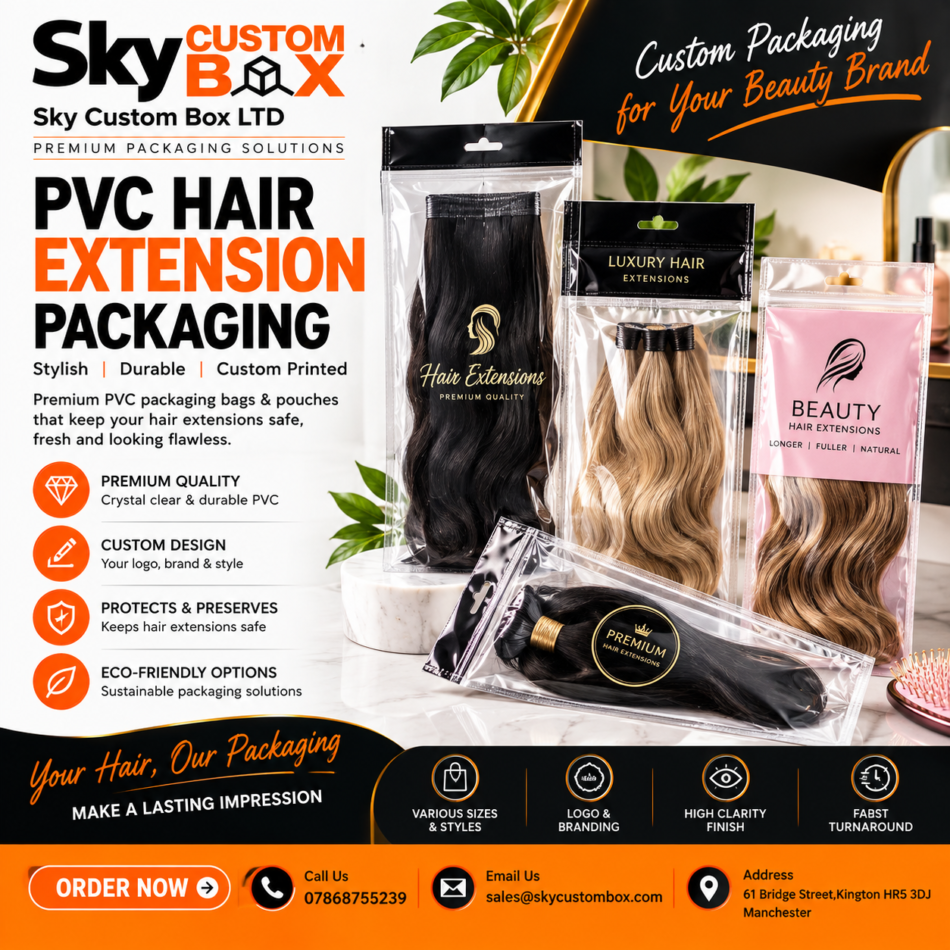
The hair extension industry depends on product quality, presentation, and reliable packaging. Whether a business sells human hair bundles, synthetic extensions, clip-in hairpieces, or professional salon supplies, suitable packaging helps keep products organised and presentable throughout storage, handling, and delivery. As competition grows in the beauty market, packaging has also become an important part of brand identity and customer experience.
PVC plastic packaging bag for packing hair extension is one option businesses may consider when they need transparent packaging that allows customers and retailers to view the product without opening the package. PVC, or polyvinyl chloride, is a plastic material used in various packaging applications because it can be manufactured in different forms, thicknesses, and levels of flexibility.
However, selecting packaging involves more than choosing a transparent bag. Businesses need to evaluate product protection, dimensions, closure systems, printing options, shipping requirements, and environmental considerations. Understanding these factors helps hair extension brands make informed decisions that balance presentation with practical performance.
1. What Is PVC Hair Extension Packaging?
PVC plastic packaging bag for packing hair extension refers to packaging made from polyvinyl chloride that is designed to hold and display hair extensions, wigs, ponytails, and related beauty products. Depending on the construction, it may take the form of a flexible bag, transparent pouch, hanging package, or structured enclosure.
Its main appeal is visibility. Customers can often inspect the colour, texture, and general appearance of a hairpiece without removing it from the packaging.
Common applications include:
- Human hair extension bundles
- Synthetic hair extensions
- Clip-in hairpieces
- Ponytail extensions
- Wig accessories
- Hair extension kits
- Beauty supply retail products
Different products require different packaging dimensions. Long hair bundles need sufficient space to sit comfortably, while smaller accessories may fit inside compact pouches.
A suitable package should accommodate the product without excessive compression. It should also allow customers to remove the hairpiece without snagging fibres or damaging the presentation.
Businesses should confirm the exact material used by a supplier because transparent packaging can also be manufactured from PET, PP, and other plastics. These materials have different physical properties and recycling considerations, so they should not automatically be treated as interchangeable with PVC.
Read More:
2. Key Benefits of a PVC Plastic Packaging Bag for Hair Extensions
A PVC plastic packaging bag for packing hair extension products may offer several practical benefits, particularly for businesses that prioritise product visibility and organised retail presentation.
Clear Product Visibility
Transparent packaging allows customers, warehouse staff, and retailers to identify products more easily. This can be useful when managing multiple shades, lengths, textures, and extension styles.
For online retailers, clear packaging can also help staff verify product selection during fulfilment. Although packaging does not replace accurate inventory records, it can support a more organised picking process.
Flexible Packaging Designs
PVC can be manufactured in different forms and thicknesses, depending on the intended application. Some packaging designs use flexible film, while others incorporate more structured panels or reinforced edges.
Available features may include:
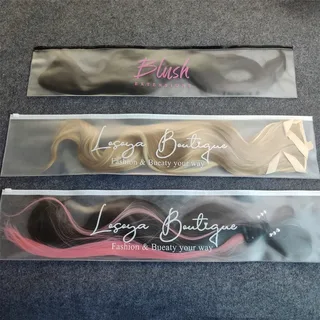
- Zip closures
- Adhesive sealing strips
- Hanging holes
- Reinforced seams
- Printed brand labels
- Compartments for accessories
Not every feature is necessary for every product. A simple pouch may work well for basic storage, whereas a hanging package may be more appropriate for retail displays.
Branding and Product Identification
Packaging can support brand recognition through labels, logos, colour accents, and product information. A transparent pouch paired with a printed insert or branded card can combine product visibility with a more distinctive presentation.
Useful information may include the product name, length, shade reference, style, SKU, and relevant care instructions.
Any claims about hair origin, composition, or processing should be accurate and supported by reliable product information.
Storage and Handling
Appropriately sized bags can help keep hairpieces contained during storage and transportation. They may reduce direct exposure to dust and routine handling, although they cannot eliminate every risk of contamination or damage.
The quality of the closure, seams, and material also matters. A bag that tears easily or opens during transit may create more problems than it solves.
3. How to Choose the Right Packaging for Different Hair Products
The best packaging depends on the product’s physical characteristics, sales channel, and distribution requirements.
Human Hair Bundles
Human hair bundles can vary considerably in length, weight, texture, and styling. Packaging should provide enough room for the bundle to sit naturally without unnecessary compression.
Longer bundles may require taller bags, while heavier products may benefit from stronger seams and more durable material.
Businesses should also consider whether the hair will be displayed individually or sold as part of a multi-bundle set.
Wigs and Styled Hairpieces
Wigs and styled hairpieces may require more structured packaging to help preserve their shape. A simple flat bag might be suitable for some products, but others may need an internal support, shaped insert, or dedicated wig enclosure.
Curly or styled hair should not be compressed excessively, as this can affect its presentation when the customer opens the package.
Clip-In Extensions and Hair Kits
Clip-in extensions and complete hair kits often contain several components. Dividers, individual compartments, or product cards can help keep these items organised.
For kits that include clips, combs, or other accessories, the package should prevent hard components from rubbing against the hair during transportation.
E-Commerce and Wholesale Orders
Online sellers need to consider more than the appearance of the retail package. Products may pass through multiple handling stages before delivery, including sorting, stacking, and courier transportation.
A practical packaging system may combine an individual hair extension bag with a suitable outer carton or mailer. The outer packaging provides additional protection, while the inner package keeps the product organised.
Wholesale businesses may prioritise stackability, standardised sizes, and efficient storage. Retail brands may place greater emphasis on printed designs and presentation.
4. Design, Quality Control and Common Packaging Challenges
Packaging decisions should be supported by practical testing rather than appearance alone.
Measure Before Ordering
Accurate measurements reduce the likelihood of bags being too small or unnecessarily large.
Before selecting a package, measure:
- The hairpiece’s length and width in its intended packaged position.
- The space required for ties, product cards, or accessories.
- The overall dimensions of any internal support.
- The space needed to insert and remove the product comfortably.
Requesting samples before committing to a large order is a useful way to check dimensions and usability.
Check Material and Closure Quality
Packaging performance depends on more than thickness. Seams, closure alignment, flexibility, and resistance to tearing can all affect the finished product.
A simple quality-control process can include checking whether:
- The seams remain intact during normal handling.
- The closure opens and closes as intended.
- The material has suitable clarity for product inspection.
- The bag fits the product without excessive compression.
- Printed information remains readable.
- The package can withstand the expected storage and shipping conditions.
Testing should reflect actual use. A package designed for a salon shelf may not need the same construction as one used for international shipping.
Read More:
Avoid Excessive Packaging Costs
Custom printing, unusual dimensions, special closures, and thicker materials can increase production costs. Businesses can control expenditure by standardising bag sizes across compatible products and reserving more elaborate packaging for selected product lines.
It is also useful to compare the total cost per packaged item, including labels, inserts, assembly, storage, and delivery.
Sky Custom Box is one example of a packaging business that companies may research when evaluating customised packaging options. Before choosing a supplier, businesses should compare material specifications, sample quality, minimum order quantities, printing capabilities, and production timeline
Environmental considerations are increasingly important when businesses select packaging materials. Although plastic packaging can provide useful product protection, its environmental impact depends on the material, manufacturing process, amount used, and available disposal or recycling systems.
PVC requires particular consideration because recycling options can differ from those for commonly collected PET or HDPE packaging. Not every local recycling facility accepts PVC film or flexible PVC bags.
Businesses should therefore confirm the exact polymer and check local waste-management guidance before making recyclability claims.
Practical steps include:
- Using the smallest suitable bag size.
- Avoiding unnecessary layers of plastic.
- Reviewing suppliers’ material specifications.
- Considering alternative materials where they meet performance requirements.
- Providing accurate disposal instructions.
- Avoiding unsupported claims such as “fully recyclable” or “eco-friendly.”
Alternative materials, including certain PET or PP formats, may be appropriate for some hair products. Paper-based packaging can also be considered when product visibility and moisture resistance are less critical. Each alternative should be assessed for durability, presentation, cost, and end-of-life options.
The objective is to select the least wasteful packaging that still protects the product and performs reliably.
Conclusion
PVC hair extension packaging can provide product visibility, flexible design options, and practical organisation for beauty brands, wholesalers, and retailers. However, its suitability depends on the type of hairpiece, the required level of protection, the sales channel, and the business’s environmental priorities.
A well-chosen PVC plastic packaging bag for packing hair extension products should fit comfortably, use a suitable closure, support accurate product identification, and withstand expected handling conditions. Businesses should also verify material specifications rather than assuming all clear plastic bags have the same properties.
By testing samples, standardising dimensions where practical, comparing total packaging costs, and evaluating recycling options, hair extension businesses can develop a packaging strategy that supports product quality and a consistent customer experience. The most effective choice is one that combines functional protection, clear presentation, responsible material use, and long-term commercial practicality.
CONTACT US:
ABOUT US:
Social Media:


