 WhatsApp Us Now

Understanding cargo delivery cost in Singapore is important for businesses that need to transport commercial goods efficiently while managing their logistics budgets. Whether you are a manufacturer, wholesaler, retailer, importer or distributor, choosing a suitable cargo delivery service requires more than comparing the prices offered by different providers. The actual cost depends on the shipment details, transportation requirements, delivery location and additional services needed to complete the movement.
For businesses operating in Singapore, cargo transportation may involve local deliveries, warehouse transfers, supplier collections or cross-border shipments to Malaysia. Each arrangement has different operational requirements, making it important to obtain a quotation based on accurate shipment information. By understanding the factors that influence cargo delivery prices, businesses can compare available options, plan their budgets and select a logistics arrangement that suits their operations.
What Determines Cargo Delivery Cost in Singapore
Cargo delivery costs are influenced by several factors, including shipment weight, cargo dimensions, transportation distance, vehicle requirements and handling conditions. The type of service selected can also affect the final quotation, particularly when the shipment requires dedicated vehicle capacity, special loading arrangements or additional logistics support.
A small shipment collected from an accessible commercial premises may have different requirements from a large palletised consignment that needs warehouse coordination. Similarly, a routine delivery may involve a different arrangement from a shipment that must meet a specific collection window or receiving deadline.
Businesses should provide a complete description of their shipment when requesting a quotation. This allows the logistics provider to assess the actual work involved rather than relying on assumptions that could result in a revised quote later.
Cargo Weight and Dimensions
The weight and dimensions of a shipment help determine the vehicle capacity and loading space required. Heavy goods may require vehicles with suitable payload capacity, while bulky items can occupy substantial space even when their overall weight is relatively low.
For palletised cargo, provide the number of pallets, individual dimensions and total shipment weight. For oversized goods, include the length, width and height, together with any special loading or unloading requirements.
Accurate measurements help the provider evaluate the transportation arrangement more effectively. If the actual shipment differs significantly from the information supplied during quotation, the vehicle allocation, handling arrangements or final price may need to be reviewed.
Collection and Delivery Locations
The collection and destination addresses influence route planning, travel distance and operational coordination. Deliveries involving multiple stops, restricted access locations or complicated loading arrangements may require additional planning compared with straightforward point-to-point transportation.
Businesses should provide complete addresses in Singapore and identify any relevant site restrictions. These may include loading bay availability, vehicle height limits, operating hours, security procedures or advance delivery appointments.
For commercial deliveries, the receiving contact and unloading arrangements should also be confirmed before dispatch. Clear instructions help the logistics provider assess the job and reduce avoidable waiting or coordination problems.
How Delivery Timing Can Affect the Quotation
The preferred collection and delivery schedule can influence the transportation arrangement available for a shipment. Businesses with flexible timing may be able to consider scheduled services or consolidation, while shipments requiring a specific vehicle or dedicated arrangement may need a different solution.
When requesting a quotation, explain when the cargo will be ready and whether the receiving location has a fixed delivery window. If the shipment is part of a recurring supply chain, provide information about the expected frequency and typical shipment volume.
Scheduled Cargo Delivery for Regular Shipments
Businesses that move goods regularly can benefit from planning their logistics requirements in advance. A consistent collection process helps suppliers prepare cargo, warehouse teams coordinate loading and receiving personnel arrange unloading.
Scheduled transportation may be suitable when the shipment fits the available route and departure arrangements. However, businesses should confirm the applicable cut-off time, cargo readiness requirements and expected delivery arrangement before booking.
Evermarch operates daily scheduled cross-border runs to Kuala Lumpur and Penang. Businesses considering these routes should confirm the available schedule, shipment requirements and quotation for their particular cargo movement.
Urgent Deliveries and Special Requirements
Some shipments have operational priorities that require closer coordination. For example, a factory may need production materials within a planned receiving window, or a distributor may need inventory delivered before a scheduled replenishment activity.
When timing is important, communicate the required collection date and delivery expectations as early as possible. Ask the provider whether the requested arrangement is available and whether any additional costs or conditions apply.
Businesses should avoid assuming that a particular delivery time can be guaranteed without confirmation. Actual timing may depend on route conditions, operational capacity, customs clearance for cross-border shipments and the agreed service scope.
Dedicated Trucking Versus Cargo Consolidation
The choice between dedicated trucking and cargo consolidation can affect the overall cost of cargo delivery in Singapore. The most suitable option depends on shipment size, cargo compatibility, timing requirements and the transportation services available for the route.
When Dedicated Trucking May Be Suitable
Dedicated trucking may be appropriate for large consignments, substantial pallet volumes or cargo that requires a particular loading and transportation arrangement. It can provide dedicated vehicle capacity and may offer greater control over coordination for the shipment.
This option may also be suitable when goods are oversized, have special handling requirements or cannot conveniently share vehicle space with other consignments.
However, dedicated transportation is not automatically the best choice for every shipment. Businesses should compare the vehicle requirements, collection arrangements, delivery expectations and total quoted cost against their actual operational needs.
When Cargo Consolidation May Be More Practical
Cargo consolidation combines compatible consignments within a shared transportation arrangement. It may suit businesses that have smaller shipments and do not require an entire vehicle.
Sharing available transport capacity can be a practical alternative when the cargo is compatible with the route and scheduled departure. However, consolidation depends on factors such as shipment dimensions, cargo handling requirements, collection readiness and the service provider’s operating schedule.
Before selecting consolidation, confirm the expected timing, applicable cut-off requirements and handling conditions. Businesses should also assess whether the arrangement fits their inventory planning and receiving schedule rather than choosing solely on the initial quoted price.
Understanding Cross-Border Cargo Delivery Costs
Businesses transporting goods between Singapore and Malaysia should consider the additional coordination involved in cross-border movements. In addition to transportation, the shipment may require customs declarations, permits, supporting trade documents and other arrangements depending on the goods and applicable regulations.
The exact requirements vary according to the commodity, transaction and direction of movement. Therefore, businesses should provide accurate cargo information and confirm the documentation responsibilities before the shipment is collected.
Customs and Trade Documentation
Commercial invoices, packing lists, declarations and permits may be required depending on the shipment. Incorrect or incomplete information can lead to clarification requests and may affect the clearance process.
When comparing quotations, ask whether customs and trade documentation support is included, available as an additional service or handled by another appointed party. Clarify which responsibilities remain with the shipper and which tasks the provider will coordinate.
Certain products may also be subject to additional restrictions or regulatory requirements. These should be checked before transportation is arranged so that the shipment can be planned according to the applicable rules.
Additional Logistics Services
Some businesses require more than transportation between two addresses. Depending on their supply chain, they may also need warehousing, distribution, consolidation or coordination between different collection and delivery points.
These services can affect the overall quotation because each involves different operational requirements. When requesting a price, identify the services needed and ask the provider to explain the scope of the proposed arrangement.
A clear quotation helps businesses understand what is included and identify any additional charges that may apply under specific conditions.
How to Compare Cargo Delivery Quotations
Comparing cargo delivery quotations effectively requires businesses to look beyond the headline price. Two providers may offer different service arrangements, collection conditions or documentation support, meaning their prices may not cover the same scope of work.
Start by confirming that each quotation uses the same shipment information, including cargo dimensions, weight, package count, pickup address and delivery destination. Then compare the proposed transportation method, timing, handling arrangements and additional services.
Check What Is Included in the Price
Ask whether the quotation includes collection, transportation, unloading or delivery coordination. For cross-border cargo, clarify the treatment of customs and trade documentation support, applicable charges and any other services required for the shipment.
Businesses should also understand the conditions that could affect the final amount, such as changes to cargo dimensions, additional stops, waiting time or revised delivery requirements.
A detailed quotation makes budgeting more predictable and helps prevent misunderstandings between the shipper and logistics provider.
Evaluate Reliability and Communication
Price is only one consideration when choosing a cargo delivery service. Businesses should also consider how clearly the provider explains the service, communicates scheduling information and responds when shipment details change.
For recurring commercial deliveries, consistent communication can help warehouse teams, suppliers and receiving personnel coordinate their activities more effectively.
The right choice is the arrangement that meets the business’s transportation requirements at a clear and commercially appropriate cost.
A Practical Checklist Before Requesting a Quote
Preparing the essential shipment information can make the quotation process more efficient. Before contacting a logistics provider, confirm the following details:
- Cargo description: Identify the goods and any special handling requirements.
- Shipment quantity: Specify the number of cartons, pallets or packages.
- Total weight and dimensions: Provide accurate measurements for vehicle planning.
- Collection address: Include the complete pickup location and contact person.
- Delivery address: Confirm the destination and receiving contact.
- Preferred timing: State when the cargo will be ready and any delivery restrictions.
- Transportation preference: Explain whether you are considering dedicated trucking or consolidation.
- Additional services: Identify any warehousing, distribution or handling requirements.
- Documentation needs: For cross-border shipments, clarify the applicable documents and responsibilities.
If any shipment details change after the initial enquiry, inform the provider before dispatch. Updated information allows the transportation plan and quotation to be reviewed where necessary.
Request a Cargo Delivery Quotation from Evermarch
Finding a suitable cargo delivery service in Singapore starts with understanding your shipment and identifying the services needed to complete the movement. By preparing accurate cargo details, confirming delivery requirements and comparing quotations on a consistent basis, businesses can make better-informed logistics decisions.
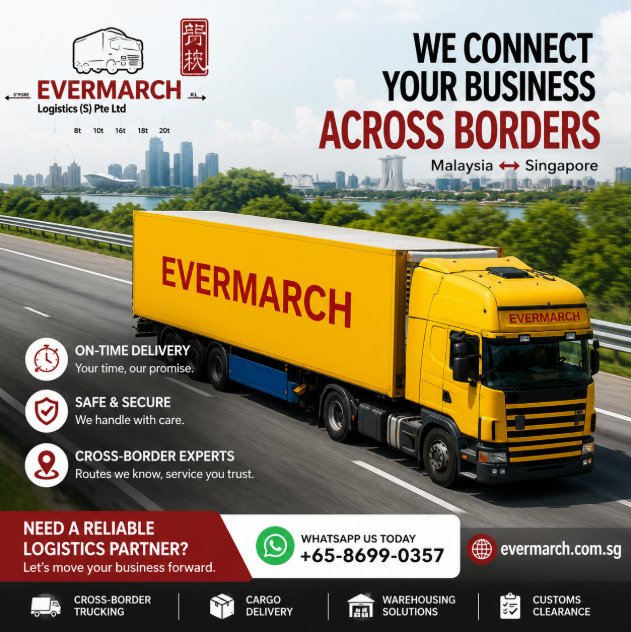
Evermarch provides local cargo delivery and cross-border transportation between Singapore and Malaysia. Its service offerings include daily scheduled runs to Kuala Lumpur and Penang, cargo consolidation, customs and trade documentation support, warehousing and distribution, subject to the applicable service arrangements.
Whether you need to arrange a local commercial delivery or move cargo between Singapore and Malaysia, sharing your shipment requirements helps the team assess the available transportation options.
Looking for a cargo delivery quotation in Singapore? Visit evermarch.com.sg to discuss your logistics requirements. Provide your cargo description, shipment weight, dimensions, collection address, delivery destination and preferred schedule so the team can evaluate a suitable arrangement and prepare a quotation based on your actual cargo movement.


