 WhatsApp Us Now

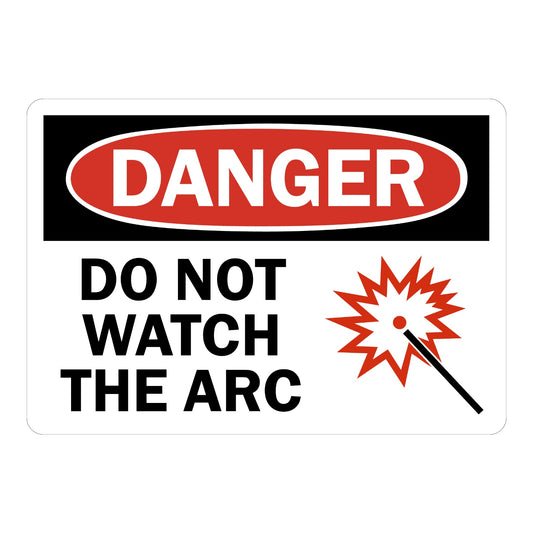
If you’ve ever looked at an electrical panel and noticed a label filled with numbers, warnings, and safety information, you may have wondered what it all means. These labels aren’t there just for decoration. Arc flash labels provide important information that helps qualified electrical workers understand potential electrical hazards before working on equipment.
An arc flash can release an enormous amount of heat and energy in a very short time. Because of that, having clear information available at electrical equipment can be an important part of a workplace electrical safety program.
But what exactly is written on an arc flash label?
Let’s break it down in simple terms.
What Is an Arc Flash Label?
An arc flash label is a warning label placed on electrical equipment where an arc flash hazard may be present. The label communicates information about the potential hazard and provides key details that workers may need when planning electrical work.
You may find arc flash labels on equipment such as electrical panels, switchboards, switchgear, motor control centers, and other electrical equipment.
The exact information included can vary depending on the equipment, electrical system, hazard analysis, and applicable safety requirements. That’s why it’s important not to assume that every arc flash label will look exactly the same.
1. Arc Flash Hazard Warning
One of the first things you’ll typically notice is a clear warning that an arc flash hazard may be present.
The purpose is straightforward: get the worker’s attention before work begins.
The label may use a signal word or other warning language along with an arc flash symbol or electrical hazard imagery. The message should be easy to see and understand from the normal working position.
This is particularly important in busy electrical rooms where workers may be dealing with multiple pieces of equipment.
2. Nominal System Voltage
Another important piece of information commonly found on arc flash labels is the nominal system voltage.
Voltage tells workers about the electrical system associated with the equipment. For example, a label may identify a system as having a particular voltage level.
This information provides useful electrical context when workers are evaluating the equipment and preparing for the task.
However, voltage alone does not tell you the complete arc flash hazard. Other factors, such as available fault current, clearing time, and equipment configuration, can also affect the potential incident energy.
3. Arc Flash Boundary
The arc flash boundary is another important piece of information that may appear on an arc flash label.
In simple terms, it identifies a distance from the potential arc source within which a person could be exposed to a specified incident energy level under the conditions used for the analysis.
Think of it as a defined distance around the equipment that helps communicate the potential reach of the thermal hazard.
Workers should understand that the arc flash boundary is only one part of electrical hazard assessment. Appropriate procedures, training, controls, and protective equipment still matter.
4. Incident Energy
Incident energy is one of the most important technical values you may see on arc flash labels.
It represents the amount of thermal energy that could be experienced at a specified working distance during an arc flash event, based on the conditions and calculations used for the equipment.
The value is commonly expressed in calories per square centimeter, or cal/cm².
This number can help qualified workers understand the potential thermal exposure associated with the equipment and determine appropriate protective measures according to the applicable electrical safety program.
Because this value is based on an analysis, it shouldn’t simply be guessed or copied from another piece of equipment.
5. Working Distance
Some arc flash labels provide a working distance associated with the incident-energy calculation.
Working distance is essentially the distance between the potential arc source and the worker’s face and body position used for the calculation.
This matters because incident energy can change depending on the distance from the arc.
A label may therefore provide both the incident energy value and the working distance used to determine it.
6. PPE Information
Depending on the labeling approach and applicable requirements, arc flash labels may communicate information related to personal protective equipment (PPE).
This can help workers understand that specific protective measures may be necessary when performing certain tasks.
However, a label should not be treated as a replacement for an employer’s electrical safety program, job hazard assessment, training, or procedures.
PPE decisions should be based on the applicable requirements and the actual work being performed.
7. Equipment Identification
An arc flash label may also identify the equipment or location where the label is installed.
For example, information may identify a particular panel, switchboard, motor control center, or other electrical equipment.
Equipment identification can make it easier for workers to connect the information on the label with the correct electrical system and documentation.
This becomes especially useful in facilities containing dozens or even hundreds of electrical components.
8. Shock Hazard Information
Arc flash and electric shock are related but different electrical hazards.
Some labels may provide information about shock protection or include voltage-related information that helps workers recognize the electrical hazard associated with the equipment.
Workers should understand that protection against an arc flash does not automatically mean protection against electric shock.
Both hazards need to be considered when planning electrical work.
9. Label Date or Study Information
Some facilities may include information that helps identify when the electrical hazard analysis was performed or when the labeling information was established.
This can be useful for facility maintenance and documentation.
Electrical systems can change over time. Equipment may be replaced, circuits may be modified, or system conditions may change. When that happens, the information represented on an existing label may need to be reviewed as part of the facility’s electrical safety and hazard-analysis process.
Why Accurate Arc Flash Labels Matter
Imagine an electrician arrives at a panel and sees a clear label containing the relevant electrical hazard information. Instead of having to guess what equipment they’re dealing with, the label provides useful information that can support the planning process.
That’s one of the main reasons arc flash labels are important.
They help communicate hazards directly at the equipment where workers need the information. They can also support workplace safety procedures by making important electrical hazard information easier to find.
Still, an arc flash label is only one part of a broader electrical safety program. Labels don’t eliminate electrical hazards, make equipment safe by themselves, or replace proper training and safe work procedures.
What Should You Check Before Using an Arc Flash Label?
Before creating or applying a label, make sure the information comes from the appropriate electrical hazard analysis or qualified source.
Avoid estimating technical values such as incident energy or arc flash boundary simply to fill in a label.
It’s also important to make sure labels remain clear, readable, and securely attached to the equipment. If a label becomes damaged, faded, difficult to read, or no longer reflects the equipment configuration, it should be addressed through the facility’s established safety process.
Final Thoughts
Arc flash labels provide important information about electrical hazards directly at the equipment where qualified workers may need it. Depending on the equipment and labeling approach, information can include an arc flash warning, nominal voltage, arc flash boundary, incident energy, working distance, PPE-related information, equipment identification, and other relevant details.
The exact information should come from the applicable electrical hazard analysis and safety requirements rather than assumptions.
Most importantly, remember that an arc flash label is a communication tool—not a substitute for proper training, electrical safety procedures, hazard assessment, and appropriate protective measures. When accurate information is clearly communicated at electrical equipment, it can help workers better understand the hazards they may encounter before beginning electrical work.


