 WhatsApp Us Now

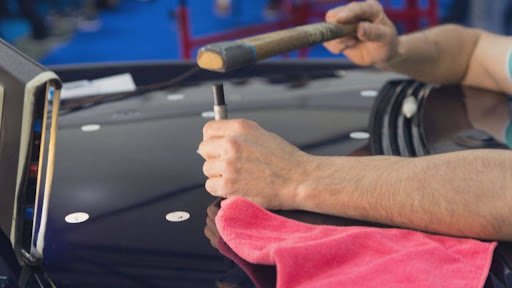
A dent can make an otherwise well-maintained vehicle look neglected, especially when it appears on a highly visible door, hood, fender, or quarter panel. Many drivers assume that fixing the damage automatically means sanding, filling, and repainting the affected area. However, that is not always necessary. Mobile Paintless dent repair offers a practical alternative for repairing certain dents while keeping the vehicle’s original factory paint intact.
One of the biggest advantages of this repair method is convenience. Instead of taking your vehicle to a traditional body shop and leaving it there for several days, a qualified technician can often perform the repair at your home, workplace, or another suitable location. This makes the process easier for busy vehicle owners while also helping preserve the car’s original appearance.
What Is Mobile Paintless Dent Repair?
Mobile Paintless dent repair is a specialized technique used to remove dents without replacing or repainting the damaged panel. Rather than covering the imperfection with body filler and applying new paint, a trained technician carefully accesses the back of the panel and gradually reshapes the metal.
The process requires patience, precision, and knowledge of how automotive panels respond to controlled pressure. Technicians use specialized rods, hooks, and other tools to work behind the damaged area. In some situations, they may also use specialized pulling techniques when direct access is limited.
For example, a small door ding caused by a shopping cart may be an excellent candidate for paintless repair if the paint has not been cracked or badly damaged. The goal is to restore the panel to its original shape while maintaining the factory finish.
How Does the Paintless Dent Repair Process Work?
The repair process usually begins with a careful inspection. The technician evaluates the size, location, depth, and condition of the dent before deciding whether paintless repair is appropriate. They also check the surrounding paint for cracks, scratches, or signs of previous bodywork.
Once the damage is assessed, the technician determines the best access point. Depending on the vehicle and panel, access may be available through the trunk, door frame, hood, interior trim, or another opening. Protective equipment and specialized tools are then used to reach the damaged area.
The technician applies controlled pressure to gradually move the metal back into position. Instead of forcing the panel outward in one movement, the dent is usually corrected in small stages. This careful approach helps maintain the natural contours of the vehicle and reduces the risk of creating additional imperfections.
Why Preserving Factory Paint Matters
Your vehicle’s original factory paint is more than just a layer that gives it color. Modern automotive paint systems are applied under controlled manufacturing conditions, which can make the original finish difficult to duplicate perfectly during a conventional repair.
When a dent can be repaired without repainting, the vehicle keeps its existing factory finish. This can be particularly useful for owners who care about maintaining the vehicle’s original appearance. It may also help avoid visible differences in color or texture that can sometimes occur when a repaired panel is repainted.
Consider a minor dent on a metallic silver vehicle. Even if a body shop matches the paint carefully, variations in lighting, age, and paint application can sometimes make the repaired section look slightly different. Paintless repair avoids that particular issue because the existing finish remains in place.
When Is Mobile Paintless Dent Repair a Good Option?
Not every dent can be repaired with paintless techniques. The best candidates are generally dents where the paint remains intact, and the underlying metal or aluminum has not been excessively stretched.
Small door dings, hail dents, minor parking-lot damage, and shallow creases can often qualify. The location of the damage also matters. A dent positioned in an accessible part of a panel may be easier to repair than one located directly along a complicated structural edge.
The depth of the dent is another important consideration. A shallow depression may require relatively straightforward correction, while a deep dent with stretched metal can be considerably more challenging. A professional technician should inspect the damage before promising a particular result.
Benefits of Choosing a Mobile Repair Service
One of the most convenient aspects of mobile dent repair is that the technician comes to you. Instead of arranging transportation to a body shop, waiting for an inspection, and potentially leaving your vehicle there, you may be able to have the repair completed at your home or workplace.
This can save valuable time, particularly for people with demanding schedules. Mobile service can also be convenient after minor parking-lot incidents or hail events when several areas of the vehicle need attention.
Another benefit is that the repair process is often focused specifically on the damaged panel. Since there is generally no need for sanding, filler, primer, or a complete repaint for suitable dents, the process can be less invasive than traditional body repair. The exact repair time depends on the damage, vehicle design, and technician’s assessment.
Mobile Paintless Dent Repair vs. Traditional Body Repair
Traditional body repair and paintless dent repair approach damage differently. Conventional repairs may involve sanding the damaged area, applying body filler, reshaping the panel, priming, and repainting it. This approach can be necessary when paint is severely damaged or the panel has been significantly deformed.
Paintless dent repair focuses on reshaping the existing panel while preserving the original finish. For suitable damage, this can reduce the number of repair steps involved.
For example, imagine a vehicle with a shallow dent on the passenger door but no paint damage. A traditional repair may require preparation and refinishing, while a paintless technician may be able to restore the shape without disturbing the paint. However, if the panel has a deep crease, broken paint, or extensive structural damage, conventional repair may be more appropriate.
How to Choose a Qualified Mobile Dent Technician
Choosing the right technician is important because paintless dent repair requires hands-on skill and precision. Before hiring a service, ask whether the technician has experience working with your vehicle type and the specific kind of damage involved.
Look for clear before-and-after examples of previous repairs and ask how the technician evaluates whether a dent qualifies for paintless repair. A professional should be willing to inspect the damage rather than automatically claiming that every dent can be removed.
It is also useful to ask about the repair process, estimated completion time, and any warranty or satisfaction policy offered by the service. Avoid choosing a technician based only on the lowest price. A poorly performed repair can leave visible highs, lows, or distortion in the panel.
Preparing Your Vehicle for a Mobile Repair
A little preparation can make the repair appointment easier. If possible, park the vehicle in a clean, accessible area where the technician has enough room to work around the damaged panel. A garage, driveway, or suitable workplace parking area may work well.
The vehicle should also be reasonably clean around the damaged section. Dirt and debris can make it harder to inspect the dent and surrounding paint accurately.
Before the technician arrives, identify all areas of damage that you want inspected. If the vehicle has multiple dents from a hailstorm or parking incident, showing them during the initial inspection can help the technician understand the full scope of the work.
FAQs
1. Does paintless dent repair damage the original paint?
When performed correctly on suitable damage, paintless dent repair is designed to preserve the existing factory paint rather than remove or replace it.
2. Can every dent be repaired with paintless dent repair?
No. Deep dents, severely stretched metal, broken paint, or damage in difficult locations may require traditional body repair. A professional inspection is recommended.
3. How long does mobile dent repair take?
Repair time varies depending on the size, depth, location, and number of dents. Small dents may be completed relatively quickly, while larger or more complicated damage can take longer.
4. Can hail damage be repaired with paintless techniques?
Yes, many hail dents can be suitable for paintless dent repair when the paint remains intact and the panels have not suffered excessive damage.
5. Why choose a mobile dent repair service?
A mobile service provides convenience by bringing the technician to your location. This can reduce the need to drive to a body shop and leave your vehicle there for an extended period.
Conclusion
Mobile Paintless dent repair provides a convenient way to restore suitable vehicle dents while preserving the original factory paint. Instead of automatically repainting a damaged panel, skilled technicians can use specialized tools and controlled pressure to carefully reshape the metal.
The key is determining whether the damage is suitable for the technique. Factors such as paint condition, dent depth, panel location, and metal stretching all influence the repair approach. For minor dents, door dings, and many hail-related imperfections, paintless repair can provide an efficient and less invasive solution. Choosing an experienced technician and getting a proper inspection can help ensure your vehicle receives the right type of repair.


