 WhatsApp Us Now
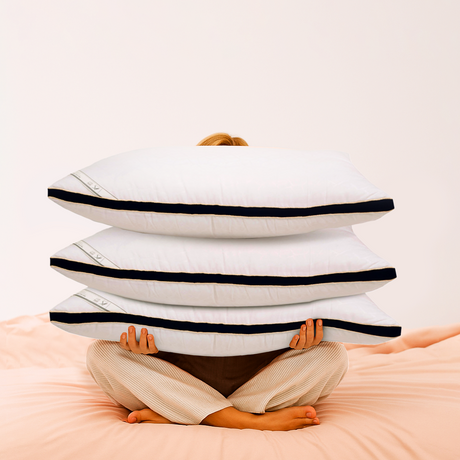
We often spend a lot of time choosing the right mattress, bedsheets, and even blankets, but there’s one sleep essential that doesn’t always get the attention it deserves: your pillow.
Think about it. You can have the most comfortable mattress in the world, but if your pillow is too high, too flat, too firm, or simply doesn’t suit the way you sleep, you may still wake up feeling uncomfortable.
The right pillow should support your head and neck while allowing you to sleep in a comfortable, natural position. And because everyone sleeps differently, the best pillow for you may not be the same one your partner prefers.
So, let’s look at how to choose the right pillow based on your sleeping position.
Why Does Your Sleeping Position Matter?
Your sleeping position determines the amount of space between your head and the mattress. That’s why pillow height and firmness matter.
For example, when you sleep on your side, there’s a larger gap between your head and the mattress because of the width of your shoulder. A pillow that fills this space can help you stay comfortable.
Back and stomach sleepers have different requirements because their heads are positioned differently relative to the mattress.
Instead of choosing a pillow simply because it looks comfortable, start by considering how you naturally sleep.
The Best Pillow for Side Sleepers
If you’re a side sleeper, you generally need more support than someone who sleeps on their back or stomach.
When you’re lying on your side, your shoulder creates a gap between your head and the mattress. A pillow that is too thin may allow your head to tilt downward, while one that is too thick may push your head upward.
A medium-to-high loft pillow can be a good starting point for many side sleepers. Look for a pillow that provides enough firmness to support your head without feeling like you’re sleeping on a hard surface.
Memory foam or other supportive materials can be worth considering because they can provide structure while adapting to your head and neck.
Your shoulder width also matters. People with broader shoulders may prefer a higher pillow, while those with narrower shoulders may feel more comfortable with a slightly lower one.
The Best Pillow for Back Sleepers
Back sleepers usually need a different type of support.
When lying on your back, your head is closer to the mattress, so an excessively high pillow can push your head forward and feel uncomfortable.
A medium-loft pillow is often a practical starting point. It should provide enough cushioning for your head and neck without creating an awkward angle.
Look for a pillow that feels supportive but doesn’t force your head into a raised position.
Your mattress firmness also plays a role here. If your mattress is softer, your body may sink deeper, which can change how high your pillow needs to be.
So, don’t choose your pillow completely separately from your mattress.
The Best Pillow for Stomach Sleepers
Stomach sleepers often need the thinnest pillow of the three.
When you’re sleeping face down, using a thick pillow can raise your head too much and create an uncomfortable angle.
A soft, low-profile pillow may be a better choice. Some stomach sleepers may even prefer a very thin pillow or no pillow under the head, depending on their comfort.
If you naturally sleep on your stomach but frequently wake up feeling uncomfortable around your neck, consider experimenting with a lower pillow height.
What About Combination Sleepers?
Not everyone stays in one position all night.
You might fall asleep on your side, turn onto your back, and wake up on your stomach. If this sounds familiar, you’re a combination sleeper.
For combination sleepers, a medium-height pillow with a flexible or responsive feel can be a practical choice.
Adjustable pillows can also be useful because you can modify the fill or loft to find a height that works across different positions.
The goal is to find a pillow that doesn’t feel excessively high or low when you change positions.
Choose the Right Pillow Material
Pillow material can significantly affect how it feels.
Memory foam pillows can provide a supportive, contouring feel and are often chosen by people who like structured support.
Latex pillows tend to feel more responsive and can provide a combination of support and cushioning.
Fiber-filled pillows can offer a softer and more traditional feel, while some adjustable pillows allow you to add or remove filling to change the height.
There’s no universally perfect material. Think about whether you prefer a soft, fluffy feel or a more supportive and structured surface.
Don’t Forget About Firmness
Pillow height gets plenty of attention, but firmness matters too.
A very soft pillow may compress significantly under your head. A firmer pillow may provide more consistent support but can feel uncomfortable if you prefer a plush surface.
Side sleepers often benefit from a more supportive pillow because it needs to maintain its shape under the head. Back sleepers may prefer medium firmness, while stomach sleepers often feel more comfortable with a softer option.
Again, these are starting points—not strict rules.
Consider Your Mattress Too
Your pillow and mattress work together.
If you sleep on a very soft mattress, your shoulders and upper body may sink deeper into the surface. This can change the distance between your head and mattress.
On a firmer mattress, you may sit higher on the sleeping surface.
This means the same pillow can feel completely different depending on your mattress.
When buying a new pillow, consider how it feels with your existing mattress rather than judging it in isolation.
How to Know If Your Pillow Is Right
The easiest way to evaluate a pillow is to pay attention to how your body feels.
When lying in your normal sleeping position, your head should feel supported without being pushed too far forward, backward, or sideways.
You shouldn’t feel like you’re constantly adjusting the pillow throughout the night.
Also look at the pillow itself. If it’s permanently flattened, uneven, or no longer provides the support it once did, it may be time to replace it.
When Should You Replace Your Pillow?
Pillows don’t last forever.
Over time, the filling can compress, materials can lose their shape, and the pillow may become less supportive.
How often you need to replace your pillow depends on its material, quality, usage, and care. Instead of following a strict replacement date, look for signs of wear.
If your pillow has become lumpy, permanently flat, damaged, or uncomfortable, replacing it may be a good idea.
Final Thoughts
Choosing the right pillow doesn’t have to be complicated. Start with the way you sleep.
Side sleepers generally need more height and support, back sleepers often benefit from balanced support, and stomach sleepers typically prefer a thinner, softer pillow. Combination sleepers may want something flexible or adjustable.
Then consider the material, firmness, loft, and how the pillow works with your mattress.
Most importantly, don’t choose a pillow simply because someone else loves it. Your sleeping position, body shape, mattress, and personal comfort all matter.
The right pillow should quietly do its job while you sleep—supporting you comfortably without becoming something you have to think about all night.


