 WhatsApp Us Now
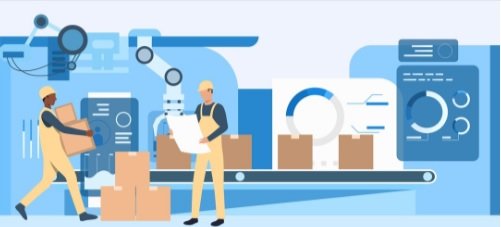
Supply chain operations need to process greater quantities of orders and ensure faster, more accurate delivery. With an increase in the variety of products and increasing complexity of the distribution network, ensuring that the products reach the right place has become extremely important.
Automated sortation is increasingly tackling this problem through sensors, software, and mechanical/robotic technologies that identify and separate products. This can be attributed to an overall trend of connected automation in the supply chain where each process is integrated instead of being a standalone warehousing process.
Why Sortation Matters More Than Ever
Sorting occurs between transportation, storage, picking and shipping. A system can allocate cartons, parcels or totes according to their destination, order, carrier or service level.
This becomes especially beneficial where the facility has to deal with:
- High number of orders at various destinations
- Large number of stock-keeping units
- Short time period of dispatch and same-day delivery
- Regular fluctuations in demand and order characteristics
Manual sortation is prone to difficulties because the pace and precision of work rely greatly on labour and constant handling operations. With automation, the process flows smoothly while workers have time to perform other tasks.
Connecting Sortation With Material Flow
Sorting works best when it is integrated with upstream and downstream systems. The conveyor system will ensure that materials are always moving continuously towards the scanners and sorters. This will be decided by the software within the warehouse.
The material handling conveyor system is not just meant to move materials but can become more than that when it is combined with scanners, controls and other warehouse management systems.
Integration has a number of benefits:
- Less needless travel and manual touches
- A more consistent flow of products through the establishment
- Improved visibility of item motion
- Quicker adaptation to shifting throughput demands
Improving Accuracy and Throughput
The biggest advantage of an automated sortation system is that it can automatically repeat sorting decisions very quickly. Through the use of barcodes, dimensioners, sensors, and software, the system can be used to determine the object to be sorted and then place it in the proper lane or destination.
The use of automated sortation will help the operator avoid misroutes and provide reliable dispatching. The use of this system will also allow facilities to manage their peak times without being totally dependent on extra temporary labour. However, proper system design, precise data, and routine maintenance are essential to performance.
Supporting Scalable Supply Chains
Supply chains are rarely static. Seasonal peaks, new sales channels, and shifting customer expectations can all affect throughput requirements. When systems use modular equipment and flexible controls, sorting technology can offer a scalable layer within an automation strategy.
Businesses should evaluate:
- Existing and future throughput capacity
- Product size, weight, and packaging
- Number and locations of destinations
- Sort accuracy needs
- Floor space and interface availability
The evaluation will help to determine whether the system has the capability to meet future requirements and not just the current problem.
How Addverb Enables Smarter Sortation
Addverb offers warehouse automation and intralogistics solutions, including material handling, sorting, storage, picking, and software. Conveyor systems, robotic sorters, vertical sorting, and automated handling solutions are among the products in its portfolio that are intended to facilitate the flow of goods throughout warehouse operations. With models including Zippy 6, Zippy 10, Zippy 30, and Zippy 40, its robotic sorter range offers payload capacities ranging from 6 kg to 40 kg, enabling businesses to choose a configuration based on their handling needs. Additionally, Addverb provides a vertical sortation robot, SortIE, that can manage payloads up to 10 kg. This range of payload capacities supports the broader objective of increasing throughput, accuracy, and scalability while enabling sortation automation across various parcel and product-handling applications.
Conclusion
Automated supply chains of the future will be more about connected systems exchanging data rather than individual machines. Sortation may prove an effective intermediary step connecting order processing and fulfilment, enabling facilities to handle the flow of products effectively and control it.
As businesses seek to increase their speed, precision, and scalability, implementing intelligent sorting could enhance the robustness of their distribution systems. A good combination of software, machinery, and material handling conveyor system design can help businesses turn a potential choke point into an effective supply chain component.


