 WhatsApp Us Now
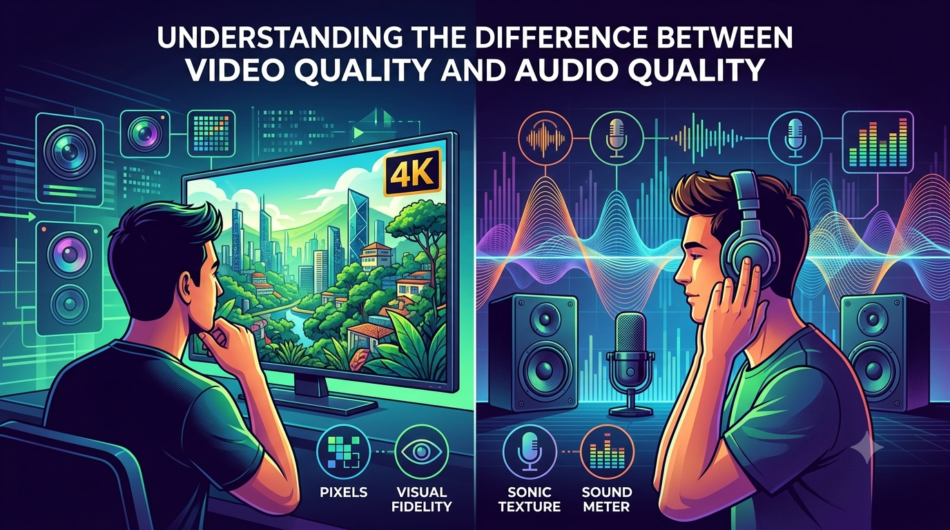
People often focus on video resolution when watching or saving digital media. A sharper picture can make a video look better, but image quality is only part of the experience. Also, the quality of the audio matters because if it is clear, it is easier to enjoy and understand music, lessons, interviews, and videos.
For example, someone using a YouTube MP3 tool might care more about audio quality than video resolution. However, someone saving a movie or tutorial might want a clear picture as well as good sound. Knowing the difference between the two quality types allows users to choose the right file for their needs.
What Is Video Quality?
Video quality is the clarity and detail of an image. Often it is related to the resolution, which is the number of pixels used to make up the picture.
Common resolutions: 480p , 720p , 1080p , 4K . The higher the resolution, the more visual detail – especially on large screens. However, they also tend to create larger files and can require more storage and bandwidth.
Video quality can also be affected by frame rate, compression, lighting, and the original recording.
What Is Audio Quality?
Audio quality describes how clearly sound is recorded, processed, and played. Several factors can affect it, including bitrate, compression, the original recording, and the audio format.
A higher bitrate can preserve more audio information in some compressed formats, but bitrate alone does not guarantee better sound. The quality of the original recording and the way it was encoded also matter.
For music and spoken content, clear audio can make a major difference even when the video itself is not very sharp.
Video Quality vs. Audio Quality
The main difference is what each one measures. Video quality focuses on visual details, while audio quality focuses on sound.
A video can have excellent resolution but poor audio. For example, a recording may look sharp but contain background noise or unclear speech. The opposite can also happen. A video with modest resolution may have clean and balanced audio.
This is why users should consider both factors instead of judging a file only by its resolution.
How File Size Is Affected
Higher quality usually means more data. A high-resolution video can take much more storage space than a lower-resolution version. Similarly, high-quality audio can increase the size of an audio file.
When using a service such as Flvto, users should consider whether they need maximum quality or a smaller file that is easier to store and transfer.
Choosing the Right Quality
The right choice depends on how the file will be used. For a large screen, higher video resolution may be useful. For music, podcasts, or spoken content, audio quality may be more important.
For mobile devices, a balanced quality level can help save storage while still providing an enjoyable experience.
Why the Original Source Matters
There is no setting that can bring back the quality that was lost in the original recording. If your source video is blurry or has bad audio, selecting a higher output setting will not magically create missing detail.
This is important when you convert or save digital media. The final quality is very much dependent on the source.
Conclusion
Audio quality and video quality are two separate but equally important components of digital media. Video quality affects how clear and detailed images appear, while audio quality affects how natural and understandable sound is. The best choice depends on the type of content, device, storage space, and personal needs. Knowing them lets users pick the right formats and quality levels, without choosing larger files than they need.


