 WhatsApp Us Now
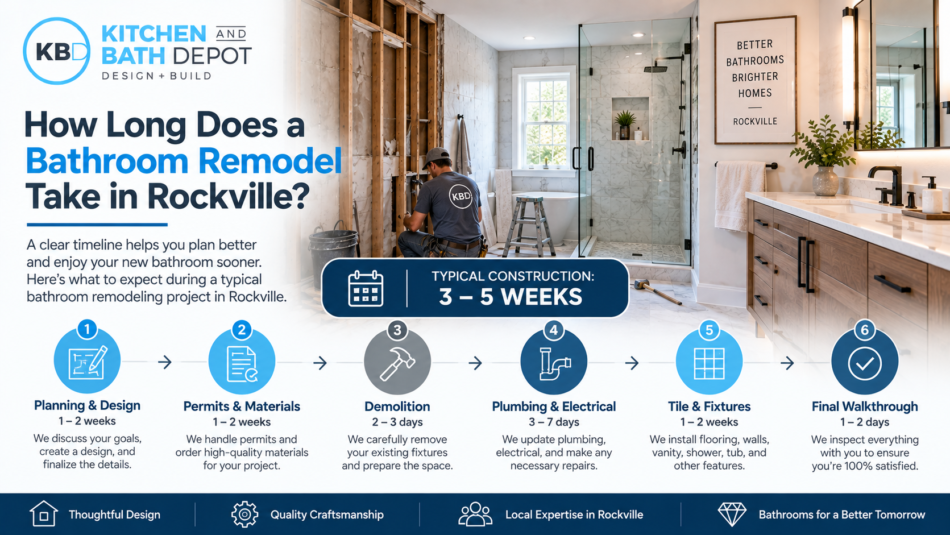
A bathroom remodel can make a home more comfortable and functional, but homeowners often wonder how long they will need to live with construction. The answer depends on several factors, including the size of the bathroom, the type of renovation, the materials selected, the amount of plumbing and electrical work, and whether the layout is being changed.
A simple bathroom update may be completed much faster than a full renovation. Replacing a vanity, mirror, lighting, or fixtures is different from removing the entire bathroom and installing new flooring, cabinets, a shower, plumbing, electrical systems, and finishes.
Understanding the remodeling process can help homeowners prepare for the work and set realistic expectations.
What Determines the Remodeling Timeline?
Several factors influence how long a bathroom renovation takes.
The scope of the project is one of the biggest factors. A cosmetic update requires fewer construction steps than a complete renovation.
The size and layout of the bathroom also matter. Larger bathrooms may require more materials and installation time.
Material availability can affect the schedule as well. Custom cabinets, specialty tiles, countertops, glass doors, and certain fixtures may need to be ordered in advance.
The condition of the existing bathroom can also create unexpected delays. Problems hidden behind walls or under floors may not become visible until demolition begins.
What Happens Before Construction Starts?
The remodeling timeline actually begins before demolition.
Homeowners first need to decide what they want to change. This may include the shower, bathtub, vanity, flooring, lighting, storage, fixtures, and layout.
Measurements and design planning then take place.
Materials need to be selected and ordered. Depending on the project, permits may also need to be addressed.
This planning stage is important because starting construction before all major decisions are made can lead to delays and additional costs.
How Long Does Demolition Take?
Demolition involves removing the existing fixtures and finishes that are being replaced.
This may include the vanity, toilet, bathtub, shower, flooring, tile, cabinets, or other materials.
A simple bathroom may require relatively little demolition. A complete renovation can involve much more work.
Careful demolition is important because the contractor needs to avoid unnecessary damage to parts of the home that will remain.
Once demolition is complete, the condition of the underlying walls, floor, plumbing, and electrical systems can be evaluated.
Why Can Hidden Problems Delay a Project?
Old bathrooms sometimes contain problems that cannot be seen before demolition.
A contractor may discover water damage, damaged subflooring, outdated plumbing, poor previous repairs, or electrical issues.
These problems need to be addressed before new finishes are installed.
For example, installing new tile over a damaged or unstable surface can create future problems.
Homeowners should therefore avoid assuming that the original schedule is guaranteed.
A realistic remodeling plan should allow for the possibility of unexpected work.
How Long Does Plumbing Work Take?
Plumbing work depends on what is being changed.
If the sink, toilet, shower, and bathtub remain in their existing locations, plumbing work may be relatively straightforward.
Moving fixtures can require new supply lines and drain connections.
Changing a bathtub to a shower may also require modifications depending on the existing plumbing.
The exact time required depends on the bathroom and the complexity of the work.
Plumbing should be completed and checked before walls and floors are closed up.
What About Electrical Work?
Electrical work can involve lighting, outlets, exhaust fans, heated features, and other components.
If the bathroom layout changes, wiring may need to be adjusted.
Additional electrical work may also be necessary when homeowners add new lighting or other features.
Electrical work should be completed by appropriately qualified professionals and according to applicable requirements.
Planning electrical changes early can prevent delays later.
How Long Does Waterproofing Take?
Waterproofing is an important step around showers, bathtubs, and other areas exposed to moisture.
The exact process and time depend on the system and materials being used.
The surface needs to be properly prepared before waterproofing is applied.
Allowing appropriate time for installation and curing is important.
Rushing waterproofing can create serious problems later, so homeowners should prioritize proper installation over finishing the project as quickly as possible.
How Long Does Tile Installation Take?
Tile installation depends on the amount of tile, surface preparation, design complexity, and size of the bathroom.
A simple floor with standard tiles may require less installation time than a large shower with multiple walls and a detailed pattern.
After installation, grout and other materials may also need appropriate curing time before the area is fully used.
Homeowners should discuss the expected tile schedule with the contractor before construction begins.
How Long Does Cabinet Installation Take?
Cabinet installation can be relatively quick when standard products are already available.
Custom cabinets may require more planning and manufacturing time before installation.
This is why material selection should happen early.
If cabinets arrive late, other parts of the project may need to be delayed.
Homeowners should confirm expected delivery dates before construction begins.
What Happens During the Finishing Stage?
Once the major construction is complete, finishing work begins.
This may include installing fixtures, mirrors, hardware, lighting, accessories, paint, doors, and other final elements.
The contractor may also complete touch-ups and final adjustments.
A final inspection can help identify small issues before the project is considered complete.
How Can a Bathroom Remodeling Company in Rockville Help With Scheduling?
When working with a Bathroom Remodeling Company in Rockville, homeowners should ask for a realistic project schedule before construction begins.
The contractor can explain the expected order of work and identify factors that may affect the timeline.
A good remodeling company should also communicate when materials need to be selected and when decisions need to be finalized.
This can help prevent avoidable delays.
Homeowners should also ask who will coordinate subcontractors such as plumbers, electricians, tile installers, and painters.
Good coordination can make the renovation more organized.
Can Homeowners Speed Up the Project?
Some parts of the timeline are within the homeowner’s control.
Making design decisions early can prevent delays.
Order long-lead materials in advance and confirm that products are available before scheduling installation.
Avoid making major changes after construction begins.
For example, changing the tile design after installation has started can create additional work and delay other steps.
Good communication with the contractor can also help resolve questions quickly.
What Can Cause Remodeling Delays?
Several factors can cause delays.
Material shortages or late deliveries can affect the schedule. Unexpected plumbing or structural problems can require additional work.
Changes requested by the homeowner can also extend the project.
Permit or inspection requirements may affect the timeline depending on the work being performed.
Weather may affect certain parts of a project, particularly if materials or construction activities involve areas outside the bathroom.
A good contractor should explain potential risks rather than promising an unrealistic completion date.
How Should You Prepare for Bathroom Construction?
If the bathroom is the only one in the home, homeowners should plan carefully for limited access during the renovation.
If another bathroom is available, organize daily routines around it.
Remove personal belongings from the remodeling area before work begins.
Ask the contractor how dust, debris, tools, and construction materials will be managed.
It can also be useful to discuss working hours and expected noise.
Preparing ahead of time can make the renovation less disruptive.
Should You Stay Home During the Remodel?
This depends on the homeowner’s situation and the size of the project.
Some people are comfortable staying home during construction, while others prefer to spend more time elsewhere.
If you stay home, discuss access to the work area, working hours, noise, and safety with the contractor.
Children and pets should be kept away from construction areas.
Frequently Asked Questions
How long does a typical bathroom remodel take?
The timeline varies widely. A simple update may take considerably less time than a complete renovation. The best estimate comes from reviewing the actual bathroom, scope of work, materials, and required construction.
What causes bathroom remodeling delays?
Common causes include material delays, unexpected plumbing or structural problems, design changes, permit requirements, and coordination between different trades.
Can I use the bathroom during remodeling?
Usually, access may be limited or unavailable during certain stages, especially when plumbing, flooring, or shower work is underway. Your contractor should explain when the bathroom will be unavailable.
Can I reduce the remodeling timeline?
Making design decisions early, ordering materials in advance, keeping the project scope stable, and communicating quickly with the contractor can help reduce avoidable delays.
Final Thoughts
The length of a bathroom remodel depends on the size of the project, layout, materials, labor, plumbing, electrical work, and condition of the existing space.
A simple update may be completed relatively quickly, while a complete renovation can require several stages of construction.
Homeowners should plan ahead, select materials early, and allow room for unexpected issues.
For anyone considering a Bathroom Remodeling Company in Rockville, asking for a detailed timeline before work begins can make it easier to understand what to expect. A professional contractor should explain the major stages, material requirements, potential delays, and responsibilities clearly.
The goal should not be to complete the project as quickly as possible. Proper planning, quality installation, and careful attention to waterproofing and other important details are more valuable than rushing the work.
With realistic expectations and good communication, homeowners can prepare for the temporary disruption and look forward to a bathroom that is more comfortable, functional, and attractive.


