 WhatsApp Us Now
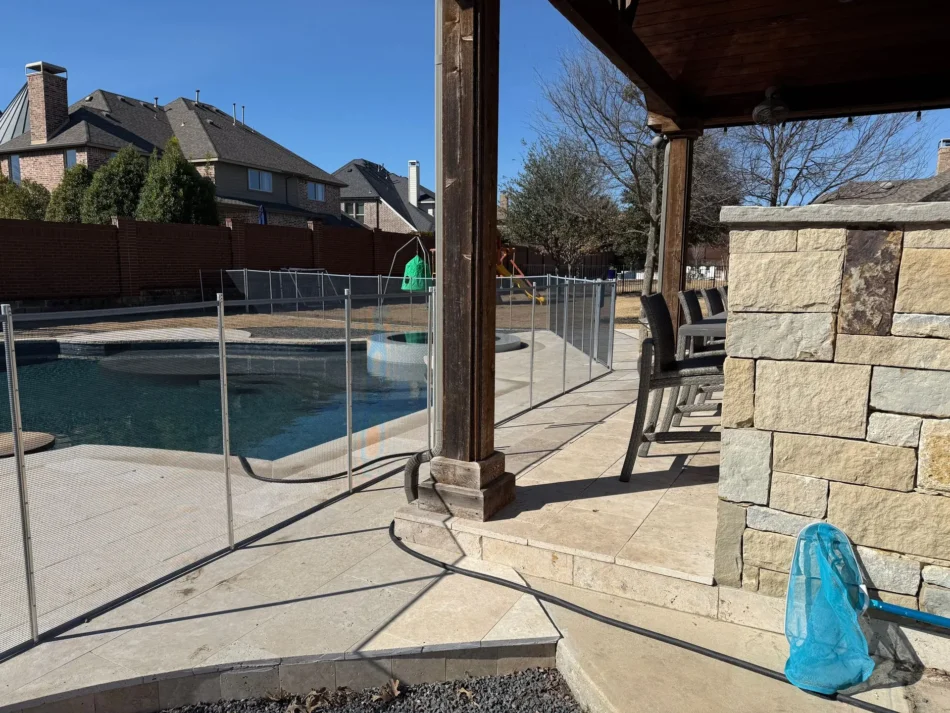
A pool fence in Frisco isn’t just a backyard accessory. It’s the law, and it exists to keep kids alive. Skip it, or put one up that misses code, and you’re gambling with something bigger than a fine. Frisco has grown fast over the past decade, and thousands of new pools now sit behind homes across the city. With that growth comes a shared responsibility: keep curious kids and unsupervised visitors away from open water. And that’s what this article covers: what Texas and Frisco codes actually require, what separates a compliant barrier from a decorative one, why self-latching gates matter, how to pick a fence material for North Texas weather, and what installation and upkeep typically run.
Texas and Frisco Pool Barrier Code Basics
Texas doesn’t have one statewide pool fence law. Every city writes its own building code, usually based on the International Swimming Pool and Spa Code or something close to it. Frisco follows that pattern. Any residential pool, spa, or hot tub with water deeper than 24 inches needs a barrier.
The core rules stay consistent across most North Texas cities: a barrier at least 48 inches tall, gaps no larger than 4 inches, and no footholds or handholds a child could climb. New pools need a permit, and an inspector checks the barrier before signing off. Retrofitting an older pool is common too. Plenty of families only find out their fence falls short when an inspector flags it, or when an insurance company asks for proof.
Frisco’s building department publishes its own checklist, and it’s worth pulling up before you order materials. Rules shift now and then. A fence that met code five years ago might not meet it today.
What Actually Makes a Fence Compliant
Height alone doesn’t make a barrier legal. A 5-foot fence with a 6-inch gap at the bottom fails inspection just as often as a 3-foot fence does. Compliance comes down to the whole system working together: height, spacing, gate hardware, and no climbable features anywhere near the fence line.
The usual failure points: patio furniture pushed too close to the fence, decorative lattice with wide openings, and horizontal rails that double as a ladder rung. Vertical pickets with narrow gaps tend to pass inspection more often than horizontal styles. There’s simply nothing to grip.
Homeowners researching options in Frisco usually find local expertise worth the phone call. Frisco pool fence installers, such as the team at Texas Pool Barrier’s Frisco service page, walk clients through the gaps that fail inspection most often in this area, and they adjust designs before installation instead of after a failed one.
Self-Closing, Self-Latching Gates
Gates cause more compliance failures than fence panels do. A gate propped open defeats the whole barrier, no matter how solid the fence itself is. Code requires gates to swing away from the pool, close on their own, and latch automatically, with the release mechanism set high enough that a small child can’t reach it, generally at least 54 inches off the ground.
Spring hinges wear out.
That one detail causes more re-inspections than anything else on a pool barrier. A hinge that worked fine at installation can loosen within a year or two, especially under daily use in Texas heat. So test your gate once a month. Push it open and watch whether it swings shut and latches on its own. That small habit catches the problem before it turns into a safety gap or a failed inspection.
Choosing a Fence Material for North Texas Conditions
Aluminum, wrought iron, glass, and mesh can all meet code when installed correctly, but they hold up differently once summer hits. Frisco summers bring long stretches above 100 degrees, and winter can still throw in an occasional ice storm. Aluminum resists rust and handles the heat well, without the upkeep iron demands.
Glass panel fencing has caught on with homeowners who want a clear view of the pool, and it can meet code when the panels are tempered and properly spaced. But it costs more upfront, and it shows fingerprints and water spots faster than metal does.
Removable mesh fencing suits families who want a barrier during pool season but would rather store it away once it gets cold. It’s usually the most budget-friendly option, and in many cases it installs without permanent posts. It does need more frequent tightening to stay taut and compliant.
Cost and Installation Considerations
Pricing for a compliant Pool Fence Frisco installation depends on yard size, material, and terrain. Aluminum and wrought iron typically cost more per linear foot than mesh, but they last longer and need less seasonal upkeep. Glass sits at the top of the price range.
Professional installation matters more here than on most fencing jobs, because a barrier that looks fine to the eye can still fail an inspector’s tape measure. A contractor who knows Frisco’s code checks gap spacing, gate hardware placement, and ground clearance before calling the job done.
Ongoing maintenance is minor, but don’t skip it. Check the latch tension, tighten loose posts after storms, and make sure no furniture or planters have crept close enough to the fence to create a foothold. All told, that’s about 15 minutes a season, and small habits like this keep a barrier doing the job it was built for.
Conclusion
Frisco’s pool safety rules exist because drowning is one of the leading causes of accidental death among young children in Texas, and a properly built barrier is one of the few things proven to cut that risk. Getting the details right, height, gap spacing, self-latching gates, material suited to local weather, is what separates a fence that looks the part from one that actually protects a family. And this is where Texas Pool Barrier comes in. The company designs and installs pool fencing built to meet Texas and Frisco code, handling everything from permit-ready gate hardware to material choices suited for North Texas heat, so homeowners don’t have to guess whether their barrier will pass inspection. A pool should be a source of enjoyment, not a liability waiting to happen. So before the next backyard gathering, it’s worth asking: does your fence actually meet code, or does it just look like it does?
This article was contributed by Texas Pool Barrier, a company specializing in the design and installation of state-compliant pool safety fences across Texas, including Frisco and the greater Dallas-Fort Worth area. The team works with homeowners, builders, and property managers to build barriers that meet local code requirements while fitting the look of the surrounding property. More information is available at texaspoolbarrier.com.


