 WhatsApp Us Now
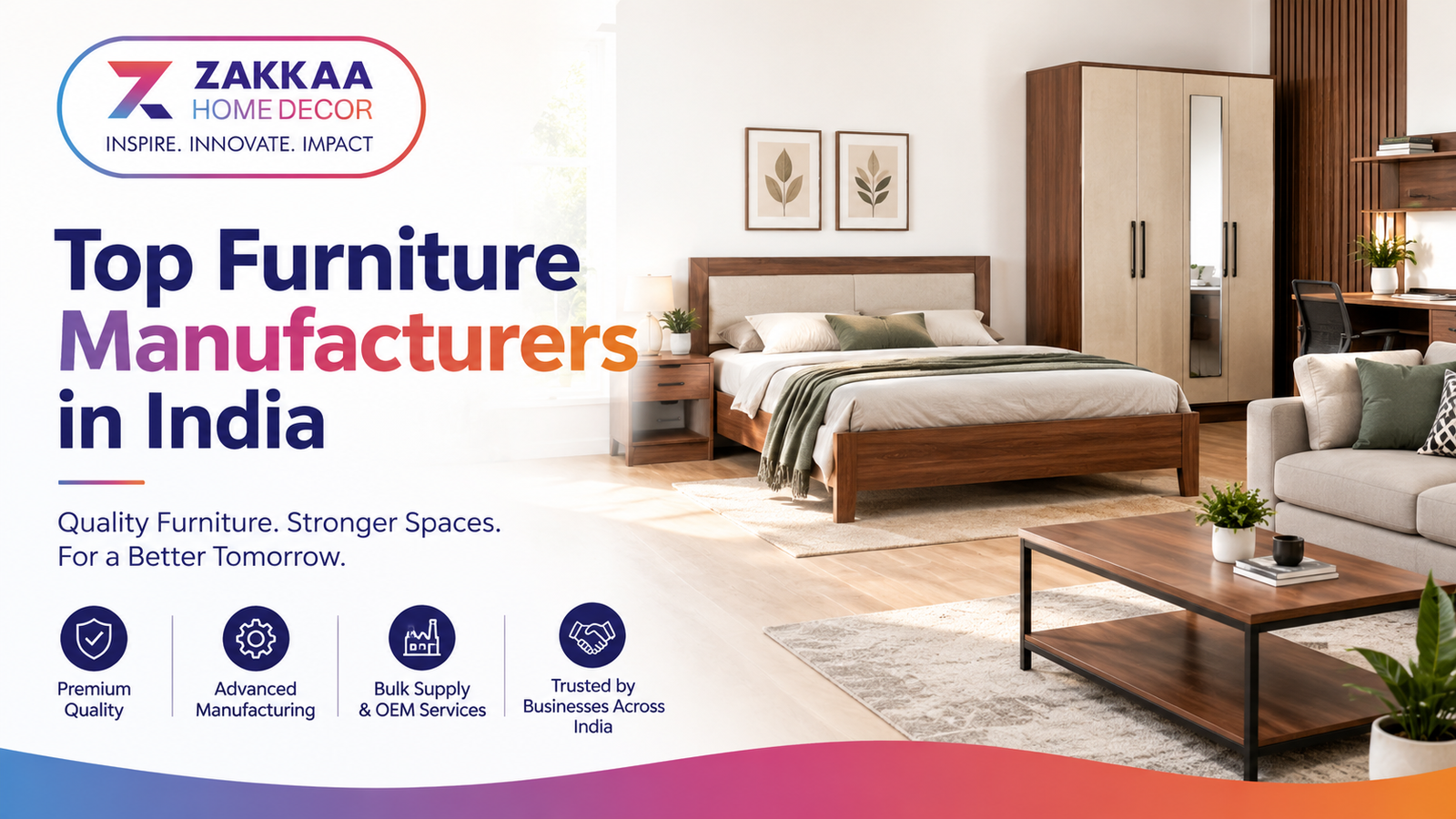
Finding the right furniture manufacturing company is essential for businesses looking for reliable, durable, and well-designed furniture in bulk. Whether you are a retailer, distributor, interior designer, builder, hospitality business, educational institution, or corporate buyer, your manufacturing partner can directly influence product quality, pricing, delivery timelines, and customer satisfaction. With increasing demand for customised and commercial furniture, selecting an experienced manufacturer with strong production capabilities has become more important than ever.
Why Choosing the Right Furniture Manufacturer Matters
Furniture is more than a functional product. It contributes to the appearance, comfort, productivity, and overall experience of a space. A dependable manufacturing partner can help businesses maintain consistent quality while meeting specific design and quantity requirements.
Working with the right manufacturer can provide several advantages, including:
- Consistent product quality
- Competitive bulk pricing
- Customised furniture solutions
- Reliable production timelines
- Large-scale manufacturing capabilities
- Better material selection
- Professional quality control
- OEM and private-label opportunities
For businesses purchasing furniture in large quantities, these factors can have a significant impact on profitability and long-term growth.
Key Factors to Consider When Selecting a Furniture Manufacturing Company
1. Manufacturing Experience
Experience is one of the most important factors when evaluating a furniture manufacturer. An established company is more likely to understand different materials, production techniques, market requirements, and quality standards.
Look for manufacturers with a proven track record in producing furniture for different industries. Experience in commercial, institutional, residential, and customised furniture can be particularly valuable for businesses with diverse requirements.
2. Product Range
A manufacturer with a broad product portfolio can make procurement easier. Instead of working with multiple suppliers, businesses may be able to source several furniture categories from a single manufacturing partner.
Depending on your requirements, you may need products such as:
- Office furniture
- Institutional furniture
- School furniture
- Hospital furniture
- Residential furniture
- Storage solutions
- Tables and desks
- Chairs
- Cabinets
- Custom furniture
A diverse product range can also make it easier to develop coordinated furniture solutions for large projects.
3. Customisation Capabilities
Every business has different requirements. Standard furniture may not always meet the dimensions, design, material, colour, or functionality required for a particular project.
A capable furniture manufacturer should be able to offer customisation according to specifications. This may include changes to:
- Dimensions
- Materials
- Colours
- Finishes
- Storage configurations
- Designs
- Branding
- Packaging
Custom manufacturing is particularly useful for businesses operating under their own brand or managing specialised commercial projects.
OEM and Private-Label Furniture Manufacturing
OEM manufacturing has become an important opportunity for brands that want to sell furniture without developing their own manufacturing infrastructure.
An experienced OEM partner can manufacture products according to a brand’s specifications while supporting requirements related to design, production, quality control, packaging, and bulk supply.
Private-label furniture can help businesses expand their product portfolios while reducing the investment required to establish manufacturing facilities.
For retailers and distributors, partnering with an established manufacturer can also provide greater flexibility when launching new furniture collections.
Manufacturing Infrastructure and Production Capacity
Large projects require manufacturers with adequate production infrastructure. Before selecting a supplier, businesses should evaluate the manufacturer’s facilities, machinery, workforce, production processes, and capacity.
A manufacturer with scalable production capabilities is better positioned to handle both regular orders and large project requirements.
Production capacity can become particularly important for:
- Government projects
- Educational institutions
- Hospitals
- Hotels
- Builders
- Corporate offices
- Retail chains
- Large distributors
Always discuss expected order volumes and delivery schedules with the manufacturer before finalising a partnership.
Quality Control Should Be a Priority
Furniture must be strong, functional, safe, and durable. Poor-quality materials or inconsistent manufacturing can lead to product damage, customer complaints, and increased replacement costs.
A reliable furniture manufacturing company should have quality-control procedures throughout the production process.
Important quality considerations include:
- Material quality
- Structural strength
- Surface finishing
- Hardware quality
- Dimensional accuracy
- Load-bearing capacity
- Assembly quality
- Packaging standards
Businesses should also ask about inspection procedures and quality standards before placing large orders.
Material Selection and Finishing
The choice of material has a major impact on furniture’s durability, appearance, and cost.
Depending on the application, manufacturers may work with materials such as metal, engineered wood, solid wood, laminates, and other specialised materials.
Commercial and institutional furniture often requires materials capable of handling frequent and intensive use. Residential furniture may place greater emphasis on aesthetics and finishes.
A good manufacturer should be able to recommend appropriate materials based on the intended application, budget, durability requirements, and design preferences.
Furniture Manufacturing for Different Industries
Furniture requirements vary considerably between industries.
Educational Institutions
Schools, colleges, universities, and training centres require furniture designed for regular use. Desks, chairs, storage units, laboratory furniture, and institutional solutions must balance durability with comfort and functionality.
Healthcare Facilities
Hospitals and healthcare facilities require furniture that supports hygiene, durability, functionality, and efficient use of space. Manufacturers supplying this sector need to understand the specific requirements of healthcare environments.
Corporate Offices
Modern offices require furniture that supports productivity and efficient space utilisation. Workstations, desks, conference tables, storage systems, and seating solutions can be customised according to workplace requirements.
Hospitality
Hotels, restaurants, resorts, and other hospitality businesses often require furniture that combines visual appeal with durability. Furniture may also need to match a particular interior theme or brand identity.
Retail and Commercial Spaces
Retail stores and commercial establishments often require customised furniture for displays, storage, customer areas, offices, and other applications.
The Importance of Delivery and Supply Chain Management
Quality furniture is not enough if orders are consistently delivered late. Businesses should evaluate the manufacturer’s ability to manage production schedules, inventory, logistics, and bulk dispatches.
Before entering into a long-term agreement, discuss:
- Minimum order quantities
- Production lead times
- Delivery schedules
- Packaging
- Transportation
- Bulk-order handling
- Replacement policies
A manufacturer with organised supply-chain processes can help businesses avoid unnecessary delays.
Why Indian Furniture Manufacturers Are Gaining Attention
India has developed a strong manufacturing ecosystem across numerous furniture categories. Manufacturers can serve domestic businesses as well as brands looking for OEM and bulk-production solutions.
The availability of skilled labour, manufacturing infrastructure, diverse materials, and established supply chains makes India an attractive sourcing destination for furniture.
For businesses, working directly with an Indian manufacturer can also provide better control over product specifications, pricing, production volumes, and customisation.
Zakkaa: Supporting Large-Scale Furniture Requirements
Zakkaa is an Indian manufacturing company providing furniture and other product solutions for businesses, institutions, distributors, and project requirements.
With established manufacturing capabilities and experience across multiple product categories, Zakkaa focuses on delivering practical, durable, and scalable solutions for different business requirements.
Its furniture manufacturing capabilities can support businesses looking for bulk furniture, institutional solutions, customised products, and OEM manufacturing partnerships.
For organisations that require furniture at scale, working with a manufacturer that understands production, quality, customisation, and supply requirements can simplify the procurement process.
Questions to Ask Before Choosing a Manufacturer
Before finalising a furniture manufacturing partner, businesses should ask:
- How many years of manufacturing experience do you have?
- What furniture categories do you manufacture?
- Do you provide customised furniture?
- Can you handle large-volume orders?
- Do you offer OEM or private-label manufacturing?
- What quality-control processes do you follow?
- What materials and finishes are available?
- What is your typical production lead time?
- What are your minimum order quantities?
- Can you support long-term bulk supply?
Getting clear answers to these questions can help buyers compare manufacturers more effectively.
Conclusion
Selecting the right furniture manufacturing company is an important decision for businesses that depend on quality, consistency, customisation, and timely delivery. Instead of focusing only on the lowest price, buyers should evaluate manufacturing experience, production capacity, product range, quality-control processes, customisation capabilities, materials, and supply-chain reliability.
For retailers, distributors, institutions, builders, hospitality businesses, and brands, an experienced manufacturing partner can provide the foundation for reliable furniture sourcing and long-term business growth. Whether you need standard products, customised furniture, OEM manufacturing, or large-scale institutional solutions, choosing a capable manufacturer can make the entire procurement process more efficient and cost-effective.


