 WhatsApp Us Now
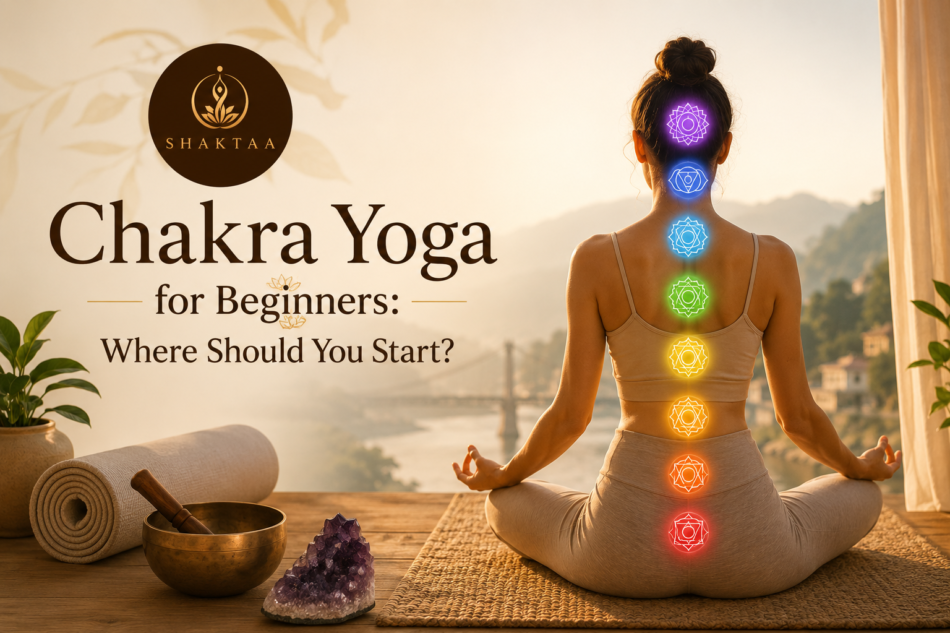
Starting a chakra yoga practice can feel confusing when you are new to both yoga and the traditional chakra system. With so many poses, breathing techniques, meditation methods, and chakra-related practices available, it is easy to feel that you need an advanced routine to begin. In reality, a beginner-friendly practice can be simple, gentle, and focused on awareness.
Start With Awareness
Before choosing specific poses for the chakras, begin by becoming aware of your body and mind. Sit quietly for a moment and notice your breathing, physical sensations, emotions, and general state of mind.
You can also choose a simple intention for your practice. Perhaps you want to feel more grounded, develop confidence, cultivate compassion, express yourself more freely, or simply create a sense of inner calm.
The intention gives your practice a direction without making it complicated.
Explore One Chakra at a Time
You do not need to work with all seven chakras in a single session. Beginners may find it easier to explore the seven chakras and their traditional associations one theme at a time.
For example, you might use grounding as the focus of one practice and compassion or self-expression as the focus of another. This approach allows you to slow down and understand how different practices affect your awareness.
Remember that chakra associations come from traditional yogic and tantric systems and can vary between traditions.
Combine Movement and Breath
Yoga becomes more mindful when movement is connected with breathing. Choose comfortable postures and move at a pace that allows you to remain aware of your breath.
Instead of forcing a particular sensation or expecting to “feel” energy moving through your body, pay attention to what is actually happening. Notice your posture, muscle tension, breathing rhythm, and overall sense of presence.
This makes the practice more grounded and personal.
Add a Few Minutes of Meditation
After your physical practice, transition into stillness. Sit comfortably and observe your natural breathing.
You could silently return to your intention or simply notice your thoughts without trying to control them. Even five minutes of quiet observation can help create a clear ending to your yoga session.
If you want to understand how different meditation methods work, exploring different approaches to meditation can also help you find a practice that feels appropriate for you.
Meditation does not have to mean completely emptying the mind. The goal for a beginner can simply be learning to observe without immediately reacting.
Keep Your Practice Consistent
One of the biggest mistakes beginners make is creating a routine that is too complicated to maintain. A short, regular practice can be more sustainable than an hour-long session that you rarely repeat.
Start with 10–20 minutes if that feels manageable. As you become more comfortable, you can gradually increase the duration or introduce new elements such as breathwork, meditation, or different yoga sequences.
Avoid Chasing Instant Results
Chakra yoga is not about achieving a perfect energetic state after one session. Your experience may be different from someone else’s, and some days may feel more focused than others.
Treat the practice as an opportunity for self-awareness, reflection, mindful movement, and personal exploration rather than a test you have to pass.
It is also important to distinguish traditional chakra teachings from modern scientific claims. Chakras are understood within spiritual and contemplative traditions; they are not scientifically established anatomical structures.
A Simple Beginner Routine
If you are unsure where to begin, try this simple sequence:
1. Sit quietly and set an intention.
2. Practice a few gentle yoga movements.
3. Coordinate comfortable movement with natural breathing.
4. Spend several minutes sitting in meditation.
5. Notice how your body and mind feel afterward.
The key is not to make your chakra yoga practice complicated. Start where you are, remain curious, and give yourself time to develop consistency.
Move mindfully. Breathe naturally. Sit quietly. Observe yourself.
