 WhatsApp Us Now
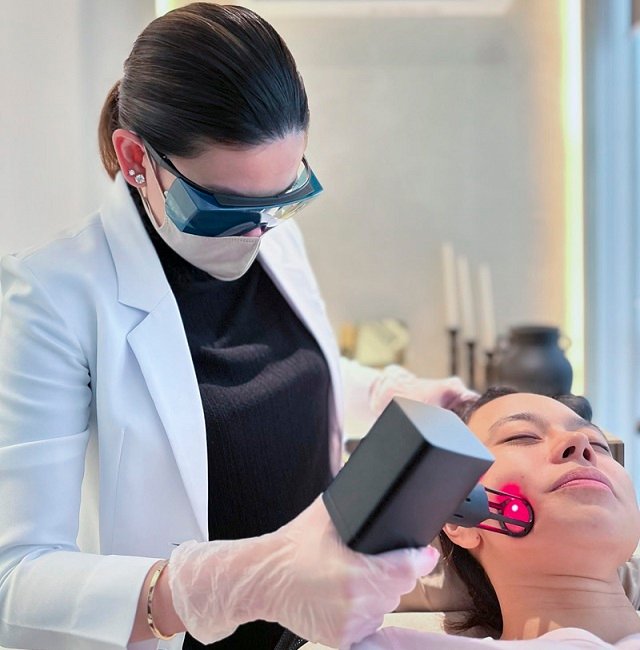
Endolift is a minimally invasive laser treatment that works beneath the skin using a very fine optical fiber. The fiber delivers controlled laser energy to selected tissues, creating a thermal effect that can support skin tightening, collagen remodeling, and, in suitable cases, localized fat reduction. The treatment is customized according to the patient’s skin condition, anatomy, treatment area, and aesthetic goals. For patients considering إندوليفت في دبي, a professional assessment is important to determine whether the procedure is appropriate.
How Is the Laser Energy Delivered?
Unlike surface laser treatments, Endolift delivers energy beneath the skin. A very fine optical fiber is inserted through a small entry point and guided through the targeted tissue.
The practitioner controls the movement of the fiber and the delivery of laser energy according to the treatment plan. This allows specific areas to be addressed without the large incisions associated with traditional facelift surgery.
How Does Endolift Tighten the Skin?
The laser creates controlled thermal effects within the treated tissues. This can cause immediate tissue contraction while also stimulating processes associated with collagen remodeling.
Collagen is an important structural protein responsible for skin firmness and elasticity. As collagen remodeling continues, the treated skin may gradually appear firmer and more refined.
How Does Endolift Affect Collagen?
Controlled laser energy can stimulate a wound-healing response in the treated tissues. This response may encourage the remodeling and production of collagen over time.
Because collagen remodeling is gradual, the results of Endolift generally develop progressively rather than appearing entirely on the day of treatment. Research has reported improvements in skin thickness, density, and elasticity following Endolift, although available studies vary in methodology and further high-quality research is needed.
Can Endolift Reduce Localized Fat?
In selected patients, Endolift can also target small areas of localized fat. The laser’s thermal effect can contribute to lipolysis, or the breakdown of fat cells, in appropriately selected treatment areas.
Common areas may include the under-chin region, jowls, and other areas where localized fullness affects facial definition. Endolift is not designed to replace weight-loss treatment or address large amounts of body fat.
How Does Endolift Improve Facial Contours?
By combining tissue tightening with selected treatment of localized fullness, Endolift may improve the appearance of facial contours.
The jawline, chin, lower face, and neck are commonly considered areas for treatment. The practitioner determines which areas are appropriate based on facial anatomy and the patient’s concerns.
What Happens to the Treated Tissue?
The laser energy produces controlled thermal effects beneath the skin. Depending on the treatment objective, this can support:
- Tissue contraction
- Collagen remodeling
- Improved skin firmness
- Localized fat reduction
- Refinement of facial contours
The response varies between individuals and depends on factors such as skin elasticity, age, treatment area, and the extent of laxity.
Why Is Endolift Considered Minimally Invasive?
Endolift uses a very fine optical fiber inserted beneath the skin instead of requiring large surgical incisions. This makes it less invasive than traditional facelift surgery.
The procedure can therefore be considered by selected patients who have mild to moderate skin laxity and want a less invasive approach to facial rejuvenation.
What Does Endolift Feel Like?
Patients may experience warmth, pressure, mild pulling, or movement beneath the skin while the fiber is being guided through the treatment area. Local numbing may be used depending on the treatment area and clinical approach.
After treatment, temporary redness, swelling, tenderness, bruising, or sensitivity may occur. Published reviews have generally described these effects as mild and temporary, although individual experiences can vary.
How Long Does the Endolift Effect Take to Develop?
Some changes may be noticeable relatively soon after treatment because of the immediate tissue response. However, collagen remodeling takes longer.
Patients may therefore notice continued improvement in skin firmness and contour over the following weeks and months. The final appearance depends on individual healing and collagen response.
What Areas Can Endolift Treat?
Endolift can be considered for several areas where mild laxity or localized fullness is present. Depending on individual suitability, these may include:
- Chin
- Under-chin area
- Jawline
- Jowls
- Lower face
- Cheeks
- Neck
Not every area is appropriate for every patient. Treatment should be planned after an examination by a qualified practitioner.
Is Endolift Suitable for Loose Skin?
Endolift may be appropriate for patients with mild to moderate skin laxity. It can provide tightening and contouring effects without the extensive tissue repositioning involved in a surgical facelift.
Patients with significant excess skin may require a different treatment approach. A consultation is necessary to determine whether the expected degree of improvement is realistic with Endolift.
How Does Endolift Differ From Surface Laser Treatment?
Surface laser treatments deliver energy primarily to the skin’s surface or superficial layers, while Endolift uses a fine fiber to deliver laser energy beneath the skin.
This difference allows Endolift to target deeper tissues and combine tissue-tightening effects with localized contouring when appropriate.
What Influences How Endolift Works?
The outcome depends on several factors, including:
- Laser wavelength and settings
- Fiber placement
- Treatment technique
- Treatment area
- Skin thickness
- Degree of laxity
- Individual collagen response
- Practitioner experience
Proper treatment parameters are important because excessive or inappropriate energy delivery can increase the risk of unwanted tissue effects.
Is Endolift Completely Risk-Free?
No. Although Endolift is minimally invasive, it still involves delivering laser energy beneath the skin. Potential complications can include burns, infection, pigmentation changes, contour irregularities, and temporary nerve-related symptoms.
Recent literature emphasizes appropriate patient selection, knowledge of anatomy, suitable treatment parameters, and careful technique.
Frequently Asked Questions:
Does Endolift Stimulate Collagen?
Yes. The controlled thermal effect produced beneath the skin can stimulate collagen remodeling, which may contribute to gradual improvements in firmness and skin quality.
Does Endolift Melt Fat?
Endolift can be used for localized fat reduction in selected areas. It is not a general fat-loss treatment and should not be considered a substitute for weight management.
Is Endolift a Surgical Facelift?
No. Endolift is minimally invasive and uses a fine optical fiber rather than the larger incisions and tissue repositioning involved in traditional facelift surgery.
Are Endolift Results Immediate?
Some early changes may be visible soon after treatment, but further improvement develops gradually as collagen remodeling takes place.
How Long Does Endolift Take to Work?
The timing varies between patients. Early changes can occur relatively quickly, while more developed results may become apparent over the following weeks and months.
Conclusion:
Endolift works by delivering controlled laser energy beneath the skin through a fine optical fiber. The resulting thermal effects can support tissue contraction, collagen remodeling, and localized fat reduction in appropriately selected patients. Because the treatment response develops over time, improvements in skin firmness and contour may continue after the initial recovery period. Proper assessment, individualized treatment settings, and an experienced practitioner are important for achieving an appropriate and safe treatment outcome.


