 WhatsApp Us Now
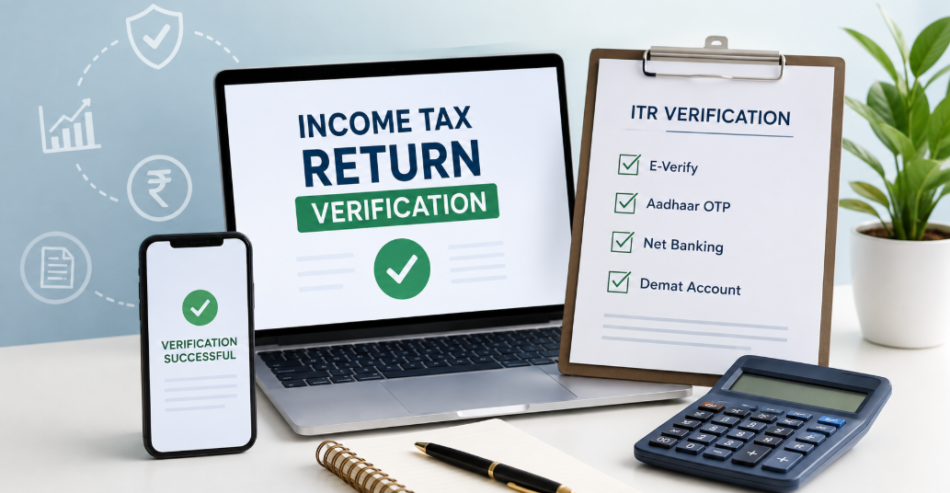
Filing an Income Tax Return (ITR) for the first time can be a daunting task, especially when it comes to verification. Understanding the process is crucial for ensuring compliance and avoiding any potential penalties down the line. In this article, we will guide you through the process of income tax return verification, making it simple and straightforward for first-time ITR filers.
What is Income Tax Return Verification?
Income tax return verification is the final step in the income tax filing process. After submitting your ITR, the Income Tax Department requires you to verify your return. This is an important step because the ITR is not considered valid unless it has been verified. In essence, verification serves as a confirmation that you have indeed submitted your tax details accurately.
As a first-time filer, you may wonder why this step is essential and how to complete it. Verification helps in ensuring that your tax details are correct and that you are standing in compliance with tax laws.
Steps to Verify Your Income Tax Return
1. Check Your ITR Status
Before proceeding with verification, you need to check the status of your tax return. You can do this on the official income tax department website. This will give you an idea of whether your return has been successfully submitted.
2. Choose Your Verification Method
You have several options for verifying your income tax return:
- E-Verification: This is the most convenient option and can be done through the Income Tax Department’s e-filing portal. You can use methods like Aadhaar OTP, Net Banking, or Electronic Verification Code (EVC) generated via your savings account.
- Physical Verification: You can send a signed copy of the ITR-V (acknowledgment) to the Bengaluru address of the Income Tax Department. Be mindful that this method must be completed within 120 days of filing your return.
- Verification via Bank Accounts: If you have linked your bank account with the Income Tax Department, you can use the EVC generated through your bank to verify your return.
3. Submit the Verification
Once you have chosen a suitable method, follow the instructions provided on the portal. Make sure that you enter any necessary identification details, such as your PAN, to complete the verification.
4. Confirmation of Verification
After submitting your verification request, you will receive a confirmation message or email from the Income Tax Department. It’s advisable to keep this confirmation for your records.
Income Tax Return Verification Made Easy
For first-time ITR filers, the process can seem overwhelming, but it’s designed to be user-friendly. By utilizing digital methods like e-verification, you can swiftly complete your income tax return verification without a lot of paperwork. More info on this can be found at Bajaj Finance Income Tax Verification.
Understanding How to Calculate Income Tax on Salary
Apart from understanding income tax return verification, first-time filers should also learn how to calculate income tax on salary with example. This can help them understand how taxable income is determined, estimate their tax liability, and gain a clearer understanding of their overall tax obligations.
Basic Calculation Steps
- Determine Your Gross Income: This is your total income before deductions, including salary, bonuses, and other sources of income.
- Identify Deductions: Identify eligible deductions under different sections (like Section 80C, 80D) to arrive at your Net Taxable Income.
- Apply Tax Rates: Tax slabs are defined for different income groups, so knowing your applicable slab will allow you to compute your tax liability.
Example Calculation
Let’s say you have a gross salary of ₹8,00,000.
- Gross Salary: ₹8,00,000
- Deductions:
- Under Section 80C (like ELSS, PPF): ₹1,50,000
- Health Insurance under Section 80D: ₹25,000
- Total Deductions: ₹1,75,000
- Net Taxable Income:
- Gross Salary – Deductions = ₹8,00,000 – ₹1,75,000 = ₹6,25,000
- Tax Calculation as per Slabs (FY 2023-2024):
- Up to ₹2.5 lakh: No tax
- ₹2.5 lakh to ₹5 lakh: 5% of ₹2.5 lakh = ₹12,500
- ₹5 lakh to ₹6.25 lakh: 20% of ₹1.25 lakh = ₹25,000
- Total Tax:
- ₹12,500 + ₹25,000 = ₹37,500
- Adding Cess: Don’t forget to add the health and education cess (4% of the total tax).
- Cess = 4% of ₹37,500 = ₹1,500
- Total Tax Payable = ₹37,500 + ₹1,500 = ₹39,000
In this example, your total income tax liability would be ₹39,000. More details on calculating income tax can be found in Bajaj Finance’s Guide on How to Calculate Income Tax on Salary.
Conclusion
Navigating through the income tax return verification process does not need to be a hassle for first-time filers. By familiarizing yourself with the process and understanding how to calculate your income tax, you can ensure that you fulfill your obligations correctly and efficiently. Utilize digital resources and tools available through platforms like Bajaj Finance to make your experience smooth and simple.
Embrace your journey as an ITR filer. With accurate information and the right approach, you’ll soon find that understanding income tax return verification can be simple and straightforward!


