 WhatsApp Us Now
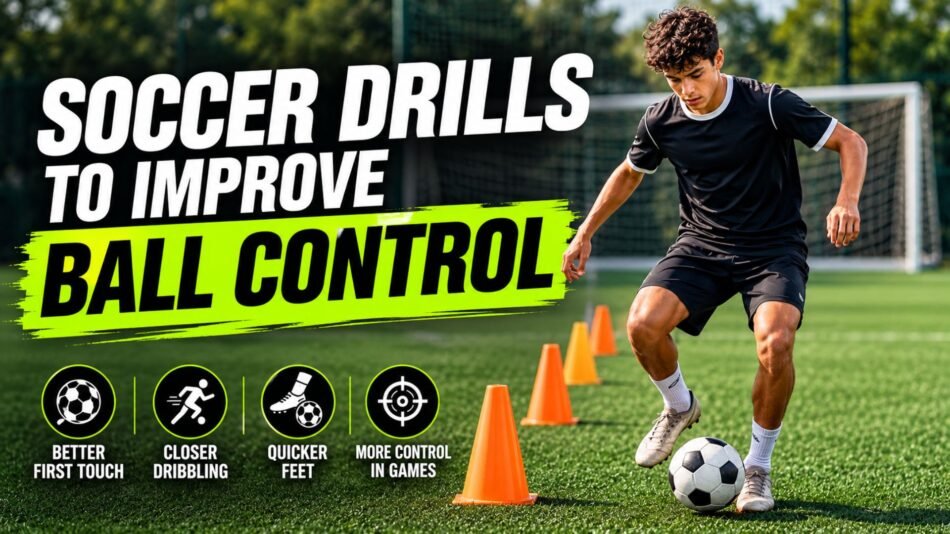
Improving at soccer is not about doing one difficult workout or learning a new trick every day. The biggest improvements usually come from doing simple things correctly and repeating them consistently.
For young players, this can be difficult. Between school, homework, team practices, matches, and family activities, there may not always be enough time for additional training. Even when players do have free time, they may not know exactly what they should practice.
A structured soccer training app can help solve both problems.
Instead of searching for random drills every time they want to practice, players can follow organized sessions designed around different areas of development. This makes individual training easier to manage and can help young athletes build a routine that works alongside their normal soccer schedule.
Why a Training Routine Matters in Soccer
Talent can help a player get started, but consistent practice is what develops long-term ability.
A young player who practices for a short period several times each week can gradually build stronger technical habits. Over time, those repetitions can improve how naturally the player controls, passes, dribbles, and strikes the ball.
A training routine also creates accountability.
When players know what they are supposed to practice, they are less likely to waste their training time deciding what to do.
The goal isn’t necessarily to train for hours every day. It is to create a realistic routine that a player can maintain throughout the season.
Start With the Fundamentals
Before moving into advanced skills, players should develop a strong technical foundation.
First Touch
A good first touch gives players more control and time.
Players should practice receiving the ball with both feet and controlling it into useful areas rather than simply stopping it.
Ball Mastery
Ball mastery exercises help players become comfortable with the ball.
Simple touches using the inside, outside, and sole of both feet can improve coordination and confidence.
Passing
Passing technique is another important foundation.
Players can work on accuracy, weight of pass, receiving, and using their weaker foot.
Dribbling
Good dribbling requires close control and quick changes of direction.
Players should learn to manipulate the ball while keeping their head up and remaining aware of the space around them.
Create a Weekly Soccer Training Schedule
A training routine doesn’t have to be complicated.
For example, a young player might organize additional individual training like this:
Monday – Ball Mastery
Focus on close touches and control using both feet.
Tuesday – Team Training
Concentrate on applying technical skills in team exercises.
Wednesday – Dribbling
Work on changes of direction, acceleration, and close control.
Thursday – Recovery
Allow the body to recover or perform light mobility work.
Friday – Passing and Shooting
Practice passing technique and finishing.
Weekend – Match or Light Technical Session
Use the match to apply skills in real situations, or complete a light session if there is no game.
The exact schedule should depend on the player’s age, existing training load, fitness, and recovery needs.
How the Best Soccer Training App Can Help
The Best Soccer Training App should make this type of routine easier to follow.
Rather than giving players a huge list of disconnected exercises, a useful platform should organize training into clear sessions.
This can help players understand:
- What to practice
- How to perform the exercise
- Which skills they are developing
- How to progress
- How consistently they are training
Structure is particularly useful for younger players because it removes some of the uncertainty from individual practice.
Training at Home Can Still Be Productive
Players don’t always need access to a professional training facility.
Many technical exercises can be performed with a soccer ball and a few cones.
A backyard, driveway, garden, or local park can provide enough space for many individual drills.
A Soccer app for training can make these sessions more productive by providing instructions and helping players follow a clear routine.
The quality of practice matters more than having expensive equipment.
Don’t Ignore the Weaker Foot
One common problem among young players is becoming too dependent on their stronger foot.
If a player always dribbles, passes, and shoots with the same foot, defenders can eventually predict their movements.
Individual training provides a good opportunity to work on the weaker foot.
Players can start with simple exercises:
- Short passes
- Controlled touches
- Basic dribbling
- First-touch exercises
- Short-range finishing
The objective isn’t to become equally strong with both feet immediately. The objective is to become comfortable enough with the weaker foot that it can be used confidently during a match.
Add Fitness to Technical Training
Soccer is not just a technical sport.
Players need to be able to move efficiently for the entire match.
Speed, agility, balance, coordination, and endurance all contribute to performance.
A balanced training routine can include appropriate physical exercises alongside technical work.
However, young players should avoid excessive training loads. Recovery, sleep, nutrition, and age-appropriate activity are all important parts of development.
Why Progress Tracking Can Improve Motivation
Young players don’t always notice their own improvement.
A skill may gradually become better without the player realizing how much progress has been made.
Progress tracking can help make development more visible.
Players can look back at completed sessions and see how consistently they have trained.
This can create a positive cycle:
Practice → Progress → Confidence → Motivation → More Practice
The objective isn’t to turn soccer into a competition against a number. Progress tracking should be used as a tool for motivation and personal development.
How a Soccer Coaching App Can Support Player Development
Individual players aren’t the only ones who can benefit from technology.
A Soccer coaching app can also provide useful support for coaches working with youth teams.
A coach may identify a specific weakness during a training session and encourage the player to work on it independently during the week.
For example, if a player struggles with their first touch, additional individual practice can reinforce that skill before the next team session.
This creates continuity between coaching and independent training.
What Should Parents Look for in a Soccer Training Platform?
Parents often have an important role in choosing training resources for young players.
A good platform should be easy to understand and appropriate for the player’s age and experience.
Parents should consider whether the platform provides:
Structured Sessions
Training should have a clear purpose rather than being a random collection of exercises.
Skill Variety
Players should have opportunities to develop different parts of their game.
Simple Instructions
Young players should be able to understand the exercises without constant assistance.
Progress Support
The platform should encourage players to remain consistent and recognize their development.
Flexibility
Training should fit around school, team practices, matches, and recovery.
How eCoachPro Can Fit Into a Player’s Routine
eCoachPro is designed to help young soccer players continue developing outside their regular team sessions.
Instead of treating individual practice as something players have to organize themselves, the platform provides a structured environment for continued training.
Players can work on areas such as:
- Ball control
- Dribbling
- Passing
- Shooting
- Fitness
- Agility
- Overall soccer development
This can be particularly useful for players who want to make better use of the time between team practices.
The platform also provides a convenient option for parents who want to encourage their children to train consistently without having to create new sessions themselves.
A Training App Should Complement Real Soccer
Technology can make training more accessible, but it should never replace playing the actual game.
Young players need real match experience to learn how to make decisions, communicate with teammates, deal with pressure, and understand different situations.
The ideal approach is to combine:
Individual training + Team coaching + Match experience
Each part contributes something different to player development.
Individual training improves technical repetition. Team coaching develops tactical understanding. Matches teach players how to apply those skills in real situations.
Avoid Trying to Improve Everything at Once
Another common mistake is trying to work on every skill during every session.
Players may attempt dribbling, shooting, passing, fitness, speed, tricks, and dozens of other exercises in one workout.
This can make training unfocused.
Instead, choose one or two main objectives for each session.
For example:
Session Goal: Improve close control
Spend the session working on ball mastery and dribbling rather than trying to cover every part of the game.
Focused practice makes it easier to understand what is improving and what still needs work.
Make Training Enjoyable
Young players are more likely to remain consistent when they enjoy the process.
Training shouldn’t feel like another school assignment.
Games, challenges, personal targets, and variety can make practice more engaging.
Players should also have time to simply play soccer without worrying about perfect technique.
Enjoyment is an important part of developing a lifelong relationship with the sport.
Final Thoughts
Becoming a better soccer player is a journey rather than a quick process.
Players don’t need to complete complicated workouts every day. They need a realistic routine, good coaching, quality practice, and enough patience to allow improvement to happen.
A well-designed Soccer Training App can make individual development easier by giving players structured sessions, useful exercises, and a clear way to stay consistent.
For coaches, a Soccer coaching app can help connect individual practice with team development. For parents, it can provide a practical way to support their child’s training routine.
And for young players looking for a convenient Soccer app for training, eCoachPro offers a dedicated platform focused on helping players develop their skills and build better training habits.
If you’re searching for the Best Soccer Training App to support consistent soccer development, explore eCoachPro and discover a more organized way to train.
Visit eCoachPro: https://www.ecoachpro.net/
Practice with purpose. Stay consistent. Keep improving. ⚽


