 WhatsApp Us Now
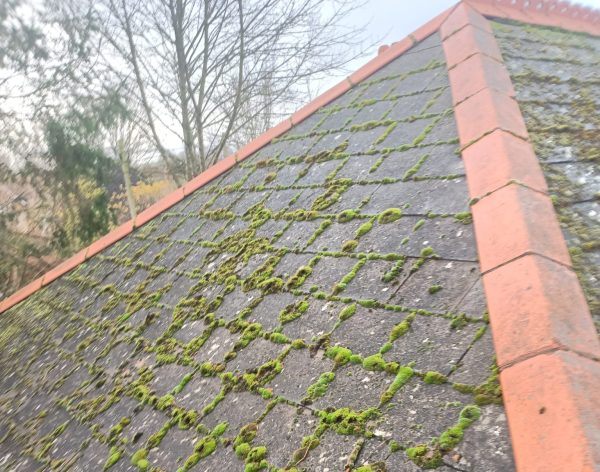
Seeing a little green moss on your roof may not seem like a serious problem. After all, moss is common across the UK, particularly on shaded roofs exposed to regular rain and moisture.
But what happens when a few patches turn into thick, established growth?
While moss does not automatically mean your roof will leak, heavy or unmanaged moss growth can contribute to roofing problems that may eventually allow water into your home. The risk is particularly concerning when moss grows around damaged or ageing tiles, roof joints and drainage areas.
Knowing the warning signs can help you deal with the problem before a minor maintenance issue develops into a costly repair.
Can Roof Moss Actually Cause a Leak?
Moss itself does not usually create a hole in a sound roof. However, extensive moss growth can create conditions that increase the risk of water-related damage.
Moss absorbs and holds moisture. When thick growth remains on roof tiles for long periods, the surface can stay damp for considerably longer after rainfall. Over time, this persistent moisture may contribute to the deterioration of certain roofing materials.
Moss can also grow around tile overlaps and other areas where water needs to drain efficiently. If growth becomes substantial, it can interfere with normal water flow and hide existing damage.
This is why it is more accurate to say that heavy moss can contribute to conditions associated with roof leaks, rather than claiming that moss will inevitably make a roof leak.
How Moss Can Contribute to Roofing Problems
There are several ways established moss growth can become a concern.
Moss Can Hold Moisture Against Roof Tiles
Moss behaves like a natural sponge. Thick growth can retain rainwater and keep the underlying surface damp.
For older or weathered roofing materials, repeated exposure to moisture can contribute to deterioration over time.
Moss Can Grow Around Tile Joints
Roof tiles are designed to work together to shed water. When moss becomes established around overlapping tiles, it can make it more difficult to see whether the tiles are sitting correctly.
If tiles have already become cracked, loose or displaced, moss can make the underlying problem harder to identify.
Moss Can Obstruct Drainage
Roof water needs to move efficiently towards gutters and drainage points. Large amounts of moss, leaves and other organic debris can interfere with this process.
If water cannot drain properly, it may collect in areas where it shouldn’t.
Moss Can Hide Existing Damage
Perhaps one of the biggest problems with extensive moss is that it can conceal what’s underneath.
A thick layer of growth may make it difficult to spot:
- Cracked tiles
- Broken tiles
- Displaced tiles
- Damaged flashing
- Deteriorating roof edges
- Blocked drainage areas
In other words, the moss may not be the original cause of a leak, but it can make an existing roofing problem much harder to notice.
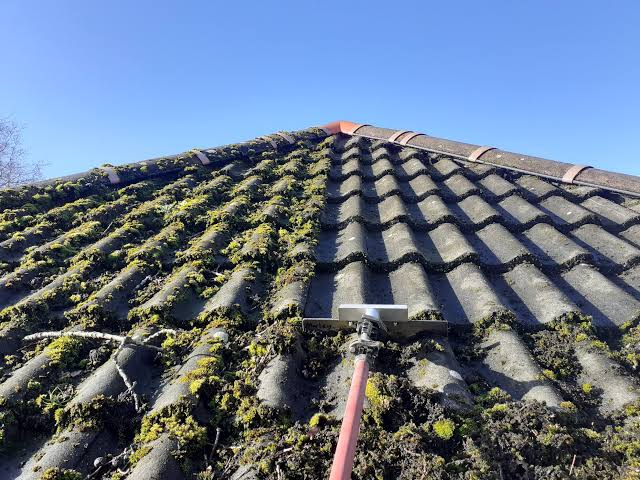
Signs Your Roof May Need Professional Moss Removal
Not every roof with a small amount of moss requires immediate treatment. However, certain signs suggest that professional assessment would be sensible.
1. Thick Moss Covers Large Areas
A few isolated patches are very different from thick moss covering multiple sections of the roof.
If moss has become widespread and forms a dense layer over the tiles, it is worth arranging an inspection rather than allowing it to continue growing.
2. Moss Is Growing Between or Under Tiles
Moss around tile overlaps deserves particular attention. If growth appears to be spreading into gaps or beneath overlapping tiles, professional assessment can determine whether it is affecting the roof’s condition.
Avoid pulling out stubborn growth yourself, particularly from a roof that is difficult or unsafe to access.
3. You Find Moss in the Gutters
Finding some moss debris in a gutter is not unusual after heavy weather or roof maintenance.
However, a recurring or substantial build-up may indicate that moss is coming away from the roof in significant quantities.
Blocked gutters can create their own water-management problems, so they should not be ignored.
4. You Notice Damp Patches Inside the Home
A damp patch on a ceiling or upper wall can be a warning sign of a roofing or water-ingress problem.
Importantly, you should not automatically blame moss. Water can enter through damaged tiles, flashing, valleys, gutters and other areas.
If you notice unexplained dampness, have the source investigated rather than simply arranging moss treatment.
5. You Can See Damaged or Displaced Tiles
If moss is accompanied by broken, cracked or displaced tiles, professional inspection becomes even more important.
Removing the moss may improve visibility, but any underlying roofing damage may also need to be addressed.
6. The Roof Looks Permanently Damp
A roof that remains visibly damp or heavily shaded for prolonged periods is more likely to support moss growth.
If the surface appears consistently wet and moss is spreading rapidly, it may be time to review your roof maintenance routine.
Should You Remove Roof Moss Yourself?
It is understandable to consider DIY moss removal, especially when the growth appears easy to reach.
The problem is that working on a roof presents obvious safety risks. Wet tiles can be slippery, and walking across them incorrectly can cause damage. Aggressive scraping can also break or dislodge some roofing materials.
For these reasons, extensive growth is generally better assessed by an experienced professional.
A moss cleaning service can inspect the roof, determine how established the growth is and recommend an appropriate method rather than simply removing everything as quickly as possible.
What Does Professional Moss Removal Involve?
The exact process depends on the roof’s material, condition, accessibility and level of moss growth.
A professional may begin by inspecting the roof for visible damage before determining the most suitable approach.
Depending on the circumstances, the work may include:
- Assessing the roof and identifying areas of heavy moss growth.
- Carefully removing established moss.
- Clearing loose debris from the roof and surrounding areas.
- Checking visible tiles and roof components for obvious problems.
- Cleaning gutters where this forms part of the service.
- Applying an appropriate treatment where required.
The objective should not simply be to make the roof look clean. Good maintenance should also take the condition of the roof into account.
What About Roof Moss and Lichen?
Moss isn’t the only form of organic growth that can appear on roof tiles. Lichen and algae can also develop, particularly in damp or shaded environments.
If your roof has several types of growth, roof moss and lichen removal may be more appropriate than treating moss alone.
Lichen can be particularly persistent because it attaches firmly to surfaces. The appropriate cleaning method will depend on the roof material and the extent of the growth.
Is a Roof Moss Cleaner Always Necessary?
You may come across various products marketed as a roof moss cleaner, but using a product without understanding the roofing material or application requirements can be risky.
A cleaning chemical that is suitable for one surface may not be appropriate for another. There are also considerations around runoff, surrounding plants and property features.
Professional cleaning companies should assess these factors before deciding whether a treatment is appropriate.
The goal should be effective and controlled cleaning, not simply using the strongest available product.
When Should You Call Roof Moss Removal Contractors?
Professional help is particularly worthwhile when:
- Moss covers a substantial part of the roof.
- The roof is steep or difficult to access.
- You have noticed broken or displaced tiles.
- Moss is repeatedly blocking gutters.
- You have concerns about possible water ingress.
- The roof is old or visibly weathered.
- You are unsure which cleaning method is safe for your tiles.
Experienced roof moss removal contractors can assess the situation and distinguish between a straightforward cleaning requirement and a problem that may require roofing repairs.
That distinction matters. Removing moss will not fix a cracked tile, damaged flashing or structural roofing problem.
Does Moss Removal Prevent Future Leaks?
Removing moss can help reduce some of the conditions associated with excessive organic growth, but it should not be considered a guarantee against leaks.
A roof can develop leaks for many reasons, including:
- Age-related deterioration
- Broken or displaced tiles
- Damaged flashing
- Blocked or damaged gutters
- Poorly sealed roof penetrations
- Storm damage
- Defective roof installation
This is why a proper inspection is important when there are signs of water ingress.
If the roof has already developed a leak, professional moss removal should not be treated as a substitute for repairing the actual source of the problem.
Roof Cleaning and Moss Treatment Should Be Appropriate for the Roof
There is no single cleaning method that is right for every roof.
The age, material, condition and pitch of the roof should all be considered before work begins. A method that may be suitable for robust surfaces could be inappropriate for fragile or weathered tiles.
A professional approach to roof cleaning and moss treatment should therefore focus on the condition of the roof rather than using the same process on every property.
This is particularly important for older UK homes, where roofing materials may have weathered significantly over the years.
How Often Should You Have Your Roof Checked?
There is no universal timetable for moss removal. Some roofs can remain relatively clear for years, while shaded properties surrounded by trees may develop moss much faster.
Instead of waiting for a fixed cleaning date, keep an eye on the condition of your roof.
A professional inspection is sensible if you notice rapidly increasing moss growth, damaged tiles, blocked gutters or signs of damp inside your property.
Regular maintenance can also make it easier to identify roofing problems before they become more serious.
What Should You Do If You Think Moss Is Causing a Leak?
Don’t assume that removing the moss will solve the problem.
If you notice a damp patch, dripping water or other evidence of water entering your home, the priority should be identifying where the water is coming from.
Arrange a professional roof inspection so the underlying cause can be established. If moss is extensive, it can then be removed using an approach suitable for the roof.
Reputable roof moss removal services should be able to explain what they have found and whether any separate roofing repairs appear necessary.
The Bottom Line
Roof moss is not automatically a sign that your roof is leaking, but extensive growth should not be ignored.
Heavy moss can retain moisture, interfere with drainage, conceal damaged tiles and contribute to conditions that may increase the risk of roofing problems. At the same time, leaks are often caused by issues that have nothing to do with moss.
The best approach is simple: don’t wait for a leak to become your first sign of a roofing problem.
If moss has become thick or widespread, or you’re seeing signs of dampness, damaged tiles or blocked gutters, have the roof assessed by a professional. Proper moss removal, combined with sensible roof maintenance, can help keep minor issues from becoming bigger and more expensive problems.


