 WhatsApp Us Now
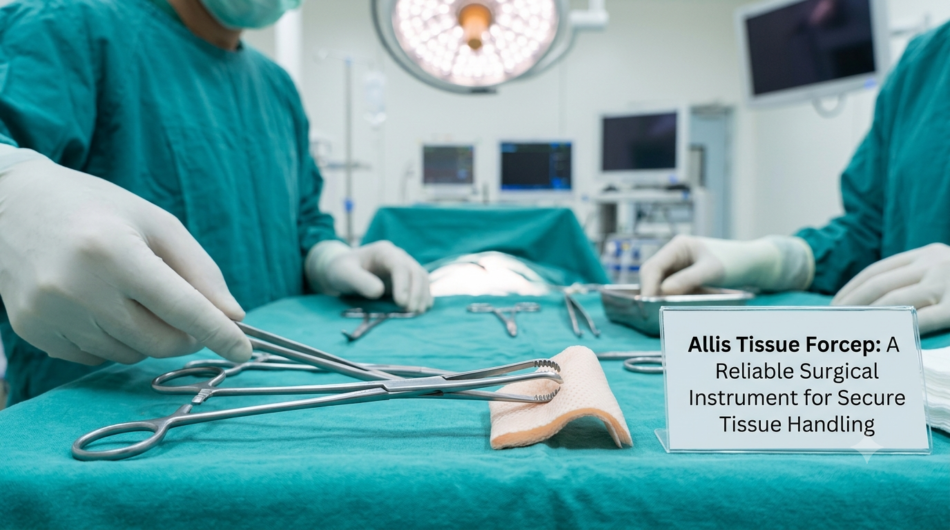
The Allis Tissue Forcep is a commonly used surgical instrument that helps surgeons hold and control tissue during medical procedures. It is known for its firm grip, locking mechanism, and durable design. These features make it a trusted tool in operating rooms across the world. Whether the procedure is simple or complex, surgeons rely on this instrument to improve control and accuracy.
Today, Surgical Allis forceps are used in many medical specialties because they provide a secure hold on tissue while allowing healthcare professionals to work comfortably. As one of the most dependable tissue forceps surgical instruments, the Allis Tissue Forcep plays an important role in supporting safe and successful surgeries.
What Is an Allis Tissue Forcep?
The Allis Tissue Forcep is a handheld instrument designed to grasp and hold tissue during surgery. It has ring handles, a ratchet locking mechanism, and jaws with small interlocking teeth that create a firm grip.
Once the instrument is locked, it holds tissue securely without requiring constant hand pressure. This allows surgeons to focus on other parts of the procedure while maintaining stable tissue positioning.
The instrument is usually made from medical-grade stainless steel, making it strong, durable, and suitable for repeated sterilization.
Uses in General Surgery
One of the main uses of the Allis Tissue Forcep is in general surgery. Surgeons use the instrument to hold soft tissue, fascia, and skin while performing different operations.
The firm grip helps expose the surgical area by keeping tissue away from the operating site. Better visibility allows surgeons to perform procedures more accurately and reduces unnecessary tissue movement.
The locking mechanism also keeps the tissue secure throughout the operation, making the procedure smoother and more efficient.
Uses in Gynecological Procedures
Surgical Allis forceps are widely used in gynecology because they provide excellent tissue control. During gynecological procedures, surgeons use the instrument to grasp the cervix, vaginal tissue, and other soft tissues that require secure positioning.
The instrument helps maintain stability while doctors perform delicate surgical tasks. This improves accuracy and supports safer treatment.
Its dependable grip makes it valuable in both routine and advanced gynecological surgeries performed in hospitals and specialized clinics.
Uses in Orthopedic Surgery
Orthopedic surgeons often use the Allis Tissue Forcep during procedures involving bones and surrounding soft tissues. The instrument is helpful for holding muscles, connective tissue, and fascia while surgeons work around the surgical site.
Proper tissue control improves access to deeper structures without constant manual assistance. This allows the surgical team to work more efficiently while maintaining clear visibility throughout the procedure.
Its durable construction also makes it suitable for repeated use in demanding orthopedic operations.
Uses in Plastic and Reconstructive Surgery
Plastic surgeons require precise control over tissues during cosmetic and reconstructive procedures. Surgical Allis forceps help maintain tissue stability while surgeons reshape or repair different body areas.
The locking mechanism keeps tissue securely in position, allowing the surgeon to focus on making accurate adjustments. This contributes to better surgical precision and smoother workflow.
Although different procedures require different instruments, the Allis Tissue Forcep remains useful whenever a firm tissue grip is necessary.
Uses in Abdominal Surgery
Abdominal procedures often require careful handling of different tissue layers. The Allis Tissue Forcep is commonly used to grasp tissue during operations involving the stomach, intestines, and abdominal wall.
The instrument helps keep tissues separated while providing better access to the surgical field. Stable tissue positioning allows surgeons to complete procedures with greater accuracy and confidence.
Its reliable performance makes it an important instrument during many abdominal surgeries.
Uses in Tissue Removal Procedures
One of the common uses of the Allis Tissue Forcep is holding tissue that will be removed during surgery. The instrument’s toothed jaws provide a secure grip, preventing tissue from slipping during removal.
This allows surgeons to perform tissue excision more efficiently while maintaining proper control throughout the procedure.
Because the instrument holds tissue firmly, it is especially useful when stability is required during surgical removal.
Uses During Wound Closure
During wound closure, healthcare professionals often need steady tissue positioning while placing sutures. The Allis Tissue Forcep helps hold tissue edges together so surgeons can complete accurate stitching.
Stable tissue alignment improves the appearance of the wound after healing and supports better surgical results.
The locking feature also reduces hand fatigue during longer wound closure procedures.
Uses in Medical Training
Medical schools and surgical training centers also use the Allis Tissue Forcep to teach students proper tissue handling techniques. Learning how to use surgical instruments correctly is an important part of medical education.
Students practice tissue control, instrument handling, and surgical coordination using training models before working with patients.
Using high-quality instruments during education helps future healthcare professionals develop confidence and practical skills.
Uses in Veterinary Surgery
The Allis Tissue Forcep is not limited to human healthcare. Veterinary surgeons also use the instrument during surgical procedures performed on animals.
Its secure grip allows veterinarians to handle tissues safely while performing different operations. The instrument is useful in both routine and specialized veterinary surgeries because of its dependable design and strong performance.
This wide range of applications shows the versatility of the instrument across different healthcare fields.
Importance of Tissue Forceps Surgical Instruments
High-quality tissue forceps surgical instruments are essential for successful medical procedures. They help surgeons hold tissue securely while improving visibility and reducing unnecessary movement.
Reliable forceps support better surgical precision, smoother workflow, and improved patient safety. They also reduce the need for repeated adjustments during procedures, allowing healthcare professionals to work more efficiently.
Among the many available tissue forceps, the Allis Tissue Forcep remains one of the most trusted because of its strong grip and dependable locking mechanism.
Proper Care for Long-Term Use
To maintain the quality of the Allis Tissue Forcep, proper cleaning and sterilization are essential. After every procedure, the instrument should be cleaned carefully to remove blood, tissue, and other surgical materials.
The ratchet should remain open during washing to allow complete cleaning of all surfaces. After drying, the instrument should be sterilized according to hospital guidelines.
Regular inspection also helps identify worn teeth, loose joints, or damaged locking systems before they affect performance. Proper maintenance increases the lifespan of the instrument and ensures reliable use in future procedures.
Conclusion
The Allis Tissue Forcep is an important instrument used in many types of surgical procedures. Its secure grip, locking mechanism, and durable construction make it valuable in general surgery, gynecology, orthopedic surgery, plastic surgery, abdominal surgery, veterinary medicine, and medical training. These wide-ranging applications demonstrate why it remains one of the most trusted instruments in modern healthcare.
High-quality Surgical Allis forceps continue to support healthcare professionals by providing dependable tissue control and improving surgical accuracy. As one of the most reliable tissue forceps surgical instruments, the Allis Tissue Forcep helps create safer procedures, better workflow, and improved patient outcomes. Choosing a well-manufactured instrument and maintaining it properly ensures consistent performance and long-term value in every operating room.
More info: AMG Medical


