 WhatsApp Us Now
Introduction
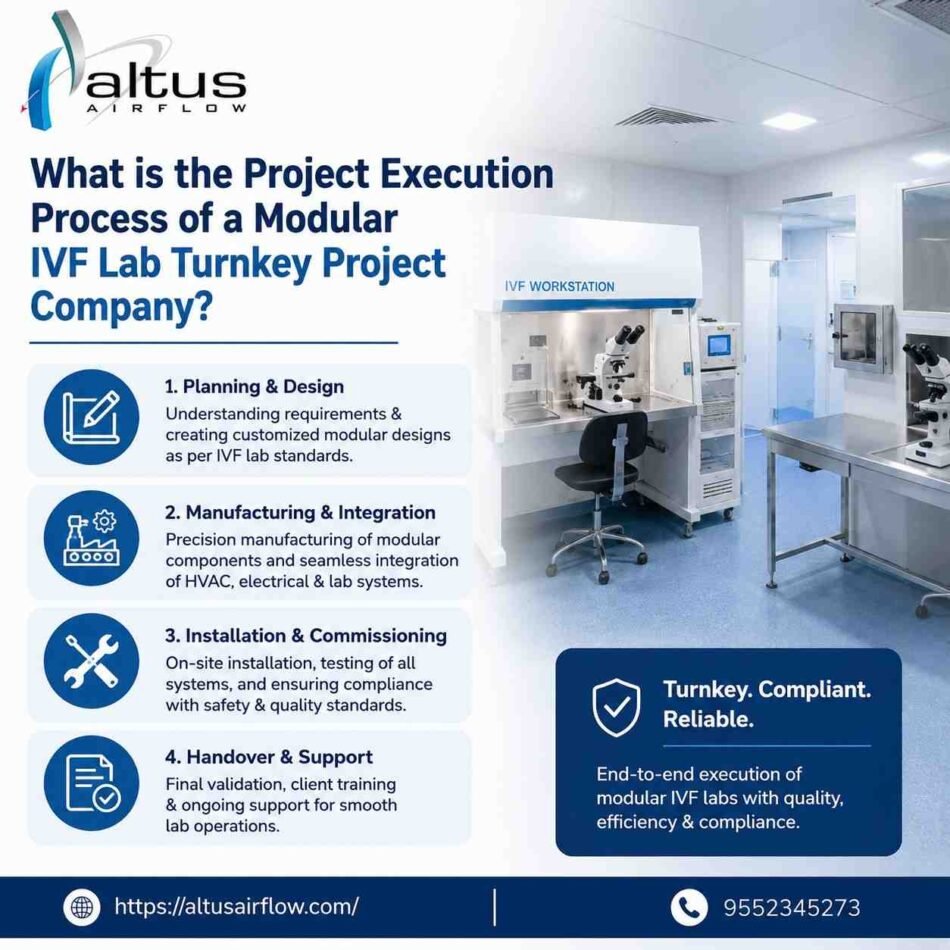
A Modular IVF Lab Turnkey Project Company plays a vital role in designing, engineering, constructing, and commissioning advanced IVF laboratories for fertility clinics, hospitals, and reproductive healthcare centers. Since IVF procedures demand highly controlled environmental conditions, every stage of project execution must be carefully planned and implemented. From initial consultation and laboratory design to HVAC installation, cleanroom integration, modular interiors, and final validation, a turnkey approach ensures seamless coordination and high-quality outcomes.
The project execution process involves multiple technical disciplines working together to create an IVF laboratory that supports sterility, precision, operational efficiency, and compliance with healthcare standards. A professionally executed turnkey project minimizes delays, optimizes resources, and delivers a laboratory that is ready for clinical operations.
Understanding Turnkey IVF Laboratory Projects
A turnkey IVF laboratory project means that a single organization manages the complete development process. Instead of coordinating multiple contractors, healthcare facilities work with one experienced partner responsible for planning, engineering, procurement, installation, testing, and final handover.
This integrated approach ensures better communication, consistent quality, and efficient project management throughout every stage.
Typical turnkey services include:
- Project planning
- Architectural design
- Modular laboratory construction
- HVAC engineering
- Laminar airflow systems
- HEPA filtration
- Medical utility integration
- Electrical systems
- Laboratory furniture installation
- Testing and commissioning
Step 1: Initial Consultation and Requirement Analysis
The execution process begins with a detailed consultation. During this phase, specialists meet with hospital administrators, fertility experts, and project stakeholders to understand the laboratory’s objectives.
Important discussions include:
- Laboratory capacity
- Available building space
- Clinical workflow
- Equipment requirements
- Budget considerations
- Future expansion plans
This stage establishes the project scope and creates a strong foundation for successful execution.
Step 2: Site Survey and Feasibility Assessment
Before design begins, engineers conduct a comprehensive site inspection.
The assessment includes:
- Structural evaluation
- Utility availability
- Existing HVAC systems
- Electrical infrastructure
- Plumbing arrangements
- Accessibility for equipment installation
The collected information helps determine the most suitable engineering solutions for the project.
Step 3: Concept Planning and Laboratory Design
After understanding the project requirements, the engineering team prepares conceptual layouts for the IVF laboratory.
A Modular IVF Lab Turnkey Project Company focuses on designing spaces that maximize workflow efficiency while maintaining strict environmental control.
The design generally includes:
- Embryology laboratory
- Andrology laboratory
- Cryopreservation area
- Sample handling rooms
- Equipment zones
- Sterile circulation pathways
- Storage areas
Careful planning ensures smooth movement of personnel and laboratory materials.
Step 4: Engineering Design and Technical Planning
Once the layout is approved, detailed engineering begins.
Technical planning covers:
HVAC Design
Heating, ventilation, and air conditioning systems are engineered to maintain:
- Stable temperature
- Controlled humidity
- Proper air exchange
- Positive pressure environments
HEPA Filtration
High-efficiency filtration systems remove airborne contaminants to protect sensitive reproductive procedures.
Laminar Airflow Systems
Laminar airflow creates clean working environments with controlled air movement, reducing contamination risks.
Electrical Infrastructure
Power distribution is designed to support laboratory equipment, emergency backup systems, and uninterrupted operations.
Utility Integration
The engineering team coordinates electrical, plumbing, communication, and laboratory utility systems to ensure seamless functionality.
Step 5: Procurement and Material Selection
Following engineering approval, procurement activities begin.
Materials selected for modular IVF laboratories typically include:
- Modular wall panels
- Laboratory ceilings
- Cleanroom doors
- Observation windows
- Chemical-resistant flooring
- Laboratory furniture
- Lighting systems
- HVAC equipment
High-quality materials contribute to durability, hygiene, and long-term performance.
Step 6: Modular Construction and Installation
Installation is one of the most critical phases of the project.
Professional teams install:
- Modular wall systems
- Ceiling panels
- Flooring
- HVAC ductwork
- HEPA filtration units
- Laminar airflow systems
- Laboratory furniture
- Utility connections
Each installation activity follows carefully planned schedules to maintain project timelines.
Step 7: Laboratory Furniture Integration
Modern IVF laboratories require specially designed furniture that supports efficient laboratory operations.
Furniture typically includes:
- Laboratory benches
- Workstations
- Storage cabinets
- Equipment tables
- Ergonomic seating
- Utility stations
Proper furniture placement enhances workflow while maintaining organized workspaces.
Step 8: Environmental Control System Installation
Environmental stability is essential for IVF success.
A professional Modular IVF Lab Turnkey Project Company installs advanced monitoring systems to maintain:
- Temperature
- Humidity
- Air cleanliness
- Pressure differentials
- Airflow consistency
Continuous environmental control helps support laboratory reliability and procedural accuracy.
Step 9: Equipment Coordination
Although specialized IVF equipment may be supplied separately, turnkey companies coordinate equipment placement during installation.
This includes planning for:
- Incubators
- Microscopes
- Laminar flow workstations
- Cryogenic storage systems
- Laboratory analyzers
- Imaging equipment
Proper positioning improves operational efficiency and accessibility.
Step 10: Testing and Validation
After installation, every system undergoes detailed testing.
Validation activities include:
- Airflow verification
- HEPA filter integrity testing
- Temperature validation
- Humidity monitoring
- Pressure testing
- Electrical safety inspections
- Lighting verification
Testing ensures that all laboratory systems operate according to design specifications.
Step 11: Quality Assurance
Quality assurance is maintained throughout project execution.
Quality control procedures include:
- Material inspections
- Installation verification
- Performance testing
- Engineering reviews
- Documentation
Continuous monitoring helps maintain consistency and project reliability.
Step 12: Staff Orientation and Handover
Before project completion, the engineering team provides guidance regarding laboratory systems and infrastructure.
This stage includes:
- System demonstrations
- Maintenance recommendations
- Operational documentation
- Technical support information
A complete handover ensures that the healthcare facility can begin laboratory operations confidently.
Advantages of a Turnkey Execution Process
Choosing a turnkey project approach offers several advantages.
These include:
Single Point of Responsibility
One company manages the entire project, simplifying communication and coordination.
Better Quality Control
Consistent supervision helps maintain high construction and engineering standards.
Faster Project Completion
Integrated planning minimizes delays between project phases.
Cost Optimization
Efficient coordination reduces unnecessary expenses caused by multiple contractors.
Improved System Compatibility
All laboratory components are designed to function together effectively.
Importance of Professional Project Management
Successful IVF laboratory development requires careful project management.
Experienced teams coordinate:
- Engineering disciplines
- Procurement schedules
- Construction activities
- Technical inspections
- Installation timelines
Proper management ensures smooth execution while maintaining quality standards.
Future-Ready IVF Laboratory Design
Modern fertility centers require laboratories capable of adapting to technological advancements.
Future-ready project planning includes:
- Expandable laboratory layouts
- Energy-efficient infrastructure
- Flexible utility systems
- Smart monitoring technologies
- Modular expansion capability
These features help laboratories remain efficient as operational needs evolve.
Conclusion
The project execution process of a Modular IVF Lab Turnkey Project Company involves systematic planning, engineering, construction, installation, validation, and final handover. Every stage contributes to creating a reliable laboratory environment that supports precise reproductive procedures, operational efficiency, and long-term performance. A structured turnkey approach ensures that all systems are properly integrated while maintaining quality, safety, and compliance.
With extensive expertise in modular healthcare infrastructure and laboratory engineering, Altus Airflow delivers comprehensive turnkey IVF laboratory solutions tailored to the specific needs of fertility centers. Through innovative engineering, advanced environmental control systems, and quality-driven execution, Altus Airflow helps healthcare facilities establish modern IVF laboratories designed for excellence.
Frequently Asked Questions (FAQs)
1. What is the project execution process of a Modular IVF Lab Turnkey Project Company?
A Modular IVF Lab Turnkey Project Company manages the complete project lifecycle, including consultation, design, engineering, procurement, modular construction, HVAC installation, environmental control, testing, validation, and final handover.
2. Why is a site survey important before starting an IVF laboratory project?
A site survey helps evaluate available space, utilities, structural conditions, and engineering requirements for proper planning.
3. What systems are installed during an IVF laboratory project?
Typical systems include HVAC, HEPA filtration, laminar airflow, modular interiors, lighting, electrical infrastructure, laboratory furniture, and environmental monitoring systems.
4. Does a turnkey company provide laboratory furniture?
Yes. Most turnkey projects include laboratory benches, storage cabinets, workstations, ergonomic furniture, and utility stations.
5. Why is environmental control important in IVF laboratories?
Environmental control maintains stable temperature, humidity, air quality, and pressure conditions necessary for sensitive reproductive procedures.
Read Our Previous Blog —————>Do Andrology Room Setup Services include laboratory furniture?


