 WhatsApp Us Now
Introduction
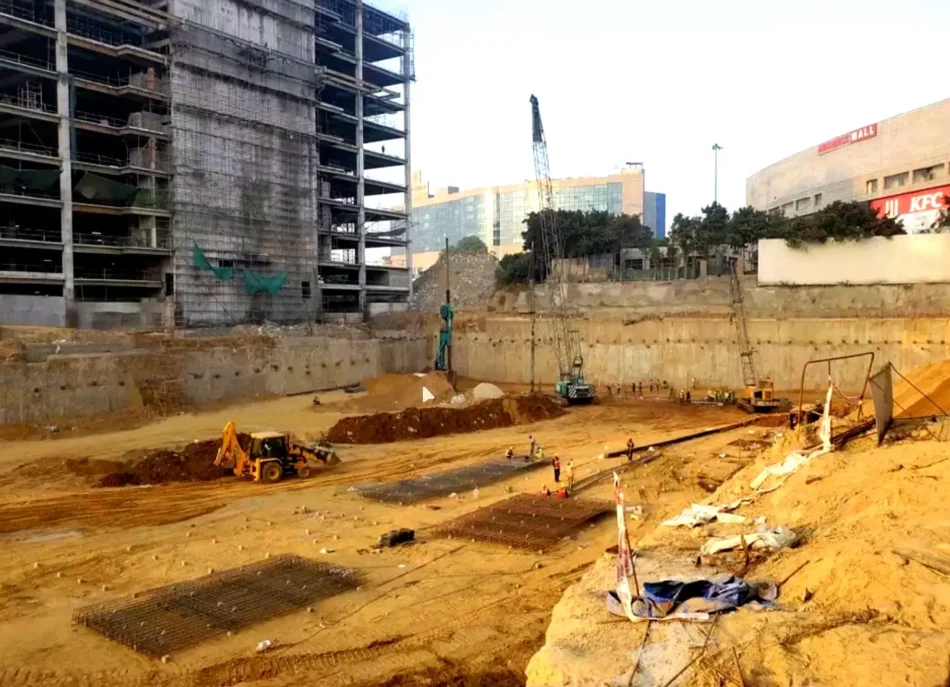
As cities continue to expand vertically, basement construction has become an essential part of residential, commercial, industrial, and infrastructure developments. Deep basements provide valuable space for parking, utilities, storage, and mechanical services. However, constructing below ground level presents significant engineering challenges, particularly when dealing with weak soil, groundwater, and nearby structures.
Basement soil stabilization is the process of strengthening the ground before and during excavation to ensure structural stability and construction safety. At Prime Engineer, we deliver advanced basement soil stabilization solutions using modern geotechnical techniques that improve soil performance, minimize risks, and support long-lasting structures.
What is Basement Soil Stabilization?
Basement soil stabilization is a geotechnical engineering process that improves the strength and stability of soil surrounding a basement excavation. It prevents soil movement, reduces settlement, controls groundwater-related issues, and creates a safe environment for construction.
The appropriate stabilization method depends on several factors, including soil type, groundwater level, excavation depth, and structural load requirements.
Why Basement Soil Stabilization is Essential
Constructing a basement without proper soil stabilization can result in serious structural and safety issues. Weak or unstable soil may cause excavation collapse, excessive settlement, cracks in nearby buildings, and costly project delays.
Proper basement soil stabilization offers several benefits:
- Improves soil strength and bearing capacity
- Prevents excavation failure
- Controls ground settlement
- Protects adjacent buildings and utilities
- Enhances construction safety
- Reduces long-term maintenance costs
- Supports durable foundation systems
Common Challenges During Basement Construction
Every construction site has unique geotechnical conditions that require customized engineering solutions.
Weak Soil
Loose sand, soft clay, or filled ground often lacks sufficient strength to support deep excavations.
High Groundwater
Water pressure can weaken soil and create unstable excavation conditions.
Nearby Buildings
Urban construction projects often take place close to existing structures that must be protected from settlement and vibration.
Deep Excavations
As excavation depth increases, lateral earth pressure also increases, requiring engineered retaining systems.
Basement Soil Stabilization Techniques
At Prime Engineer, every stabilization solution is designed after a detailed geotechnical investigation to ensure maximum safety and efficiency.
Soil Nailing
Steel reinforcement bars are installed into the excavation face and secured with grout. Shotcrete is then applied to create a reinforced soil structure capable of resisting lateral earth pressure.
PT Anchoring
Post-tension anchors provide additional support to retaining walls by transferring loads into stable ground. This technique is ideal for deep basement excavations where additional stability is required.
Diaphragm Walls
Diaphragm walls act as permanent retaining structures that support deep excavations while controlling groundwater intrusion.
Pile Foundations
Pile foundations transfer building loads to stronger soil layers located at greater depths, making them suitable for projects with weak surface soils.
Ground Improvement
Depending on project conditions, soil may be strengthened through mechanical compaction, cement stabilization, lime stabilization, or chemical treatment to improve its engineering properties.
Benefits of Basement Soil Stabilization
Increased Structural Stability
Improved soil provides a reliable foundation for basement walls and structural elements.
Higher Load-Bearing Capacity
Stabilized soil safely supports heavier buildings and infrastructure.
Reduced Settlement
Ground improvement minimizes uneven settlement that can damage structures.
Improved Excavation Safety
Stable excavation walls reduce the risk of collapse during construction.
Protection of Nearby Structures
Controlled soil movement helps safeguard neighboring buildings, roads, and underground utilities.
Faster Construction
Well-stabilized ground allows construction activities to proceed smoothly with fewer interruptions.
Long-Term Durability
Proper stabilization enhances the overall life and performance of the completed structure.
Applications of Basement Soil Stabilization
Basement soil stabilization is widely used in:
- Residential apartments
- Commercial buildings
- Office complexes
- Shopping malls
- Hotels
- Hospitals
- Industrial facilities
- Metro stations
- Underground parking structures
- Government infrastructure projects
- Educational institutions
How Prime Engineer Delivers Reliable Soil Stabilization Solutions
At Prime Engineer, every project begins with a comprehensive site assessment and geotechnical investigation. Our experienced engineers evaluate soil characteristics, groundwater conditions, excavation depth, and surrounding structures before selecting the most suitable stabilization method.
Our approach includes:
- Detailed soil investigation
- Engineering design and planning
- Selection of appropriate stabilization techniques
- Modern drilling and construction equipment
- Strict quality control
- Continuous monitoring throughout excavation
- Compliance with industry safety standards
This systematic process ensures safe execution and dependable long-term performance for every basement construction project.
Why Choose Prime Engineer?
Prime Engineer is a trusted name in geotechnical engineering and basement construction solutions. With expertise in soil stabilization, piling, diaphragm walls, PT anchoring, excavation support, and ground improvement, we provide complete engineering solutions tailored to each project’s requirements.
Our strengths include:
- Experienced geotechnical engineers
- Advanced construction equipment
- Customized engineering solutions
- Timely project execution
- High-quality workmanship
- Strong focus on safety and durability
- End-to-end project support
Whether the project involves a commercial tower, residential development, or industrial facility, Prime Engineer delivers reliable solutions that ensure safe and stable construction.
Conclusion
Basement soil stabilization is a critical step in the success of any underground construction project. Strengthening the soil before excavation improves safety, protects surrounding structures, reduces settlement, and ensures long-term structural performance.
With extensive expertise in geotechnical engineering and modern stabilization techniques, Prime Engineer provides dependable basement soil stabilization solutions for projects across India. From initial site investigation to final execution, our team is committed to delivering safe, efficient, and durable foundation systems that support the success of every construction project.


