 WhatsApp Us Now
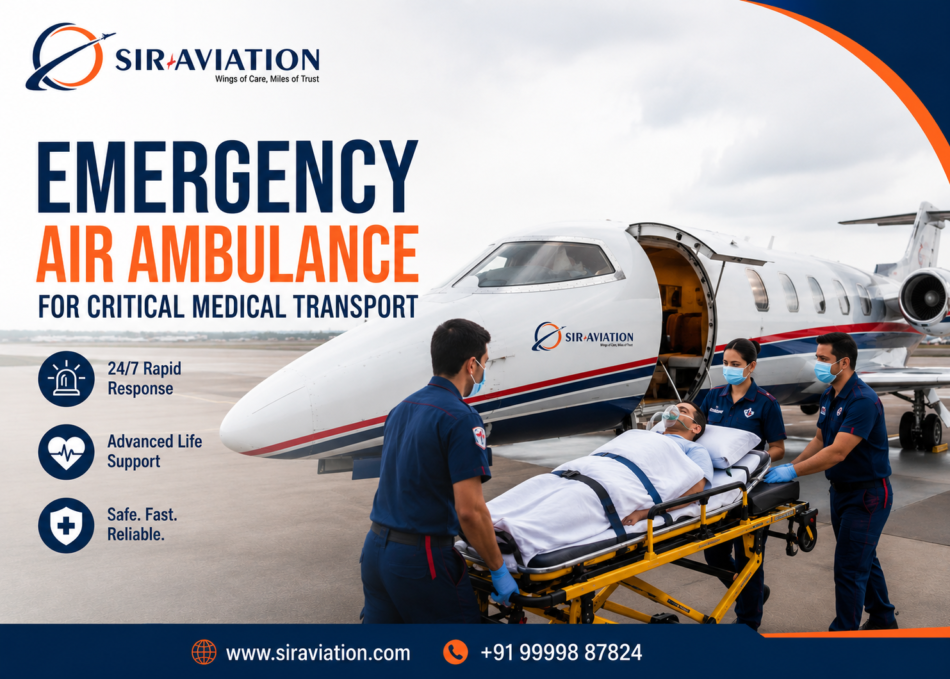
Medical emergencies demand speed, precision, and seamless coordination. When a patient requires urgent transfer over long distances or from locations with limited healthcare access, an Air Charter equipped as an Air Ambulance Service for Medical Transport becomes one of the most dependable solutions. SIR Aviation specializes in providing rapid medical evacuation supported by experienced healthcare professionals, advanced life-support equipment, and carefully coordinated flight operations. Every mission is planned to reduce transit time while ensuring patient comfort, safety, and uninterrupted medical care from departure to destination.
Why Emergency Air Ambulance Services Matter
Every minute plays a crucial role during a medical emergency. Patients suffering from severe trauma, cardiac conditions, neurological disorders, respiratory failure, or complications after surgery often require specialized treatment available only at advanced medical centers.
Ground transportation may not always be suitable due to traffic congestion, geographical barriers, or the long distance between hospitals. Air ambulance services bridge this gap by enabling patients to reach appropriate medical facilities in significantly less time.
Emergency medical flights are designed specifically for patient transportation rather than passenger travel. The aircraft cabin is configured as a flying intensive care unit, allowing medical professionals to continue treatment throughout the journey.
This combination of speed, accessibility, and continuous medical attention has made emergency air ambulance services an essential component of modern healthcare logistics.
What Is an Emergency Air Ambulance?
An emergency air ambulance is a specially configured aircraft equipped with medical equipment and staffed by trained healthcare professionals. Unlike standard charter flights, these aircraft are designed to provide advanced patient care during transportation.
Depending on the patient’s medical condition, the onboard team may include:
- Critical care physicians
- Emergency medicine specialists
- Intensive care nurses
- Paramedics
- Respiratory therapists
These professionals continuously monitor the patient’s condition while administering medications, oxygen therapy, ventilation support, cardiac monitoring, and emergency interventions whenever necessary.
The aircraft functions as an extension of the hospital rather than simply a mode of transportation.
Situations That Require Emergency Air Medical Transport
Emergency air ambulances are used in numerous situations where immediate access to advanced healthcare is essential.
Severe Trauma Cases
Patients involved in road accidents, industrial injuries, or falls may require rapid transfer to trauma centers equipped with specialized surgical teams.
Cardiac Emergencies
Heart attacks, cardiac arrest recovery, and patients requiring urgent cardiac surgery often benefit from faster transportation to advanced cardiac hospitals.
Stroke Patients
Time-sensitive neurological treatment significantly improves outcomes. Air transportation minimizes delays in reaching stroke care facilities.
Organ Transplant Transfers
Patients awaiting organ transplantation frequently require urgent transportation to transplant centers within strict medical timelines.
Neonatal and Pediatric Care
Premature infants and critically ill children often need specialized pediatric intensive care units unavailable in every hospital.
High-Risk Pregnancy
Complications during pregnancy may require immediate transfer to tertiary healthcare facilities with maternal and neonatal specialists.
Respiratory Emergencies
Patients dependent on ventilators or advanced respiratory support require carefully managed transport under expert supervision.
Post-Surgical Complications
Unexpected complications following surgery sometimes require immediate transfer to specialty hospitals for advanced treatment.
Advantages of Emergency Air Ambulance Services
Rapid Transportation
Air ambulances dramatically reduce travel time compared to road transportation over long distances.
Continuous Medical Care
Medical treatment continues throughout the journey without interruption.
Access to Specialized Hospitals
Patients can be transferred directly to healthcare facilities offering advanced treatment unavailable locally.
Professional Medical Teams
Highly experienced physicians, nurses, and paramedics accompany each patient based on medical requirements.
Advanced Medical Equipment
Aircraft are equipped with sophisticated monitoring and life-support systems similar to hospital intensive care units.
Better Patient Outcomes
Earlier access to specialized treatment often contributes to improved recovery prospects.
Long-Distance Medical Transfers
Intercity and interstate transportation becomes significantly faster while maintaining patient stability.
Medical Equipment Available Onboard
Modern air ambulances are equipped with advanced medical technology capable of handling complex medical situations.
Common equipment includes:
- Portable ventilators
- Cardiac monitors
- Defibrillators
- Syringe infusion pumps
- Oxygen supply systems
- Suction units
- Emergency medications
- Patient monitoring systems
- Intensive care stretchers
- Portable diagnostic equipment
The equipment selected for each mission depends on the patient’s medical condition and physician recommendations.
How Emergency Air Ambulance Operations Work
Successful patient transportation depends on detailed planning and coordination among multiple teams.
Initial Medical Assessment
Medical coordinators gather detailed information regarding the patient’s condition, diagnosis, hospital location, and destination.
Flight Planning
Aviation specialists determine the most efficient flight route while considering weather conditions, airport accessibility, and required permissions.
Medical Team Preparation
The medical crew prepares medications, equipment, and emergency supplies based on the patient’s needs.
Hospital Coordination
The departure hospital and receiving hospital remain in constant communication to ensure a smooth transition of patient care.
Ground Ambulance Integration
Ground ambulances transport the patient between hospitals and airports at both ends of the journey.
Continuous Patient Monitoring
Medical professionals monitor vital signs throughout the flight while providing necessary treatment.
Safe Hospital Handover
Upon arrival, the patient is transferred directly to the receiving medical team without unnecessary delays.
Importance of Specialized Medical Teams
Technology alone cannot ensure successful medical transportation.
Experienced healthcare professionals remain the foundation of every emergency air ambulance mission.
These specialists are trained to manage:
- Cardiac emergencies
- Trauma stabilization
- Ventilator-dependent patients
- Critical care monitoring
- Emergency medications
- Airway management
- Pediatric emergencies
- Neonatal care
Their ability to make immediate clinical decisions during flight significantly improves patient safety.
Choosing the Right Aircraft
Different medical situations require different aircraft configurations.
Helicopter Ambulance
Ideal for short-distance emergency evacuations, remote locations, and accident sites where immediate access is necessary.
Fixed-Wing Air Ambulance
Suitable for interstate, international, and long-distance patient transfers. These aircraft offer greater cabin space, improved medical facilities, and longer flight range.
Selecting the appropriate aircraft depends on:
- Distance
- Airport availability
- Patient condition
- Required medical equipment
- Weather conditions
Safety Standards in Air Medical Transport
Patient safety remains the highest priority during every mission.
Professional operators follow strict aviation and healthcare protocols covering:
- Aircraft maintenance
- Medical equipment inspections
- Infection control procedures
- Crew certification
- Emergency response planning
- Medication management
- Communication protocols
- Flight risk assessment
Regular quality audits help maintain operational excellence and consistent patient care.
Benefits of Professional Flight Coordination
Emergency medical transportation involves much more than flying an aircraft.
Dedicated coordination teams manage:
- Hospital communication
- Airport permissions
- Flight clearances
- Medical documentation
- Ground ambulance scheduling
- Family communication
- Medical team deployment
- Real-time operational updates
This coordination minimizes delays while allowing healthcare professionals to focus entirely on patient care.
Air Ambulance Services Across India
India’s diverse geography presents unique transportation challenges.
Mountain regions, islands, rural districts, and congested metropolitan areas often require faster alternatives to road transportation.
Emergency air ambulance services support patient transfers between:
- District hospitals
- Specialty hospitals
- Trauma centers
- Cardiac institutes
- Cancer hospitals
- Organ transplant facilities
- Pediatric hospitals
- Multispecialty medical centers
This network improves healthcare accessibility across different regions.
Why Medical Equipment Configuration Matters
Every patient has unique medical requirements.
Aircraft interiors are customized according to the patient’s condition before departure.
Configurations may include:
- Advanced cardiac support
- Intensive care monitoring
- Neonatal transport systems
- Isolation units
- Respiratory support equipment
- Multiple infusion devices
Proper preparation reduces medical risks during transport while ensuring uninterrupted treatment.
Family Support During Medical Transfers
Medical emergencies create emotional stress for families.
Professional air ambulance providers assist families by offering:
- Clear communication
- Mission updates
- Travel coordination
- Medical information sharing
- Documentation assistance
- Hospital coordination
Transparent communication helps families remain informed throughout the transportation process.
Why Choose SIR Aviation?
SIR Aviation combines aviation expertise with medical excellence to deliver dependable emergency patient transportation.
Our commitment focuses on rapid response, operational precision, patient safety, and compassionate medical care.
Key strengths include:
- Experienced aviation professionals
- Skilled critical care medical teams
- Advanced onboard medical equipment
- Efficient mission coordination
- Long-distance patient transport capability
- Hospital-to-hospital transfer support
- Round-the-clock emergency availability
- Patient-centered service approach
Every mission is handled with careful planning and clinical precision to ensure patients receive uninterrupted medical attention from departure until arrival.
Final Thoughts
Emergency medical transportation requires much more than speed. It demands coordination, experienced healthcare professionals, advanced medical technology, and reliable aviation support working together without compromise. Whether transferring trauma patients, cardiac emergencies, neonatal cases, or critically ill individuals, an expertly managed air ambulance service provides access to specialized treatment when time matters most. SIR Aviation remains committed to delivering dependable emergency medical transport with safety, efficiency, and compassionate care at every stage of the journey.
Frequently Asked Questions
1. What is an Air Ambulance Service for Medical Transport?
An Air Ambulance Service for Medical Transport is a medically equipped aircraft that transfers critically ill or injured patients while providing continuous treatment by trained healthcare professionals during the flight.
2. When should an air ambulance be used instead of road transport?
Air ambulance services are recommended when patients require urgent long-distance transfer, rapid access to specialized hospitals, or advanced medical monitoring that cannot be delayed during travel.
3. What medical equipment is available inside an air ambulance?
Most air ambulances include ventilators, cardiac monitors, defibrillators, infusion pumps, oxygen systems, emergency medications, suction units, and intensive care stretchers.
4. Can critically ill patients travel safely in an air ambulance?
Yes. Patients are accompanied by experienced doctors, nurses, or paramedics who continuously monitor vital signs and provide critical care throughout the journey.
5. Why choose SIR Aviation for emergency medical transport?
SIR Aviation offers professionally coordinated emergency medical flights, experienced critical care teams, advanced onboard medical equipment, rapid response capabilities, and a strong commitment to patient safety during every transfer.


