 WhatsApp Us Now
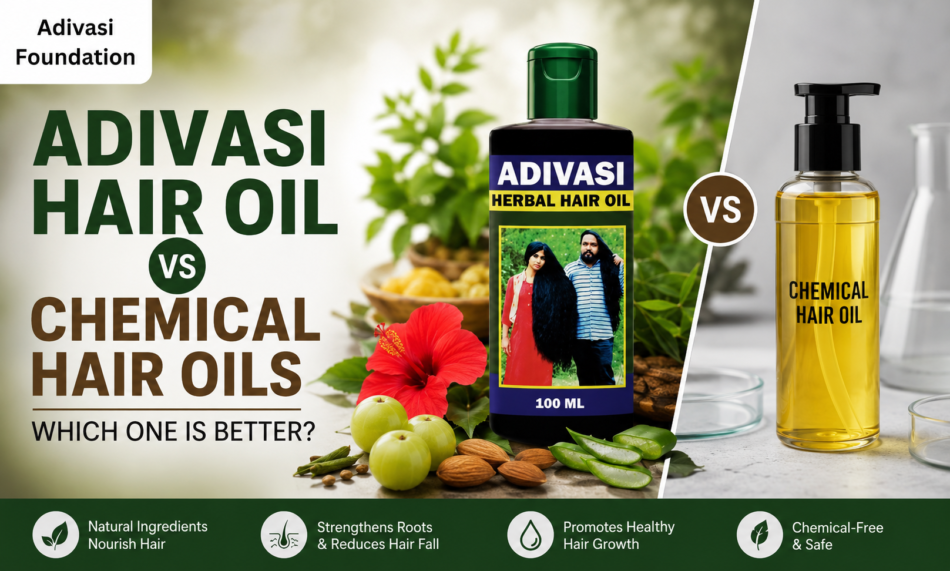
Hair care has become a priority for people who want healthier, thicker, and shinier hair. Exposure to pollution, stress, poor eating habits, excessive heat styling, and harsh hair products has increased the demand for solutions that restore hair naturally. Many consumers often compare natural herbal oils with chemical-based hair oils before making a purchase. One of the most searched comparisons is Adivasi Hair Oil vs Chemical Hair Oils because people want to know which option offers better long-term benefits.
Adivasi Foundation believes that hair care should focus on nourishing the scalp instead of only improving the appearance of hair. Traditional herbal ingredients have been trusted for generations because they support healthy hair growth without relying on synthetic chemicals. Chemical hair oils, on the other hand, are often formulated to provide quick cosmetic results, but they may not always address the root causes of common hair concerns.
This comparison explains the differences between both options so you can choose the one that matches your hair care needs.
Why Hair Oil Selection Matters
Hair oil is more than just a styling product. A good hair oil helps nourish the scalp, improve blood circulation, reduce dryness, strengthen hair roots, and support healthier hair over time.
Choosing the wrong oil can lead to problems such as:
- Dry scalp
- Excessive hair fall
- Product buildup
- Weak hair roots
- Increased breakage
- Lack of natural shine
Selecting an oil that supports scalp health is essential because healthy hair starts from healthy roots.
What Is Adivasi Hair Oil?
Adivasi Hair Oil is a traditional herbal hair oil prepared using carefully selected natural herbs, medicinal plants, and botanical ingredients known for supporting hair health. These herbal formulations are inspired by tribal knowledge passed down through generations.
Adivasi Foundation focuses on creating hair oil that works with nature instead of relying on artificial ingredients. The goal is to nourish the scalp, strengthen roots, improve hair texture, and promote healthier hair naturally.
Depending on the formulation, herbal ingredients may include:
- Bhringraj
- Amla
- Brahmi
- Hibiscus
- Neem
- Aloe Vera
- Fenugreek
- Coconut Oil
- Sesame Oil
- Various medicinal herbs
These ingredients work together to provide complete nourishment for the scalp and hair.
What Are Chemical Hair Oils?
Chemical hair oils usually contain mineral oils, artificial fragrances, preservatives, silicones, synthetic colors, and other laboratory-made ingredients. Many commercial products focus on improving the immediate appearance of hair rather than providing long-term nourishment.
Some chemical hair oils contain herbal extracts, but their formulations often rely heavily on synthetic compounds to improve shelf life, texture, fragrance, and shine.
While they may make hair appear smoother instantly, the long-term impact depends on the overall ingredient composition.
Adivasi Hair Oil vs Chemical Hair Oils: Ingredient Comparison
One of the biggest differences lies in the ingredients.
Adivasi Hair Oil
- Natural herbal extracts
- Plant-based oils
- Traditional preparation methods
- Botanical ingredients
- Herbal nourishment
- Minimal synthetic additives
Chemical Hair Oils
- Mineral oil
- Synthetic fragrance
- Artificial colors
- Preservatives
- Silicones
- Petroleum-derived ingredients
Natural ingredients generally focus on supporting scalp health, while synthetic ingredients often improve product appearance and texture.
Which Oil Nourishes the Hair Better?
Healthy hair requires nourishment from the roots.
Adivasi Hair Oil penetrates the scalp with herbal ingredients that help moisturize, strengthen follicles, and maintain scalp balance. Many herbs contain natural vitamins, antioxidants, and nutrients that support healthier hair.
Chemical hair oils often coat the hair strands with a protective layer, creating temporary softness and shine. While this improves appearance, it may not always provide deep nourishment.
People looking for long-term scalp care usually prefer herbal formulations because they support healthier roots.
Impact on Hair Growth
Hair growth depends on several factors, including genetics, nutrition, scalp health, and daily hair care.
Herbal oils support scalp circulation and help maintain a healthy environment for hair follicles.
Natural ingredients commonly associated with healthy hair include:
- Bhringraj for stronger roots
- Amla for nourishment
- Brahmi for scalp care
- Hibiscus for healthy strands
- Fenugreek for conditioning
Chemical hair oils generally do not stimulate hair growth unless they contain active ingredients specifically formulated for that purpose.
Effect on Hair Fall
Hair fall is one of the biggest concerns among both men and women.
Adivasi Hair Oil supports stronger roots through herbal nourishment. Regular scalp massage with herbal oils may improve circulation and reduce dryness that contributes to hair breakage.
Chemical hair oils may reduce friction between hair strands, but they do not always address underlying scalp issues responsible for excessive hair fall.
For long-term hair strength, nourishing the scalp remains more beneficial than simply coating the hair.
Scalp Health Comparison
Healthy hair begins with a healthy scalp.
Benefits of Herbal Oils
- Moisturize dry scalp
- Reduce roughness
- Improve scalp comfort
- Maintain natural oil balance
- Support cleaner scalp conditions
Chemical Hair Oils
Some products may contain ingredients that cause scalp irritation in sensitive individuals.
Potential concerns include:
- Heavy buildup
- Greasy feeling
- Artificial fragrance sensitivity
- Difficulty washing away product residue
The experience varies depending on the formulation and individual skin type.
Long-Term Hair Care Benefits
One of the biggest differences in the comparison between Adivasi Hair Oil vs Chemical Hair Oils is consistency.
Natural herbal oils usually require regular application before noticeable improvements become visible. Their purpose is gradual nourishment.
Chemical oils often provide immediate cosmetic improvements, including:
- Temporary shine
- Smooth texture
- Easier styling
However, lasting hair health depends on continuous nourishment rather than temporary appearance.
Which Oil Is Better for Dry Hair?
Dry hair lacks moisture and flexibility.
Adivasi Hair Oil provides natural oils that help restore softness while supporting scalp hydration.
Many herbal ingredients help reduce moisture loss and improve overall hair texture.
Chemical hair oils may temporarily reduce dryness by coating hair strands, but repeated washing often removes the effect quickly.
Which Oil Is Better for Oily Hair?
People with oily scalps often hesitate to use hair oil.
Light herbal oils applied correctly can nourish the scalp without making it excessively greasy.
Proper application includes:
- Applying small quantities
- Massaging gently
- Leaving it for a suitable duration
- Washing with a mild shampoo
Heavy chemical oils sometimes leave residue that increases product buildup on oily scalps.
Hair Strength and Breakage
Weak hair usually breaks because of poor nutrition, dryness, heat damage, or environmental exposure.
Herbal ingredients naturally support stronger hair by improving scalp nourishment.
Benefits include:
- Better elasticity
- Reduced breakage
- Stronger roots
- Improved texture
- Softer strands
Chemical products may temporarily smooth damaged hair but may not improve its internal strength.
Fragrance Comparison
Chemical hair oils usually contain synthetic perfumes designed to provide long-lasting fragrance.
Adivasi Hair Oil generally carries the natural aroma of herbs and plant oils. Some users appreciate this authentic herbal scent because it reflects the natural composition of the product.
Fragrance preference depends entirely on personal choice.
Environmental Perspective
Many consumers now consider environmental impact before purchasing personal care products.
Herbal oils prepared with plant-based ingredients generally have a smaller environmental footprint than products heavily dependent on synthetic petroleum-derived compounds.
Natural formulations also encourage responsible sourcing of herbs and botanical ingredients.
Cost Versus Value
Chemical hair oils are available across different price ranges.
Adivasi Hair Oil focuses on delivering value through quality herbal ingredients rather than cosmetic enhancement.
When evaluating cost, consumers should consider:
- Ingredient quality
- Frequency of use
- Long-term scalp health
- Hair nourishment
- Overall effectiveness
The lowest-priced product is not always the most beneficial over time.
Suitable Hair Types
Adivasi Hair Oil
Suitable for:
- Dry hair
- Weak hair
- Normal hair
- Damaged hair
- Frizzy hair
- Hair prone to breakage
Chemical Hair Oils
Usually selected by people seeking:
- Instant shine
- Styling support
- Temporary smoothness
- Easier hair management
Choosing the right product depends on individual expectations and hair care goals.
Daily Hair Care Routine with Adivasi Hair Oil
A consistent routine helps maximize the benefits of herbal oils.
- Comb hair gently before application.
- Take a small amount of oil.
- Massage the scalp using circular movements.
- Spread the remaining oil through the hair length.
- Leave it for a few hours or overnight.
- Wash with a mild shampoo.
- Repeat two to three times every week.
Consistency often delivers better results than occasional use.
Common Myths About Herbal Hair Oils
Myth 1: Herbal oils work instantly.
Natural oils usually support gradual improvement because they nourish the scalp over time.
Myth 2: More oil means better results.
Applying excessive oil does not increase effectiveness. A moderate amount is usually sufficient.
Myth 3: Herbal oils suit only older people.
People of different age groups use herbal oils to maintain healthy hair.
Myth 4: Chemical oils always damage hair.
Not every chemical hair oil is harmful. Product quality depends on its formulation and ingredients. However, consumers seeking long-term nourishment often prefer products with a higher proportion of natural ingredients.
Why Many Consumers Prefer Herbal Hair Oils
Growing awareness about ingredient transparency has encouraged many people to choose products inspired by traditional practices.
Consumers often appreciate herbal oils because they:
- Support scalp nourishment
- Contain botanical ingredients
- Focus on long-term care
- Complement regular hair care routines
- Promote healthier-looking hair naturally
The emphasis is on maintaining healthy roots instead of relying only on cosmetic improvement.
Why Choose Adivasi Foundation?
Adivasi Foundation believes that effective hair care begins with nature. The focus is on combining carefully selected herbal ingredients with traditional knowledge to create a product that supports healthier hair from the roots.
Key reasons many customers trust Adivasi Foundation include:
- Herbal ingredient-based formulation
- Traditional preparation methods
- Focus on scalp nourishment
- Suitable for regular hair care routines
- Natural approach to maintaining healthier hair
- Commitment to quality and authenticity
The aim is to provide a hair care solution that aligns with long-term hair wellness rather than temporary cosmetic enhancement.
Final Thoughts
When comparing Adivasi Hair Oil vs Chemical Hair Oils, the better choice depends on what you expect from your hair care routine. If your priority is immediate shine and styling convenience, chemical hair oils may offer quick cosmetic improvements. If your goal is to nourish the scalp, strengthen roots, improve overall hair health, and support long-term care, herbal formulations provide meaningful advantages.
Adivasi Foundation follows a nature-inspired approach by using traditional herbal ingredients that work in harmony with the scalp and hair. Consistent care, a balanced diet, proper hydration, and a healthy lifestyle, combined with the right hair oil, can help maintain stronger, healthier, and naturally beautiful hair over time.
FAQs
1. What is the main difference between Adivasi Hair Oil vs Chemical Hair Oils?
Adivasi Hair Oil primarily uses herbal and plant-based ingredients to nourish the scalp and hair, while chemical hair oils often contain synthetic compounds that mainly improve the hair’s appearance.
2. Is Adivasi Hair Oil suitable for regular use?
Yes. Adivasi Hair Oil can be used regularly as part of a consistent hair care routine to help nourish the scalp and maintain healthier hair.
3. Can Adivasi Hair Oil help reduce hair breakage?
Regular application, combined with proper scalp massage and overall hair care, may help strengthen hair roots, improve moisture balance, and reduce breakage caused by dryness.
4. Who should choose Adivasi Hair Oil instead of chemical hair oils?
People looking for a natural, herbal approach to scalp nourishment, stronger roots, and long-term hair care often prefer Adivasi Hair Oil over products focused mainly on temporary cosmetic results.


