 WhatsApp Us Now
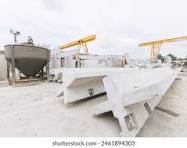
Every structure requires a sturdy and solid foundation. The foundation bears the burden of the structure and carries it securely to the ground. If builders employ a solid foundation, the structure is safe, stable, and long-lasting for a long time. If the foundation isn’t strong enough it could result in cracked floors, cracks or even serious damage. This is the reason engineers and builders make sure to select the correct kind of foundation prior to starting construction.
A popular and widely utilized foundations can be the concrete spread footing. Construction companies use concrete spread footing in a variety of construction projects due to the fact that it offers strong support and spreads the load of construction equally across the soil. Spread footing made of concrete is easy to construct, economical and is suitable for a variety of kinds of buildings.
In contemporary construction concrete spread footing has remained an extremely popular choice for foundations due to its durability, security as well as long-term performance. This article will explain the benefits of concrete spread footing for construction in simple and easy English.
What Is Concrete Spread Footing?
Spread footing made of concrete is a form of a shallow foundation constructed from reinforced concrete. It is a foundation that is positioned beneath columns or walls to help support the building. The footing is larger than the wall or column to distribute the load of construction across a greater area of soil.
The primary purpose of concrete spread footings is to lessen the pressure on the soil and permit the soil to be able to support the structure with ease. If the load is distributed evenly the structure remains solid and secure.
Concrete spread footing generally comprises:
- A concrete base
- Steel reinforcement bars
- Prepared soil surface
- Formwork in steel or wood
Steel reinforcement bars help strengthen concrete and assist in helping the footing to carry large loads. Reinforced concrete is also more durable and resistance to pressure from soil.
Spread footing in concrete works best if the soil has strong strength and is able to support the weight of construction.
Why Concrete Spread Footing Is Important
Spread footing in concrete is a crucial element in the construction. A solid foundation keeps the structure stable and avoids structural issues. Builders depend on concrete spread footings in order to offer secure support for structures.
Concrete spread footing is helpful for:
- Help support the weight of the building
- Reduce soil pressure
- Avoid settlement
- Stabilize the system
- Build more life into your building
A foundation that is well constructed protects the structure and helps reduce the cost of repairs in the future.
1. Provides Strong Structural Support
One of the major advantages for concrete spread footing is the strength of its structural support. Concrete reinforced can withstand huge weights without cracking or bend.
Concrete spread footing is used to support walls and columns, and carries the weight safely to the ground. The strong support helps keep the structure solid and secures the structure from movement.
The foundations of buildings that are solid will remain secure for a long time.
2. Distributes Load Evenly
Spreading the construction load across an extensive space of ground. This helps reduce pressure on the surface and allows the soil to be used for support.
Even load distribution prevents settlement problems. If the foundation distributes the burden evenly, then the structure is well-balanced.
Even distribution of loads helps to prevent issues like:
- Walls with cracks
- Uneven floors
- Structural stress
- Settlement for the Foundation
Balanced load transfer enhances the safety of buildings and improves performance.
3. Cost-Effective Foundation Solution
Spread footing made of concrete is one of the most cost-effective foundation system. Construction firms use less resources and require less work when compared to deep foundations.
Spread footings require less excavation since workers don’t have to dig too deep into the soil. This lowers the cost of equipment and also labor costs.
Builders also make use of less steel and concrete when in comparison to foundation systems with complex structures.
The lower construction costs make concrete spread footing an ideal option for a variety of projects, including residential ones or small-scale commercial constructions.
4. Simple Design and Planning
Concrete spread footing is an easy layout that engineers are able to design and calculate. Engineers can determine the thickness and size of the footing on the load on the foundation and soil strength.
Simple design helps plan quicker and simpler. Engineers can create drawings quickly and stay clear of complicated calculations.
Simple design also lowers the risk of errors in construction.
Due to its straightforward design the concrete spread footing has remained among the top frequently utilized foundation systems.
5. Easy Construction Process
Concrete spread footing is an easy and simple construction procedure. It is possible for workers to construct the footing by using the standard construction techniques.
The process of construction usually comprises:
- The soil is excavated
- Preparing and preparing the ground for leveling
- Placing reinforcement bars
- Formwork is being installed
- Pouring concrete
- Curing the concrete
The workers are able to follow these steps effortlessly and finish the foundation in a timely manner.
Simple construction enhances the quality of work and minimizes mistakes in construction.
6. Faster Construction Time
Concrete spread footing enables builders to finish foundation work in a short time. Construction workers do not have to drill deep holes or even install piles.
After the excavation and reinforcement installation The construction crew pours concrete, allowing it to cure. When the concrete is sturdy, the footing will be in good shape to help support the structure.
Faster construction helps builders:
- Time is money.
- Reduce labor costs
- Projects are completed on time
- Get building work started earlier
It is crucial to have a quick construction when you have limited time for your project.
7. Long-Lasting Durability
Concrete spread footing is long-lasting and provides endurance. Concrete reinforced is resistant to soil pressure, moisture and the elements.
A sturdy foundation safeguards the structure from destruction and helps reduce maintenance costs.
Concrete spread footings will last for a long time when it is constructed by the right builders.
Long-lasting foundations increase building safety and increase the value of your home.

8. Suitable for Many Types of Buildings
Concrete spread footing is suitable for a variety of building types. Builders typically employ this foundation system for:
- Houses
- Office building
- Shops
- Schools
- Warehouses
- Small commercial structures
Concrete spread footing is designed for medium-rise and low-rise structures.
The builders choose concrete spread footing in the event that the soil is strong enough to support the structure.
Because of its versatility concrete spread footing has remained an extremely popular option in construction.
9. Easy Inspection and Quality Control
Engineers can easily examine the concrete spread footing while they are working. Because the footing is sloping the inspectors can inspect the soil condition and reinforcement installation prior to pouring concrete.
Inspections to ensure that the footing is in compliance with the safety standards.
Engineers can spot and fix problems earlier, which can improve foundation quality.
A thorough inspection can lead to more secure and solid foundations.
10. Requires Basic Equipment
Spread footing made of concrete doesn’t require any special machinery. Workers can accomplish most jobs using the standard construction equipment.
Common equipment includes:
- Excavators
- Concrete mixers
- Hand tools
- Concrete vibrators
Reduced requirements for equipment decrease the construction costs.
This is what makes spread-footing concrete ideal for projects that are in urban as well as rural areas.
11. Improves Building Stability
Spread footing in concrete increases its overall strength of a structure. Stable foundations prevent structural damage and movement.
Solid foundations shield the structure from damage such as:
- Walls with cracks
- Uneven floors
- Settlement of the foundation
- Structural stress
Stable structures are secure and comfortable for the occupants.
Stability is important to prolong the life for the construction.
12. Flexible Design Options
Engineers are able to create concrete spread footings in various dimensions and shapes based on the specifications of the project.
The most common types of concrete spread footings comprise:
- Single column footings with isolated feet
- A footing system that combines two columns
- Continuous footing of walls
- Footings for straps in special conditions
Flexible design makes it possible for engineers to select the most suitable footing type for any project.
This versatility gives concrete spreading footing ideal for a variety of construction scenarios.
Conclusion
Concrete spread footing has numerous advantages when it comes to building construction. It offers strong support, uniform load distribution, as well as long-term endurance. Engineers and builders favor concrete spread footing since it’s cost-effective, simple to design and easy to build.
Spread footing in concrete allows for speedier construction and requires less equipment. It increases stability of buildings and can be used for various kinds of structures.
If the soil conditions are appropriate the concrete spread footing is one of the most effective foundation options. When properly constructed and designed, concrete spread footing will keep buildings solid and secure for many years.


