 WhatsApp Us Now
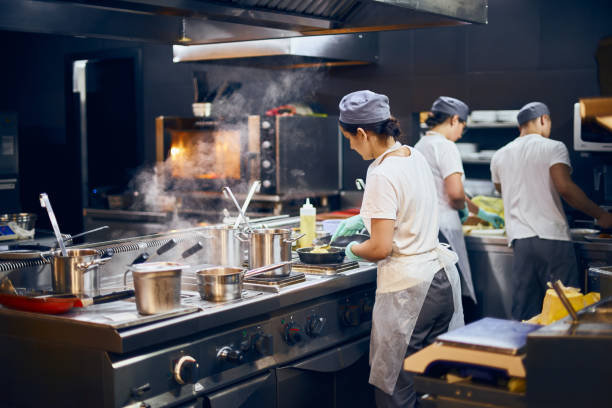
When outfitting a professional kitchen, investing in global restaurant equipment is not merely a matter of style — it’s essential for operational excellence, durability, and consistency. Whether you’re opening a small café or scaling up a full-service restaurant, choosing the right tools and machines can make or break your daily workflow.
Why Choosing Right Equipment Matters
In a commercial setting, equipment isn’t just a tool — it’s the backbone of consistent food production, food safety, and labor efficiency. The right oven, refrigerator, or food prep station helps your staff work smoothly, lowers waste, and improves output quality. Poorly chosen or mismatched tools can create bottlenecks, increase costs, or even pose safety risks.
Key Categories to Consider
Here are some of the primary categories you should evaluate:
1. Cooking & Heating Equipment
This includes ranges, ovens, griddles, fryers, and steamers. For kitchens aiming to handle high volume with versatility, multi-mode ovens or combination steam/convection ovens are especially valuable.
2. Refrigeration & Cold Storage
Reliable refrigeration is critical to food safety. Reach-in refrigerators, walk-in coolers, and prep tables ensure ingredients stay fresh and safe. Merchandising refrigerators also help in display cases or buffets.
3. Food Preparation Tools
Items like food processors, slicers, mixers, and blenders speed up prep time and maintain uniformity. High-quality equipment here reduces manual labor and increases consistency.
4. Holding, Warming & Display
Holding cabinets, food warmers, proofers, and display merchandisers let prepared items remain at safe serving temperatures. Well designed display units can also enhance the customer experience.
5. Dishwashing & Sanitation
Dishwashers, sinks, waste disposal systems, and cleaning stations must be robust and efficient. A fast, reliable dishwashing line is crucial in high-traffic periods to keep service seamless.
6. Support & Infrastructure
Work tables, shelving, pans, carts, and smallwares (knives, utensils, containers) form the ecosystem that supports the big machines. Good layout and ergonomics here reduce staff fatigue and errors.
Trends Shaping the Industry
- Energy Efficiency & Green Design
More restaurant operators are prioritizing energy-saving models, hoods, and refrigeration systems to reduce utility bills and carbon footprint. - Smart & Connected Equipment
IoT sensors that monitor temperature, usage cycles, or maintenance alerts are becoming more common, helping reduce downtime and predict servicing needs. - Modular & Flexible Layouts
As menus evolve, modular equipment (like plug-and-play cooking modules or movable prep stations) enables adaptability without major overhauls. - Hygienic & Easy-to-Clean Surfaces
Materials and designs that minimize crevices, joints, and hard-to-reach areas make cleaning simpler, improving safety and decreasing labor. - Compact Solutions for Limited Spaces
Many modern kitchens (in urban settings or ghost kitchens) need high capacity in smaller footprints — compact ovens, undercounter refrigerators, and slimline holding units help.
Tips for Selecting the Best Equipment
- Audit Your Workflow — Map your kitchen flow (receiving → prep → cooking → plating → cleaning). Each station should have just enough space and the right type of equipment to avoid cross-traffic.
- Prioritize Quality & Reliability — Often it’s better to spend more upfront on a trusted, durable brand than to replace cheap units frequently.
- Match Equipment to Menu — A pizza place has vastly different needs from a fine dining restaurant — don’t overbuy features you won’t use.
- Serviceability & Parts Availability — Ensure spare parts are available locally and that repairs can be handled without long lead times.
- Energy & Utility Costs — Check wattage, gas consumption, water usage, and insulation. Over time, efficiency pays dividends.
- Plan for Expansion — Modular systems or scalable lines enable growth without total replacement.
Posting on EMS Global Appliances’ Blog
A guest post on the EMS Global Appliances Restaurant Equipment category page is ideal because this is where customers already browse for major kitchen appliances and accessories. Integrating your expertise here helps reach an audience actively seeking solutions in the domain of global restaurant equipment. Make sure you align with their category structure (e.g. cooking equipment, refrigeration, dishwashing) and link to relevant product pages to improve relevance and navigation.
Conclusion
Choosing high-performance, durable, and well supported global restaurant equipment is a cornerstone of success in the foodservice business. From ovens to refrigeration, prep tools to sanitation systems, each piece must integrate smoothly into your kitchen’s workflow. If you’re looking for a partner with broad selection and dependable support, consider EMS Global Appliances for your next kitchen upgrade.


