 WhatsApp Us Now
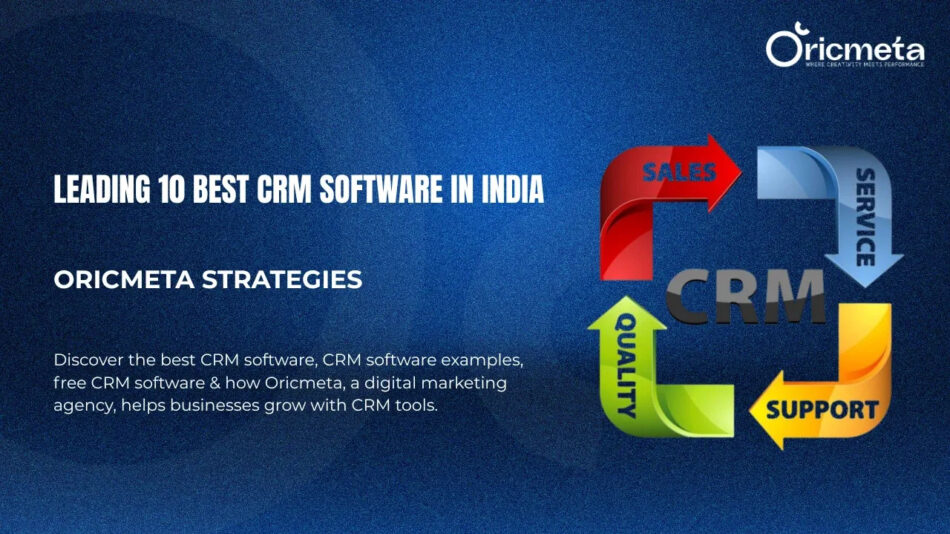
CRM Software Examples | Oricmeta
Introduction
Have you ever wondered how businesses manage customer relationships so smoothly, keeping track of every email, call, and purchase? The answer often lies in CRM software. If the term sounds a bit technical, don’t worry—we’ll break it down in plain, simple words. Imagine CRM as the personal assistant of your business: it remembers names, schedules meetings, and makes sure you never miss a beat.
In this article, we’ll explore CRM software full form, dive deep into CRM software examples, and even show you some of the best free CRM software that you can start using right away. Whether you’re a small business owner, a student, or just curious, this guide will give you everything you need to know in one place.
Explore free CRM software, CRM software examples, and CRM software full form. Learn benefits, features, and top CRM tools to boost business growth.
What is CRM Software?
CRM stands for Customer Relationship Management. At its core, CRM software helps businesses manage interactions with their customers and potential clients. Think of it as a digital diary that never forgets details about your customers—what they like, what they bought, and what they might want next.
CRM Software Full Form Explained
The CRM software full form is Customer Relationship Management software. Each word matters:
- Customer – The people or companies you serve.
- Relationship – The trust and bond you build over time.
- Management – The tools and processes that help you keep everything organized.
So, CRM software is basically a tool that helps you manage and strengthen customer relationships in an efficient way.
Why Businesses Need CRM Software
Would you remember every customer’s name, purchase, and issue without help? Probably not. That’s why businesses rely on CRM.
- It saves time by automating tasks.
- It increases sales by identifying customer needs.
- It improves customer satisfaction by offering personalized service.
In short, CRM is like the heart of modern businesses—it keeps everything pumping smoothly.
Key Features of CRM Software
When you explore CRM software examples, you’ll notice some common features:
- Contact Management: Storing customer information in one place.
- Sales Tracking: Monitoring leads, deals, and sales performance.
- Task Automation: Reminders, follow-ups, and automated emails.
- Analytics & Reports: Understanding trends and customer behavior.
- Integration: Connecting with tools like email, social media, or accounting software.
Free CRM Software vs Paid CRM Software
Here’s a quick analogy: free CRM is like a bicycle—it gets you moving but with limitations. Paid CRM is like a car—it’s faster, more powerful, and comes with extra features.
- Free CRM Software: Great for startups and small businesses. Limited storage, users, and features.
- Paid CRM Software: Suitable for growing companies with advanced needs like AI insights, automation, and scalability.
Top Free CRM Software Examples
Here are some free CRM software examples that you can try today:
- HubSpot CRM – User-friendly, perfect for beginners.
- Zoho CRM (Free Plan) – Great for small businesses.
- Bitrix24 – Offers project management along with CRM.
- Freshsales (Free Plan) – Clean interface and easy to use.
- Agile CRM – Includes marketing automation in free plan.
Popular Paid CRM Software Examples
If you’re ready to invest, here are some paid CRM software examples worth considering:
- Salesforce – Industry leader, highly customizable.
- Microsoft Dynamics 365 – Ideal for enterprise-level companies.
- Pipedrive – Focused on sales pipeline management.
- Insightly – Good for both project management and CRM.
- SugarCRM – Flexible and feature-rich.
How to Choose the Right CRM Software
Not all CRMs are created equal. To pick the right one, ask yourself:
- How big is my business?
- Do I need a free CRM software or can I invest?
- Which features are non-negotiable for me?
- Do I want cloud-based or on-premise software?
The right choice depends on your unique business needs.
CRM Software for Small Businesses
Small businesses thrive on building strong customer relationships. Free or budget-friendly CRMs are usually enough. HubSpot, Zoho, and Freshsales are perfect picks.
CRM Software for Large Enterprises
Big companies deal with millions of customers, complex sales pipelines, and multiple teams. That’s where enterprise CRMs like Salesforce and Microsoft Dynamics step in. They offer deep analytics, AI features, and advanced integrations.
Cloud-Based vs On-Premise CRM
- Cloud-Based CRM: Hosted online, accessible anywhere. (Example: HubSpot, Zoho).
- On-Premise CRM: Installed on company servers. (Example: Microsoft Dynamics on-premise version).
Cloud CRM is like renting a fully furnished apartment—you just move in. On-premise is like building your own house—more control, but more responsibility.
Benefits of Using CRM Software
Some clear benefits include:
- Better organization of customer data.
- Improved customer service.
- Higher sales conversion rates.
- Stronger customer loyalty.
- Better collaboration across teams.
Common Challenges with CRM Software
CRM isn’t magic—it has challenges too:
- Complexity for beginners.
- Cost of premium plans.
- Resistance from employees to adopt new systems.
- Data security concerns.
Future of CRM Software
The future is exciting! CRM software is becoming smarter with AI, chatbots, voice assistants, and predictive analytics. Imagine a CRM that not only stores customer data but also predicts what your customer will buy next.
Conclusion and Final Thoughts
To wrap it up, CRM software isn’t just a luxury—it’s a necessity for businesses big and small. From understanding the CRM software full form to exploring CRM software examples and testing free CRM software, we’ve covered it all.
Just remember: the right CRM is the one that matches your business size, goals, and budget. Start small, experiment with free CRM tools, and scale up as your needs grow.
FAQs
1. What is the CRM software full form?
The CRM software full form is Customer Relationship Management software.
2. Can I use free CRM software for my business?
Yes! Free CRM software like HubSpot or Zoho is excellent for startups and small businesses.
3. Which are the best CRM software examples for small businesses?
HubSpot, Zoho, and Freshsales are among the best for small businesses.
4. What are the main benefits of CRM software?
CRM software improves customer relationships, increases sales, saves time, and boosts team productivity.
5. Is cloud-based CRM better than on-premise CRM?
It depends. Cloud-based CRM is easier to use and affordable, while on-premise CRM offers more control but requires higher investment.


