 WhatsApp Us Now
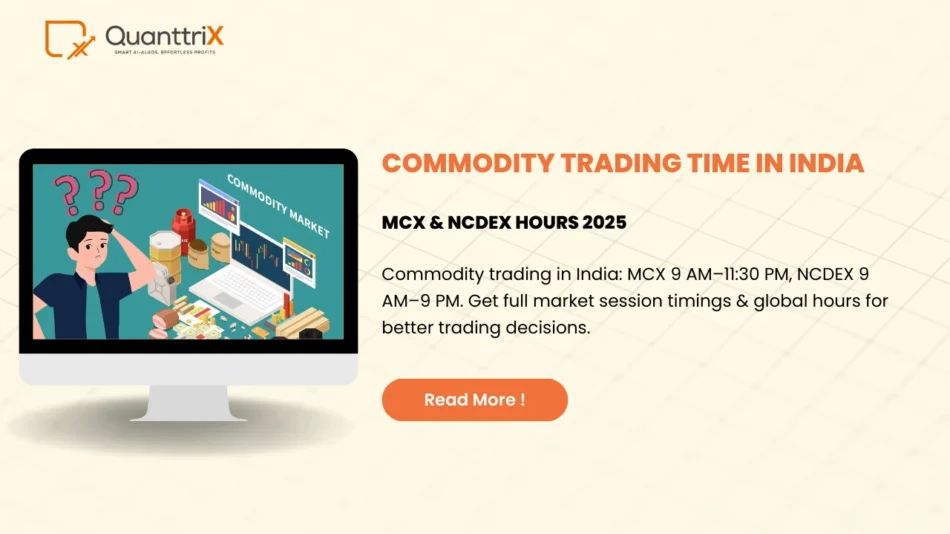
Commodity Trading Time in India: A Complete Guide for Beginners
Introduction
Have you ever wondered why timing is everything in commodity trading? Just like catching the right train can get you to your destination faster, trading at the right market hours can maximize your opportunities and minimize risks. In India, commodity trading times are structured carefully to give traders access to both domestic and international opportunities.
This article will walk you through commodity trading time in India, the opening and closing hours of commodity markets, best practices, and how technology like online trading software plays a key role in making trading seamless. Whether you are a beginner or a seasoned trader, this guide will help you trade smarter.
Learn about commodity trading time in India, market sessions, tips, and the role of online trading software. Perfect guide for beginners.
What is Commodity Trading in India?
Commodity trading involves buying and selling of raw goods like gold, silver, crude oil, natural gas, and agricultural products. In India, this trading takes place through exchanges such as MCX (Multi Commodity Exchange) and NCDEX (National Commodity & Derivatives Exchange).
Think of it as a supermarket for raw materials—just like groceries are essential, commodities are the building blocks of the economy.
Why is Commodity Trading Time Important?
Imagine showing up at your favorite shop when it’s closed—it’s frustrating, right? Similarly, in trading, knowing the exact commodity trading time in India helps you enter and exit trades at the right moment.
- Helps in syncing with global markets
- Avoids unnecessary trading downtime
- Lets traders plan strategies in advance
Commodity Market Structure in India
The Indian commodity markets are well-organized and regulated by SEBI (Securities and Exchange Board of India).
There are two major types of commodities:
- Bullion & Energy – Gold, Silver, Crude Oil, Natural Gas
- Agri-commodities – Grains, Pulses, Spices, Oilseeds
Trading Hours in Commodity Market
The commodity market in India operates in two sessions:
- Morning Session: 9:00 AM to 5:00 PM (mainly agricultural commodities)
- Evening Session: 5:00 PM to 11:30 PM (extended till 11:55 PM for International commodities like gold, silver, crude oil)
This timing ensures Indian traders don’t miss out on global market influences.
Morning Session vs Evening Session
- Morning Session (9:00 AM – 5:00 PM):
Focus on agriculture products like soybeans, wheat, chana, and cotton. - Evening Session (5:00 PM – 11:30/11:55 PM):
Energy and metals like gold, silver, copper, and crude oil attract more liquidity.
International Market Influence on Trading Hours
Since commodities like gold and crude oil are traded globally, Indian exchanges align their timings to match global commodity exchange hours. For example, the overlap with London and US markets in the evening session is crucial for prices.
MCX Trading Time in India
- Morning (Agri & Non-Agri): 9:00 AM to 5:00 PM
- Evening (Metals & Energy): 5:00 PM to 11:30 PM (upto 11:55 PM for select commodities)
MCX dominates with metals and energy contracts, making evening sessions more active.
NCDEX Trading Time in India
- Morning Session: 9:00 AM to 5:00 PM
- No evening trading for most agricultural commodities
NCDEX is more focused on farm products, making it ideal for farmers, processors, and agri-product traders.
Holiday Schedule for Commodity Trading
Commodity markets in India remain closed during major national holidays and weekends. The exchanges publish a yearly holiday calendar that traders should track carefully to avoid last-minute surprises.
Online Trading Software and its Role
Modern online trading software has transformed commodity trading:
- Provides real-time market data
- Offers technical analysis tools
- Enables faster order execution
- Mobile apps make trading accessible anytime
With software like Quanttrix Kite, Upstox, Angel One, and Groww, beginners can quickly open accounts and start trading.
How to Choose the Best Trading Platform
When selecting online trading software, look for:
- Low brokerage fees
- User-friendly interface
- Advanced charting features
- Fast execution speed
- Reliable customer support
Strategies for Effective Commodity Trading
Some proven approaches include:
- Trend Following: Riding the market wave
- Hedging: Protecting from price fluctuations
- Scalping: Making small frequent profits
- Swing Trading: Capturing middle-term moves
Common Mistakes to Avoid
- Trading without understanding commodity trading time
- Ignoring international price movements
- Overtrading due to excitement
- Not using stop-loss orders
Future of Commodity Trading in India
With digital India initiatives and rising global integration, commodity trading will only grow. AI-powered trading, real-time analytics, and advanced online trading software will dominate the next decade.
Conclusion and Final Thoughts
Just like a farmer knows the right season to sow seeds, a trader must know the right trading hours to invest. By understanding commodity trading time in India, using the right tools, and applying smart strategies, you can maximize your trading opportunities.
FAQs
1. What are the commodity trading times in India?
Commodity trading runs from 9:00 AM to 11:30 PM (extended up to 11:55 PM for some commodities).
2. Which commodities trade only in the morning session?
Mostly agricultural products like soybean, wheat, spices, and pulses.
3. Why is the evening session more active?
Because it overlaps with international markets such as London and the US.
4. Do all commodities follow evening session timings?
No, only metals and energy commodities like gold, silver, and crude oil.
5. Can I trade commodities using online trading software?
Yes, brokers like Quanttrix, Upstox, ICICI Direct, Angel One, etc., offer reliable platforms for trading.


