 WhatsApp Us Now

Does the thought of your child hurtling down the steep slide or dangling precariously from monkey bars set your heart racing? Yet, do you also understand the crucial significance of these playtime moments for their physical development, creative thinking and emotional well-being? You’re not alone. The complexities of designing playgrounds that tick all these boxes have puzzled experts and unsettled parents for decades. What’s the secret to creating inclusive, safe, but still incredibly fun playgrounds? How do playground designers navigate between a child’s adventurous spirit and the safety concerns? This blog post aims to lift the lid on the fascinating world of playground design, exploring the delicate balance between safety, accessibility, fun, and the essential developmental demands of active play.
The Evolution of Playground Design: A Brief History
Long before the era of fancy slides and climbing frames, playgrounds were natural landscapes teeming with trees, streams, rocks, and open green spaces. However, as urbanization took over, the necessity for man-made playground designs became evident. Think back to the austere, concrete playgrounds of the ’70s or the standardized plastic playsets of the ’80s and ’90s, and it’s clear that playground design has dramatically evolved, reflecting changing attitudes towards child development, safety and, crucially, fun. Today, with greater knowledge and sensitivity towards inclusive design principles, contemporary playgrounds strive to be a space for everyone — irrespective of their age or ability.
Deciphering the Basics of Playground Design
It may surprise you to know that behind those appealing swings and slides are several hours of scientific reasoning, ergonomic considerations, and creative thought processes. Firstly, the design must consider the age-related developmental demands of children. A playground should ideally offer a blend of structures that cater to a spectrum of age groups, encouraging different types of play, whether it’s thrilling, imaginative, or sensory. Secondly, the design must heed ADA guidelines for accessibility, ensuring playgrounds are inclusive spaces for all children. Lastly, of course, it should be fun — after all that’s the ultimate purpose!
Prioritizing Safety without Compromising Fun
The absorption of both safety and fun in playground design walks a fine line. Designers must incorporate elements that invite adventure and exploration while ensuring risk is minimized.
Today’s playgrounds are often designed to include “manageable risk”. This involves situations where children can test their boundaries in a relatively safe environment. It encourages self-confidence, resilience and helps children learn to navigate physical challenges without significant injury.
The Magic of Materials in Playground Design
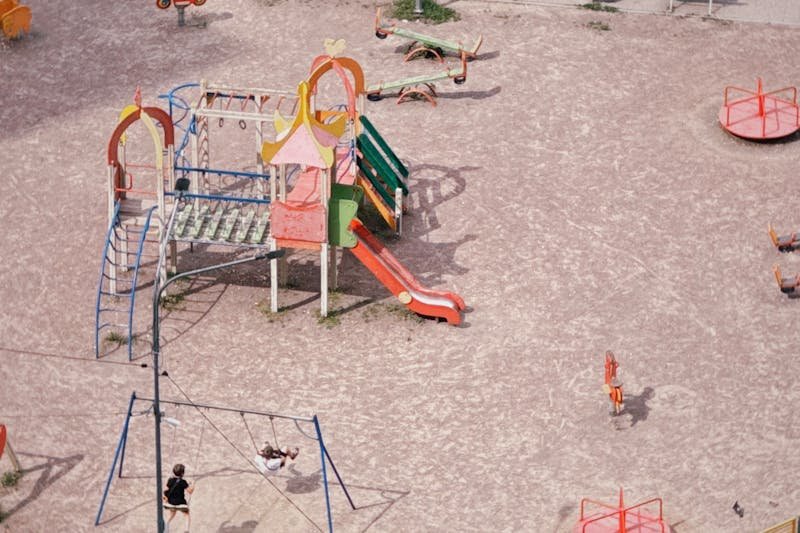
The choice of materials is just as important as the playground layout itself. The shift from cold, bleak concrete or metal to softer, natural, tactile materials dramatically transforms the playground experience. It not only ensures better safety but also aids children in experiencing various textures, enhancing the sensory aspect of play.
Towards More Sustainable and Inclusive Playgrounds
As sustainability rises to the forefront of design principles, playgrounds are not immune to the shift. Designers are reevaluating the environmental impact of playgrounds, focusing on sustainable materials and landscaping techniques. Moreover, designers are taking strides towards inclusivity — playgrounds that accommodate all kids, irrespective of their physical, sensory, or cognitive abilities.
Conclusion
As we’ve uncovered throughout this exploration, playground design is not mere child’s play. It involves a comprehensive blend of science, creativity, and understanding of children’s needs. Balancing the demands of safety, fun, inclusivity and sustainability is a complex task that designers navigate with insightful care and expert knowledge. While your heart may still race a bit at the sight of your child dangling from those monkey bars, a deeper understanding of the meticulous design process might help you breathe a little easier.
By challenging the traditional concept of playgrounds and opening conversations on inclusive, sustainable and stimulating designs, we could pave the way for future playgrounds where every child feels welcome, where play has purpose, and where safety complements rather than compromises fun.


