 WhatsApp Us Now
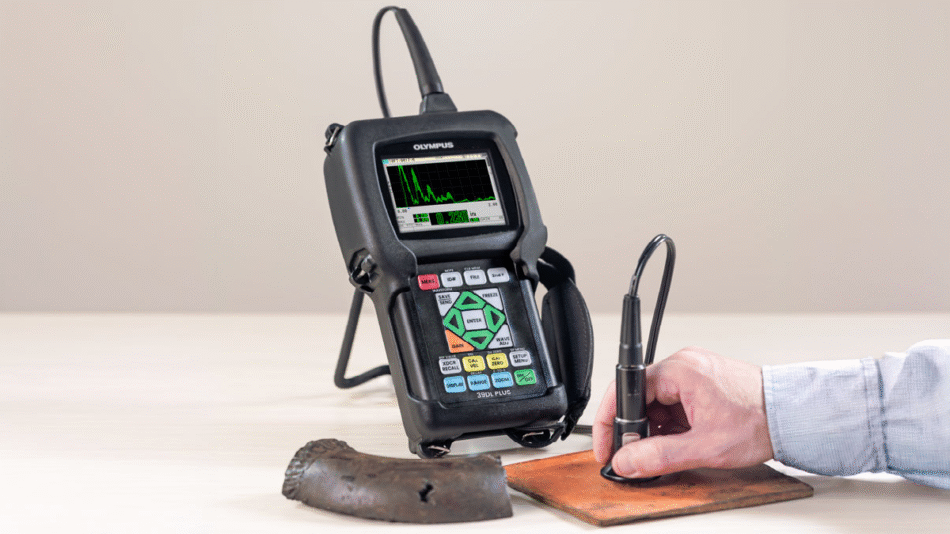
When it comes to ensuring the safety and integrity of materials in various industries, accurate measurements of material thickness are crucial. Whether you’re working in construction, manufacturing, aerospace, or energy, measuring the thickness of materials without causing any damage is essential. This is where a Wall Thickness Gauge comes into play.
A Wall Thickness Gauge is a non-destructive testing (NDT) tool that uses ultrasonic technology to measure the thickness of materials like metals, plastics, and composites. It operates by emitting high-frequency sound waves that travel through the material and reflect back to the gauge, allowing for precise measurement. However, to ensure the tool performs effectively, one of the most important factors to consider is its accuracy range.
In this blog, we will explore what affects the accuracy of a Wall Thickness Gauge, how accurate these devices are across different materials, and the key factors that influence measurement results. Understanding the accuracy range of these tools is critical for users who rely on precise measurements for maintaining quality control, ensuring safety, and complying with industry regulations.
1. How Does a Wall Thickness Gauge Work?
Before diving into the accuracy range, let’s first understand how a Wall Thickness Gauge works. These gauges typically use ultrasonic sound waves to measure the distance between the surface and the back side of the material being tested.
- Ultrasonic Technology: The device sends high-frequency sound waves through the material. The waves travel through the material until they hit the back surface, where they reflect back to the sensor.
- Time of Flight: The time it takes for the sound waves to travel through the material and back is measured, and from this, the device calculates the thickness of the material.
- Speed of Sound: The gauge also needs to know the speed at which sound travels through the material (which varies depending on the material type), allowing it to accurately calculate thickness.
This non-destructive testing method means the material remains unharmed, allowing for repeated testing, which is particularly useful for industries that require regular inspections and monitoring.
2. Factors Affecting the Accuracy of a Wall Thickness Gauge
The accuracy of a Wall Thickness Gauge is influenced by several factors, which can lead to slight deviations in the readings. While modern ultrasonic thickness meters are quite accurate, users must account for specific variables to ensure precise measurements. Let’s look at these factors:
2.1. Material Type
The material being measured is one of the most significant factors that impact the accuracy of a Wall Thickness Gauge. The speed of sound varies depending on the material’s density and elasticity, and the device must be calibrated for each material type to ensure accuracy. For example:
- Metals (e.g., steel, aluminum, stainless steel) have a predictable speed of sound and can typically be measured with high accuracy.
- Plastics, rubber, and composites may require specialized calibration settings as their sound transmission properties can differ significantly from metals.
- Coatings can sometimes be measured separately from the underlying substrate, requiring dual-element transducers or specific calibration for accuracy.
2.2. Surface Condition
The condition of the material’s surface is another important factor in the accuracy of measurements. Wall Thickness Gauges rely on sound waves traveling through the material and reflecting back. If the surface is rough, dirty, or corroded, the sound waves may scatter or fail to reflect correctly, leading to inaccurate readings.
For the best results, surfaces should be smooth and free of contaminants. In industrial settings, where materials may have accumulated rust or paint, it is essential to clean the surface prior to measuring. Additionally, if the material has a coating (e.g., paint or corrosion protection), the gauge must distinguish between the coating and the substrate beneath, which can affect reading accuracy.
2.3. Temperature Variations
Temperature changes can have a significant impact on the accuracy of Wall Thickness Gauges. The speed of sound in materials increases with temperature, meaning that if the material is too hot or too cold, the sound waves will travel at a different speed, resulting in incorrect readings.
For instance, a Wall Thickness Gauge that measures thickness at a temperature of 30°C might provide different results if the material is heated to 50°C. To account for this, some gauges come with built-in temperature compensation or allow users to manually adjust the settings to accommodate for temperature variations. It is always recommended to take measurements in consistent temperature conditions or to calibrate the device according to the material’s temperature.
2.4. Calibration of the Device
The accuracy of a Wall Thickness Gauge is directly tied to its calibration. Calibration ensures that the device is measuring accurately according to the material’s specific properties. Many ultrasonic thickness gauges come with preset settings for commonly used materials like steel, aluminum, or concrete. However, if you’re working with non-metal materials or materials with non-standard thickness ranges, you will need to calibrate the device using reference standards (materials with known thickness).
The Wall Thickness Gauge should be recalibrated regularly, especially after changing the material being measured, to ensure consistent accuracy. Calibration typically involves using known thickness standards (such as calibration blocks) and adjusting the device until it matches the standard’s reading.
2.5. Probe Type and Frequency
The type of probe used with the Wall Thickness Gauge and the frequency of sound waves it employs can also influence measurement accuracy. There are two main types of probes:
- Single-element probes: These are simpler and typically used for measuring uniform materials with smooth surfaces.
- Dual-element probes: These are used for measuring coatings or materials that may have layers, like painted steel or composite materials. Dual-element probes send and receive ultrasonic waves separately, improving accuracy when measuring multi-layered materials.
The frequency of the sound waves affects the resolution and penetration capability of the Wall Thickness Gauge. High-frequency probes provide greater resolution and are ideal for thin materials, while lower-frequency probes are better suited for thicker materials.
3. Accuracy Range of a Wall Thickness Gauge
The accuracy range of a Wall Thickness Gauge varies depending on several factors, including the type of material, the probe, the calibration, and the quality of the device. Generally speaking, the accuracy of ultrasonic thickness meters is within the range of ±0.1 mm to ±0.5 mm, but it can be better or worse depending on the conditions.
3.1. Metals (e.g., Steel, Stainless Steel, Aluminum)
For metals, ultrasonic thickness gauges are typically highly accurate, often providing readings within ±0.1 mm to ±0.3 mm. This is because metals have a predictable density, allowing the ultrasonic waves to travel through them in a consistent manner. The gauge’s accuracy can improve further if the material is well-maintained, clean, and properly calibrated.
- Example: Measuring the thickness of steel pipes in the oil and gas industry can typically be done with an accuracy of ±0.1 mm, allowing for precise maintenance schedules based on the remaining wall thickness.
3.2. Plastics and Polymers
For non-metal materials like plastics or polymers, the accuracy typically falls within ±0.2 mm to ±0.5 mm, but the specific range depends on the material’s homogeneity and density. The accuracy may vary more significantly compared to metals due to the different acoustic properties of these materials. Proper calibration is key to achieving precise readings on plastics and polymers.
- Example: In the automotive industry, Wall Thickness Gauges are used to measure the thickness of plastic components. Depending on the material, the accuracy might be around ±0.2 mm, which is sufficient for most quality control checks.
3.3. Coatings (e.g., Paint, Galvanizing)
When measuring coatings, the accuracy typically falls between ±0.1 mm to ±0.3 mm, depending on the type of coating and the underlying material. Coating thickness measurements are particularly sensitive to surface preparation and calibration. Dual-element probes are often used to measure both the coating and the substrate thickness independently.
- Example: For measuring paint coatings on automotive bodies, a Wall Thickness Gauge can measure with accuracy levels of ±0.2 mm, ensuring the coatings meet industry standards for thickness and quality.
3.4. Composites and Other Non-Metallic Materials
For composites, ceramics, and other non-metallic materials, the accuracy can vary widely. The Wall Thickness Gauge can measure composites with an accuracy range of ±0.3 mm to ±0.5 mm, depending on the material’s composition and the homogeneity of the layers. Composite materials often require more sophisticated calibration and dual-element probes for accurate readings.
- Example: In the aerospace industry, measuring the thickness of carbon fiber components is critical for maintaining structural integrity. Wall Thickness Gauges can provide accurate measurements within ±0.3 mm for these types of materials.
4. How to Ensure Accurate Measurements
To ensure that you achieve the most accurate results with your Wall Thickness Gauge, here are a few best practices:
- Regular Calibration: Always calibrate your device before use and at regular intervals. Calibration should be done using reference standards that match the material you’re measuring.
- Surface Preparation: Clean the material’s surface to ensure sound waves can travel through smoothly without interference. Rough or dirty surfaces can lead to inaccurate readings.
- Use the Correct Probe: Select the appropriate probe based on the material type. Use dual-element probes when measuring coatings or multi-layered materials to ensure accuracy.
- Account for Temperature: Be mindful of temperature variations, as these can affect the speed of sound in the material. Some Wall Thickness Gauges come with built-in temperature compensation to help address this.
- Check Material Properties: Ensure that you’re using the appropriate settings for the material you’re measuring, especially for non-metal materials like plastics and composites.
5. Conclusion
The accuracy of a Wall Thickness Gauge typically ranges from ±0.1 mm to ±0.5 mm, depending on the material being measured and the conditions under which the measurement is taken. Metals like steel, stainless steel, and aluminum tend to produce the most accurate results, with deviations typically within ±0.1 mm to ±0.3 mm. Non-metal materials, such as plastics, coatings, and composites, may show a broader range of accuracy, typically falling within ±0.2 mm to ±0.5 mm.
Achieving the highest accuracy requires careful calibration, proper probe selection, surface preparation, and consideration of factors such as temperature. By understanding the limitations and factors that affect the accuracy of Wall Thickness Gauges, you can make more informed decisions about how to use these tools effectively for quality control, maintenance, and inspections.
For industries that require precise, non-destructive thickness measurements, investing in a high-quality Wall Thickness Gauge and adhering to best practices will help ensure accurate results, improving material management, safety, and performance.


