 WhatsApp Us Now
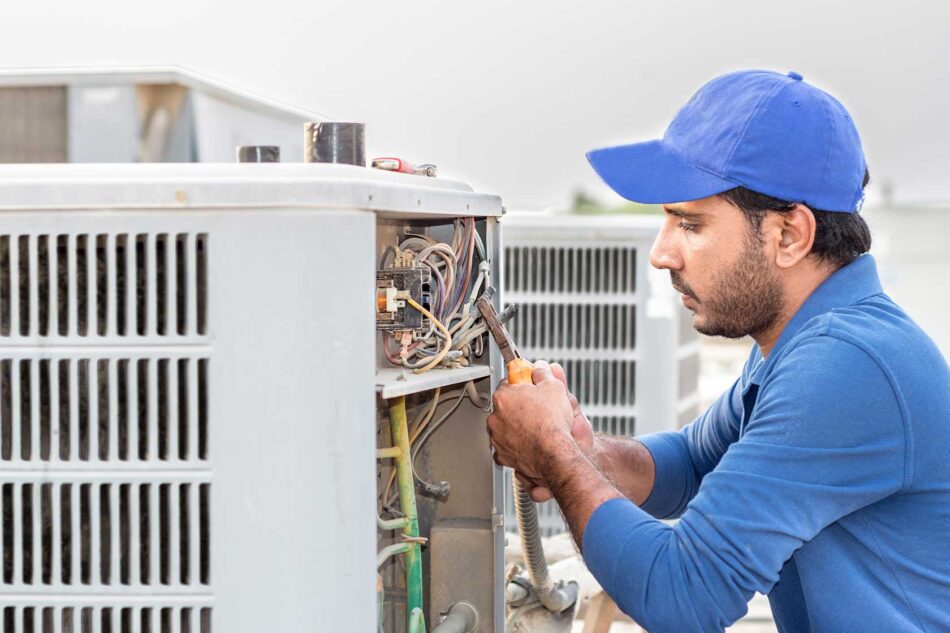
After a power loss, your AC should start working again. But you should check a few things to figure out why it remains off. First, give the system time to reset itself, waiting a couple of minutes before checking the low temperature settings on the thermostat; sometimes, the batteries in the thermostat just need replacing. Next, check the circuit breaker and outdoor disconnect switch and ensure they are turned on.
Then, check out the fuses and reset the air conditioner as necessary. Also, check for any strange noises and do a physical inspection to see any visible damage to the unit. If the system is still unresponsive, it is probably time to call for air conditioning repair to address more serious electrical or mechanical issues efficiently and safely.
Solutions To Fix My AC Not Turning On After A Power Outage
Try these solutions when your AC doesn’t turn on after a power outage:
1: Stay Calm and Wait
Your AC may not turn right back on when power returns. This should not be anything to worry about. Most are equipped with a time delay or similar protective feature that prevents them from being damaged by a sudden increase in power. These delays prevent short cycling and damage to your compressor. Wait 5 to 10 minutes and do not turn the thermostat on and off again.
2: Double-Check the Thermostat
Your HVAC system is the body; your thermostat is the brain. If the sensor is not operating correctly, your air conditioner may not receive a sufficient signal to start. Here’s what to check:
- Power: Is the thermostat screen lit? If not, it may have lost power, or the batteries could have died. Change the batteries if necessary.
- Mode: Should be set to “Cool” and the fan on “Auto” (or “On”).
- Temp: At 5 degrees less than the room.
Some smart thermostats take time to reboot after a power failure. If you have one connected to Wi-Fi, see if it has returned online.
3: Check the Circuit Breaker
Power spikes during an outage can cause a circuit breaker to trip, particularly for high-powered appliances such as air conditioners.
- Open the electrical panel.
- Locate the breaker marked “AC,” “HVAC” or “Air Conditioner.”
- If it is in the middle or “off” position, flip it to off, then turn it back on.
4: Check the Disconnector Switch outside
Your outdoor AC unit has a disconnect box nearby. This provides a way to turn off power during an emergency.
- Open the cover.
- Check the switch or pull-out fuse.
- Make sure it’s ‘On.’
The outdoor unit won’t get power if the breaker tripped or is loose due to the outage.
5: Check for Blown Fuses
Fuses are also installed in some systems to prevent overloading electrical elements. This might be located in the furnace, the air handler, or the disconnect box on the outside. For instance, if a fuse is knocked out during a power failure, the system will die.
- Visually inspect for evidence such as black marks or broken filaments.
- While it’s possible to use a multimeter to test the fuse.
- If in doubt, call a licensed technician.
It is very important never to exceed the amperage of a fuse or replace it with a higher amperage one.
6: Reset the Air Conditioner
If all else fails, a full reset might solve the problems caused by the loss of power. Here are safe tips on how to reset your AC:
- Turn off the thermostat.
- Wait for 1–2 minutes.
- Turn the breaker back on.
- Flip the thermostat’s switch back on, set it to “Cool,” and adjust the temperature setting.
This reset can eliminate minor control errors between the system and the thermostat.
7: Listen for Unusual Sounds
If your AC turns on but there is unusual noise, turn the blower fan off. Listen for:
- Buzzing or humming indicates a problem with the capacitor.
- Clicking can indicate an issue with the relay.
- Squeaking or grinding due to a fault with the fan motor or compressor.
In either of these scenarios, you should shut off the system and call an HVAC professional to prevent causing more damage.
8: Look for Signs of Damage
A power loss or surge can result in a damaged AC unit. Inspect the indoor and outdoor units for:
- Burned wires
- Melted insulation
- Scorch marks
- Loose components
- Water near the indoor unit
Never touch exposed wiring. If you see damage, turn off the system and call a professional immediately.
9: When You Should Call an HVAC Technician
Call a professional HVAC technician if none of the above steps solve the problem. Power surges can damage:
- Circuit boards
- Capacitors
- Contactors
- Compressors
Experts can help with advanced diagnostics capabilities and safely handle potentially high-voltage equipment.
Conclusion
You can try a few things before you call your contractor if your AC won’t turn on after a power outage. Begin by giving it a few minutes and then checking the thermostat and the circuit breaker. Then check the disconnect box and fuses. You can also try a full system reset, listen for any strange noises, or look for any physical damage.
Safety switches and clogged drain lines can also prevent the system from turning on, so check those. If nothing works, call an expert for fast air conditioning repair to prevent further damage and keep your home comfortable in hot weather.
Click here and read more blogs


