 WhatsApp Us Now

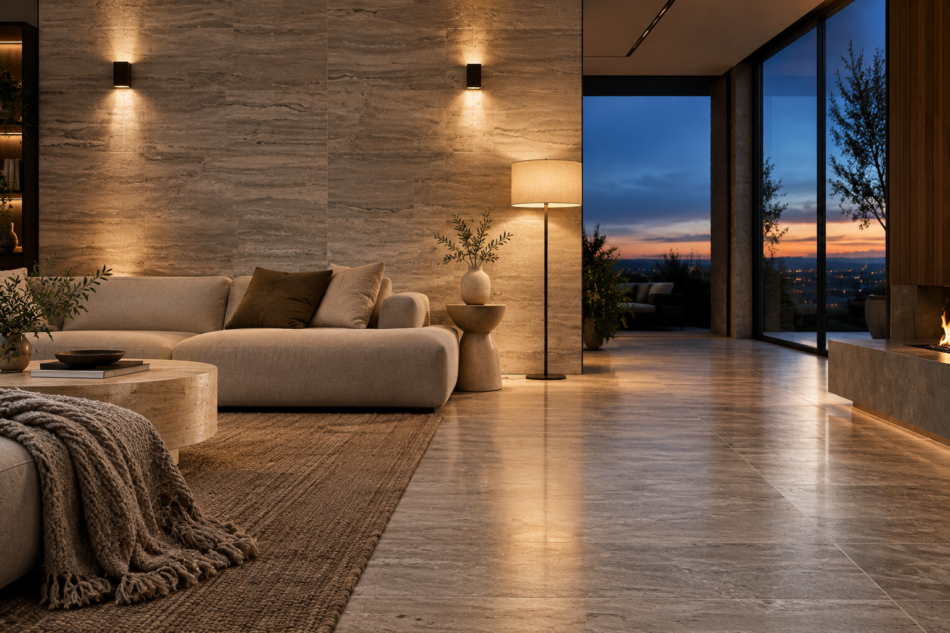
A room can look perfectly ordinary all day and still surprise you at night. Turn on a lamp and suddenly the floor takes on a different shade. The wall behind the sofa looks less flat and that empty corner feels like a nice place to sit for a while.
Nothing has moved around. You are simply seeing familiar things in a different light.
That’s what makes evening lighting interesting when planning an interior. It can bring out the little details in natural stone, change how colours appear and give certain parts of a room more attention than others. Before adding anything new to your home, it is worth considering what a lighting change can do.
Indoor Details That Shape the Look of Your Home After Dark
Some changes are obvious, while others take a moment to notice. These seven details show how lighting can influence the look and feel of an indoor space.
1. The Way Light Falls Across Your Floors
The floor may look different once the sun goes down. A lamp near the sofa can bring out the grey patterns in Silver travertine tiles, while other types of lighting may make the same stone look lighter or darker.
A few details can affect its appearance:
- Bulb colour: Warm lighting can give the stone a softer look, while cooler light may bring out its grey tones
- Light position: Light falling across the floor from the side can make its natural texture more noticeable
- Stone finish: Honed and polished surfaces respond to light in different ways
If you’re choosing new flooring, try looking at the samples in both daylight and under your usual indoor lights. You may notice a difference in how the stone looks.
2. Shadows That Give Plain Walls More Character
A wall doesn’t need a picture hanging on it to become interesting. Sometimes, a little light falling across its surface does enough.
This is particularly noticeable with textured finishes and natural stone cladding. The uneven surface creates small shadows, giving the wall more depth without adding extra decoration.
A few combinations worth exploring include:
- Wall lights placed close to textured surfaces
- Natural stone cladding paired with simple furniture
- Soft, indirect lighting against an otherwise plain wall
The effect depends on the room. A heavily textured wall may need very little else, while a painted wall can look just as inviting with a well-placed lamp.
3. The Corners That Suddenly Feel Cosier
Every home seems to have a corner that nobody quite knows what to do with. It might sit beside a window or occupy the awkward gap between a cupboard and the wall.
Instead of filling it with things just to make it look finished, give it a purpose.
- A floor lamp and an armchair can create a small reading spot
- A side table gives you somewhere to leave a book or cup of tea
- A plant can soften the space without taking up much room
There is no need to turn it into a complete makeover project. Sometimes, one comfortable chair and a little light are all a corner need.
4. Patterns That Look Different in Evening Light
Some floors reveal their character through their layout rather than their colour. French pattern tiles are a good example, combining different tile sizes to create a varied arrangement.
Under evening lighting, the shapes and lines between these tiles may become more noticeable. The surrounding furniture can influence how much of the pattern you actually see.
- Keep larger furniture pieces from covering every interesting part of the floor
- Choose wall colours that sit comfortably alongside the stone
- Use lighting that shows the layout without creating distracting shadows
The pattern doesn’t have to become the main feature of the room. It can simply add another layer of detail.
5. Reflections That Make a Room Feel Different
A mirror catching the glow of a bedside lamp can change the feel of a room more than you might expect. Glass tabletops and metal handles can do something similar, picking up little flashes of light after dark.
These details can help a room feel brighter, but too many reflections may become distracting.
- Position mirrors where they catch softer light
- Balance glass and metal with matte surfaces or fabric
- Avoid placing bright light sources where they reflect directly onto television screens
A comfortable room doesn’t need to shine from every angle. A few carefully placed reflective surfaces can be enough.
6. The Materials You Can Almost Feel Just by Looking
You can often recognise the grain of timber or the roughness of stone just by looking at it. Lighting can make these details easier to notice, particularly when it falls across a surface at an angle.
This is one reason mixing materials can work so well indoors.
- Timber can bring warmth alongside natural stone
- Soft curtains and cushions can balance harder surfaces
- Textured stone can add variation without relying on bold colours
Before choosing a finish, look at how it appears in both daylight and artificial light. The difference may be subtle, but it can influence how the materials work together.
7. The Small Details That Complete the Room
Big decisions usually get made first. Flooring, wall colours and furniture take up most of the planning, leaving smaller details until later.
Yet a bedside lamp, cabinet handle or framed photograph might be what catches your eye once the main lights are dimmed.
- A small lamp can bring attention to a shelf or favourite object
- Similar finishes across a few accessories can help the room feel connected
You don’t have to match everything or decorate every empty spot. A home often feels more personal when there is a little room for things to come together naturally.
A Different Perspective for the Same Room
The room hasn’t changed after sunset, but your attention has. You might notice the markings in the stone, the shadows on a wall or a corner that feels more inviting than it did a few hours earlier. When choosing flooring, wall finishes and other materials, it helps to consider how they will look under different lighting conditions. A finish that works in bright daylight should also feel right when the evening lamps come on.
Sometimes, the difference isn’t what you add to a room. It’s what you finally noticed.
Disclaimer: The information provided in this blog is to the best of our knowledge and intended as a general guide. We recommend confirming all details based on your specific project requirements before execution.


