 WhatsApp Us Now
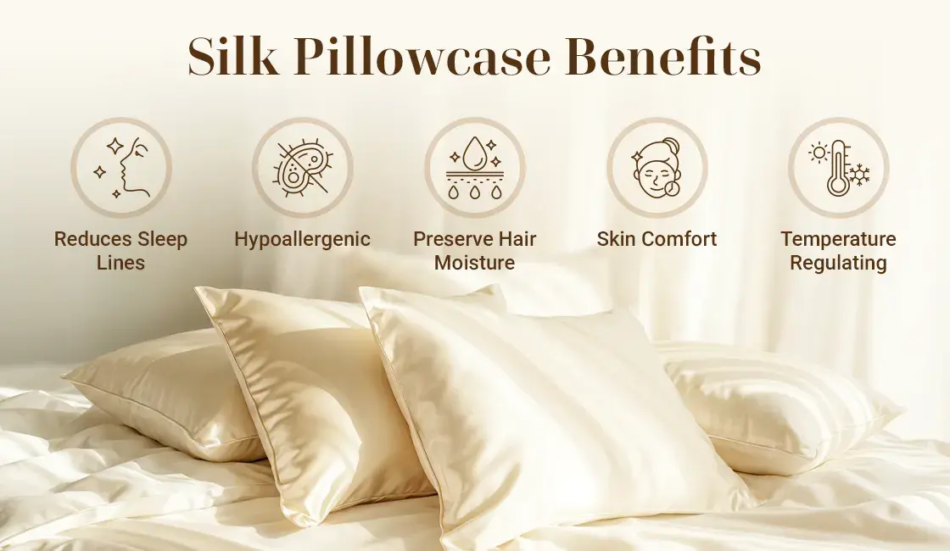
People often pay attention to what helps them sleep better, from bedtime routine to everyday comfort. However, the fabric that comes into direct contact with your skin and hair for eight hours each night is often overlooked. The fiber type, breath ability, and texture of a pillowcase influence how it reduces friction, regulates temperature, and absorbs moisture throughout sleep cycles.
Long valued in traditional practices such as Ayurveda and supported by growing scientific interest in its material properties, silk continues to attract attention for its role in everyday comfort. Regarded as the “queen of textiles” for centuries, 100% mulberry silk has established itself as an industry benchmark due to the fiber’s unique physical properties. Assessing the distinct characteristics of silk in relation to conventional fabrics enables a better-informed choice centered on material efficiency. Here are five top reasons that influence many individuals to select a pure silk pillowcase.
Reason 1: Natural Protein Composition Reduces Sleep Lines
Fine lines are usually temporary and generally appear after waking up, especially for side-sleepers whose skin stays in contact with fabric for an extended period. Continuous micro-movements overnight generate repetitive friction against standard textile materials. This mechanical resistance puts uneven pressure on sensitive facial tissue, leading to skin distortion in the morning.
What distinguishes pure silk?
- Continuous Filament Surface: Pure silk consists of long continuous fibroin filaments, creating a uniform, smooth surface devoid of coarse micro-edges from short-staple fibers.
- Friction less Gliding Action: The soft fabric enables facial skin to move effortlessly over the textile instead of pulling or straining with motion. Reducing physical resistance greatly lowers the mechanical strain on delicate skin regions during an eight-hour sleep period.
- Long- term preventive effect: This unique composition changes the sleep environment from abrasive to protective. Using a silk surface creates a soft, non-reactive base for an advanced skin preservation routine.
Reason 2: Preserve Hair Moisture and Structural Stability
The friction hair experiences while sleeping can influence how it looks and feels the next morning. Silk fabric’s plain weave can remove natural oils and highly textured weaves will trap individual shafts during the turn. This physical disturbance can weaken the cuticle layer, making hair susceptible to tangling overnight, frizz, and structural fragility.
In what way do mulberry silk fibers develop a distinct environment for hair fibers?
- Hydrophobic Moisture Retention: Silk fibers absorb minimal moisture, preserve essential moisture and natural oils in hair, keeping it conditioned by morning unlike other fabrics.
- Cuticle-Protecting Glide: The sleek fibroin structure enables each hair fiber to glide easily without tangling or pulling. Removing this overnight mechanical friction avoids micro-tears in the hair cuticles, minimizing static frizz and tangles.
- Targeted Structural Protection: This non-abrasive, low-resistance environment provides essential advantages for complex hair textures. It serves as a protective barrier for curly, color-treated, or chemically processed hair that needs careful moisture retention to avoid breakage.
Reason 3: Dermatologist-Recommended Skin Comfort
Our face rest on a pillowcases for numerous hours each night, directly affecting the outer layer of skin. For those with sensitive, reactive, or acne-prone skin, this prolonged exposure can contribute to irritation. Dermatologists often advise using pure silk due to its microscopic interaction with the skin, reducing the occurrence of possible irritation from textiles.
Why do dermatologists emphasize pure silk for maintaining the skin barrier?
- Reduces irritation: Rough or synthetic fibers can lead to micro-friction, small, frequent abrasions that happen as you shift while sleeping. For skin that is already affected by acne, eczema, or rosacea, persistent friction can worsen inflammation, redness, and overall sensitivity. The smooth filament structure of silk removes this physical tension.
- Maintains the fragile stratum corneum: Stratum corneum is the outermost layer of skin which protects against external stressors. Abnormal abrasion can occur over time, due to high texture of fabrics, and impact this barrier. Silk forms an unreactive and smooth surface, allowing the skin to relax and rejuvenate throughout the night.
- Aids in clinical skincare procedures: Numerous dermatological products, including retinoids or acne treatments, may initially cause the skin to become dry, flaky, or extremely sensitive. Resting on a fabric that doesn’t irritate or harm the skin allows treatments to continue without extra discomfort or secondary irritation.
Reason 4: Naturally Hypoallergenic and Resistant to Allergens
Environmental allergens and airborne particles consistently find their way into household fabrics. Choosing a fabric with inherent protective qualities is an easy solution for handling prolonged exposure to these foreign particles. Consistent washing is crucial for maintaining cleanliness, yet the fabric type also affects how the sleeping surface behaves as time passes.
What makes silk inherently resistant to dust mites and mold?
- Biocompatible Fiber Composition: Silk is naturally made from biocompatible fibers, which are non-irritating and therefore safe to the skin. This organic composition is an ideal alternative for people prone to contact dermatitis or sensitive to synthetic fibers.
- Unwelcoming Microenvironment: The remarkably dense structure of premium silk, along with its low moisture-holding capacity, prevents typical household allergens. This design inherently deters dust mites, mold spores, and mildew.
- Proactive Hygiene Assistance: Incorporating a naturally resilient fabric into the sleep setting effectively keeps the surface cleaner. This structural resistance also serves as a simple and hygienic way for people who want to live in low-allergen homes.
Reason 5: Breathable, Temperature-Regulating, and Comfortable Throughout the Year
Quality sleep is enabled by an ideal micro climate. During sleep, the body is constantly trying to maintain a normal temperature by eliminating metabolic heat. Consequently, a material that inhibits air circulation and permits moisture to accumulate around it causes an increase in temperature, which may disrupt sleep.
What enables this high-quality fabric to sustain an even micro climate?
- Light and porous fiber structure: Silk features a delicate, porous fiber composition that allows for constant air circulation within the fabric. This inherent breath ability stops stagnant, excessive heat from building up around the face.
- Thermoregulation: Instead of just retaining heat, the material responds actively to changes in the surrounding environment. It effectively releases extra body heat in warm weather while offering lightweight insulation in cooler conditions.
- Enhanced Moisture Evaporation: Heat and sweat generally build up together during deeper sleep. Silk’s breathable characteristics enable both factors to evaporate quickly, reducing surface moisture to keep a fresh, dry sleeping environment.
Final Thoughts
Using a 100% silk pillowcase is a conscious decision built into your daily wellness regimen rather than hoping for instant improvements. Understanding how a fabric is made and how it performs helps buyers to judge quality rather than promotional claims.
Delivering precise, transparent material information that promotes enduring comfort. Synchronizing your sleep schedule with genuine, premium silk transition bedding transforms a fundamental need into a designed space for rejuvenation.


