 WhatsApp Us Now

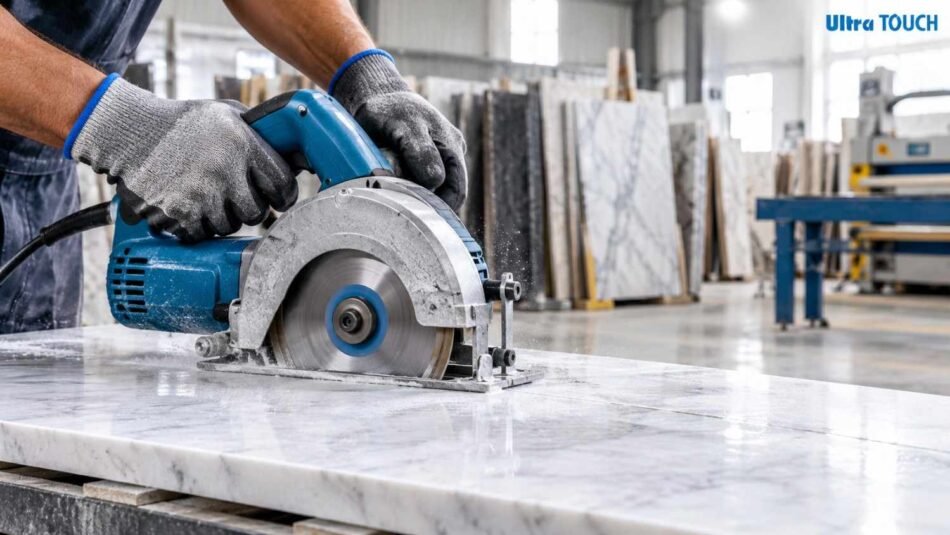
A batch of cutting machines arrives at a dealer’s warehouse. The packaging looks fine, the price is attractive, and the motor specifications match the quotation. But once contractors start using them, complaints surface about excessive vibration, uneven cutting, and blade fitting problems. That’s where a cheap purchase becomes an expensive mistake.
Choosing a Marble Cutter requires more than comparing wattage and wholesale prices. For distributors, contractors, and procurement managers, motor reliability, cutting depth, safety features, and spare parts availability determine whether the equipment delivers value or creates repeated complaints.
Marble Cutter Specifications That Deserve Closer Inspection
Technical specifications reveal how a machine should perform. However, actual cutting conditions determine whether those figures translate into reliable operation.
Motor Power, Speed, and Cutting Capacity
Motor capacity affects how efficiently a machine handles demanding materials. Ultra Touch lists its UTCM-4SA model with a 220V AC supply, 50Hz frequency, and 11,000 RPM no-load speed. Its published specification describes an input power range of 1,050–1,300W as typical for the 4SA class.
Power alone doesn’t settle the buying decision.
A machine operating smoothly without resistance may behave differently when cutting dense granite or thick flooring material. Buyers should request demonstrations under realistic cutting loads rather than relying entirely on catalogue figures.
Blade Diameter, Arbor Size, and Cutting Depth
The UTCM-4SA specification lists a 110 mm diamond cutting wheel, 20 mm arbor, and approximately 30–34 mm maximum cutting depth.
Here’s the detail many buyers overlook: blade diameter and arbor compatibility must match the machine and approved wheel specification. A mismatched wheel can create mounting problems and serious operating hazards.
Safety Guards, Cooling, and Handling
A cutting machine should offer a secure handle, effective blade guarding, and manageable vibration.
The UTCM-4SA product information lists an adjustable blade guard, spindle lock, double insulation, and air cooling. Wet cutting is described as possible with an attachment, but buyers must confirm the exact variant’s approval and electrical protection before introducing water.
Five Criteria for Evaluating Marble Cutter Manufacturers
Before negotiating a bulk order, procurement teams should evaluate these five factors.
- Motor performance: Ask for rated input power, operating limitations, and cutting demonstrations. A bad answer is, “The motor is heavy-duty, so it won’t overheat.” That explains nothing about actual performance.
- Blade compatibility: Verify diameter, arbor dimensions, approved blade types, and maximum permitted wheel speed. A supplier who says “any standard blade will fit” is ignoring a critical safety requirement.
- Build quality: Examine the base plate, gear housing, switches, guards, and spindle alignment. A poor supplier refuses physical inspection or cannot explain basic component specifications.
- Warranty and replacement support: Demand written warranty exclusions, spare parts details, and a claims procedure. “We’ll handle complaints individually” is not a dependable warranty policy.
- Order fulfilment: Confirm available inventory, dispatch arrangements, packaging, and replacement procedures. Vague assurances about immediate delivery are particularly risky when stocking multiple branches.
Reliable Marble Cutter Manufacturers should answer these questions before asking buyers to commit to volume purchases.
How Better Equipment Protects Buyer Margins
The benefits of selecting suitable cutting equipment extend beyond machine performance.
- Fewer rejected cuts: Stable cutting and appropriate blade selection can reduce material damage and costly rework.
- Reduced replacement expenses: Durable components and proper maintenance help limit premature equipment failures.
- Improved operator control: Balanced construction and comfortable handling can reduce unnecessary strain during repeated cutting operations.
- Lower safety exposure: Suitable guards and approved dust-control arrangements help manage operational hazards.
- Better inventory planning: Accessible replacement parts reduce the risk of equipment becoming unusable while waiting for repairs.
- Stronger dealer relationships: Consistent specifications and clear warranty procedures reduce disputes with contractors and retailers.
Consider dust control. The US Occupational Safety and Health Administration identifies continuous water delivery to the blade as a specified dust-control method for many handheld masonry-saw applications. That guidance illustrates why cutting safety deserves attention beyond motor specifications.
A machine that sells quickly but returns repeatedly can destroy the margin earned on the original order.
Marble Cutter Availability Across India’s Industrial Markets
For buyers comparing Marble Cutter Manufacturers in India, location affects more than shipping charges. Regional warehousing, transport connectivity, and spare parts access influence the actual cost of maintaining stock.
Mumbai, Delhi NCR, Ahmedabad, Pune, Hyderabad, Bengaluru, and Chennai serve substantial construction and industrial markets. Demand may vary by project activity, local dealer coverage, and customer application.
Established Marble Cutter Suppliers should clarify dispatch locations and delivery arrangements instead of quoting an unsupported nationwide delivery promise.
Similarly, Marble Cutter Dealers need access to compatible accessories and service assistance, while Marble Cutter Wholesalers must assess carton quantities, freight costs, and reorder flexibility.
A Mumbai-based supply contact can be convenient for western Indian buyers, but delivery economics still depend on destination, shipment size, and transport availability.
About Ultra Touch: Practical Power Tool Specifications
At Ultra Touch, we focus on supplying power tools for construction, stoneworking, and industrial applications.
We publish technical details for our UTCM-4SA marble cutting model, including its 110 mm wheel, 20 mm arbor, and 11,000 RPM no-load speed. We know these measurements matter because buyers must match their cutting wheels to the machine before putting equipment into service.
We also highlight access to dealer support, replacement parts, and warranty assistance through our product network. Our Mumbai contact location is 330, Samuel Street, Vadgadi, Mumbai – 400003, Maharashtra, India.
We invite distributors, contractors, retailers, and procurement managers to share their specific purchasing requirements with Ultra Touch.
We ask buyers to send their required quantity, delivery city, intended cutting material, blade specifications, and preferred purchase schedule.
We confirm the applicable minimum order quantity (MOQ), available stock, and expected dispatch period during quotation discussions rather than assuming the same terms apply to every order. Our published contact information does not specify a guaranteed response time, so we confirm the expected reply timeframe when an enquiry is received.
Conclusion
Selecting a Marble Cutter based solely on price exposes buyers to avoidable equipment and service risks. Motor performance, blade compatibility, operator safety, and warranty clarity deserve equal scrutiny. Businesses that verify these details before placing orders will be better positioned to protect margins and build dependable supply partnerships.
Frequently Asked Questions
1. What specifications matter most when buying a Marble Cutter?
Start with rated power, blade diameter, arbor size, cutting depth, speed, guarding, and service arrangements. Match these to the actual material and workload rather than assuming higher wattage always means better performance.
2. How can buyers verify Marble Cutter Manufacturers?
Request product datasheets, business credentials, warranty terms, and a sample inspection. Manufacturing claims should also be checked against the supplier’s documented capabilities; a catalogue alone cannot prove factory ownership.
3. What should businesses ask Marble Cutter Suppliers before ordering?
Confirm stock quantities, dispatch location, freight arrangements, accessories, and replacement policies. Published product availability doesn’t necessarily mean every model is immediately ready for bulk dispatch.
4. Do Marble Cutter Dealers offer warranty and spare parts support?
Many established dealers provide both, but coverage varies by seller, model, and warranty conditions. Obtain written confirmation about claim procedures and parts availability before purchasing.
5. Can Marble Cutter Wholesalers offer better pricing for large orders?
Bulk purchases may qualify for improved unit pricing. However, freight costs, payment terms, order quantities, and after-sales obligations can change the actual savings.
6. What should buyers compare among Marble Cutter Manufacturers in India?
Compare verified specifications, product consistency, regional supply arrangements, replacement parts, and written commercial terms. A nearby supplier is not automatically the most economical option.
7. Can one marble cutting machine handle granite, ceramic tiles, and stone?
Some models support several materials when fitted with suitable, manufacturer-approved blades. Cutting performance still depends on material hardness, thickness, wheel selection, and machine capacity. Always verify the permitted application before use.


