 WhatsApp Us Now

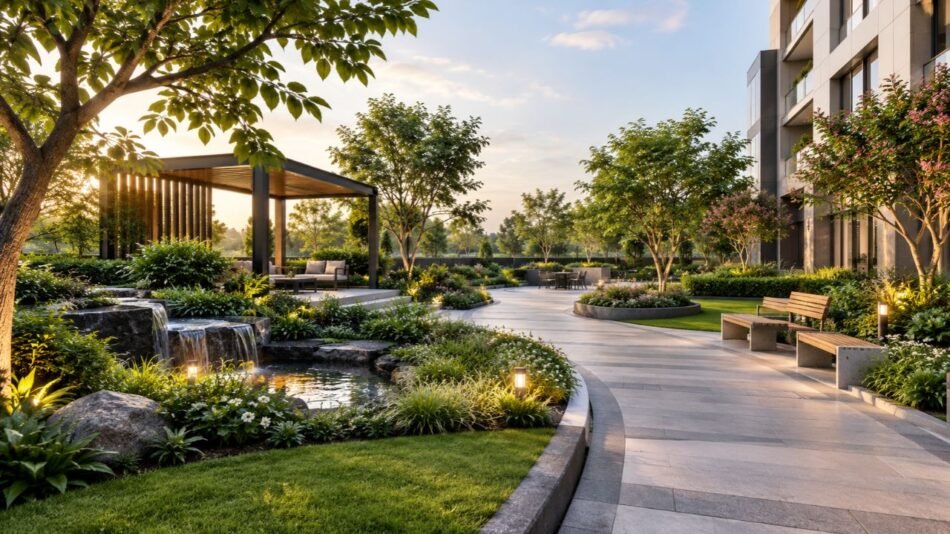
In today’s commercial real estate landscape, exterior environments are critical drivers of project value, tenant engagement, and municipal approval. From corporate headquarters and mixed-use retail centers to urban plazas and hospitality resorts, the surrounding site design defines a development’s overall identity. For architects, urban planners, developers, and general contractors, presenting conceptual site plans effectively requires absolute visual clarity. Utilizing professional landscape rendering services helps AEC teams convert complex civil plans into photorealistic digital visuals. Highlighting Landscape Rendering for Commercial Developments ensures that investors, planning boards, and community stakeholders clearly understand the full spatial and aesthetic potential of a proposed project.
Assess Portfolio Depth and Visual Precision
The first step in selecting a visualization partner is examining their portfolio for technical accuracy and realism. Commercial landscape design goes beyond basic aesthetics—it requires precise depiction of site grading, lighting conditions, structural hardscaping, and regional flora.
When evaluating a rendering studio’s past work, look for key technical indicators:
- Botanical Accuracy: The ability to represent specific plant species, regional foliage, and realistic growth scale appropriate for the project’s climate zone.
- Hardscape Realism: Accurate representation of paving materials, retaining walls, custom woodwork, water features, and outdoor amenities.
- Lighting and Environmental Depth: Natural shadow casting, atmospheric depth, reflections, and accurate sun orientation matching real-world site conditions.
Firms experienced in comprehensive Architectural Visualization bring technical precision to every visual asset, helping review boards and financial partners assess spatial flow, accessibility, and environmental integration before construction begins.
Match Rendering Capabilities to Project Scope
Commercial developments vary widely in scale, requiring visualization partners to adapt their approach based on the project phase and audience. Ensure your rendering partner offers a complete suite of services suited to your specific requirements.
Specialized Urban and Pedestrian Visuals
For downtown developments, transit hubs, and retail centers, specialized services like Streetscape Rendering showcase pedestrian circulation, outdoor seating areas, retail storefronts, night lighting, and green buffers with natural scale and human activity.
Comprehensive Building and Landscape Integration
A successful commercial presentation connects outdoor spaces with surrounding structures. Utilizing detailed Exterior Rendering enables teams to illustrate how outdoor courtyards, plazas, and walkways interact with building facades, curtain walls, and main entrances.
Advanced landscape architecture rendering bridges macro-level master planning with micro-level site details, giving stakeholders a complete, cohesive understanding of the entire site plan.
Prioritize CAD/BIM Compatibility and Technical Alignment
A common issue in commercial rendering workflows is a disconnect between visual models and actual engineering documentation. A top-tier commercial landscape rendering provider must integrate smoothly with your existing architectural and civil workflows.
Ensure the rendering team works natively with AutoCAD, Revit, BIM models, SketchUp, and Civil 3D files. Working directly from constructible models eliminates duplicate work and ensures that the final visuals accurately mirror constructible plans. Leading AEC support providers, such as McLine Studios, offer extensive expertise in CAD drafting, BIM modeling, and 3D visualization, guaranteeing that aesthetic graphics match precise architectural and civil specifications.
Key Factors Impacting Landscape Rendering Cost and ROI
Understanding pricing structures allows project managers to budget effectively while obtaining high-impact visuals. The total landscape rendering cost is primarily determined by:
- Site Scale and Geometry: Extensive master plans with complex topography require more development time than compact commercial plazas.
- Model Detail and Asset Customization: High-density foliage, custom site furniture, and intricate hardscape patterns add modeling complexity.
- Output Medium: Still images, 360-degree interactive panoramas, and full 3D video animations carry distinct pricing tiers.
While choosing a low-cost provider may seem economical, working with an experienced landscape rendering company yields significant long-term value. Photorealistic 3D visuals accelerate municipal approvals, reduce change orders by identifying design conflicts early, and drive early pre-leasing and capital investment.
Effective Collaboration Strategies for Design Teams
To ensure a seamless project delivery when hiring landscape rendering services, follow these practical steps:
- Provide Detailed Input Files: Share accurate CAD/BIM files, civil grading plans, material schedules, and precise plant lists.
- Clarify Project Objectives: Communicate whether the primary goal is municipal approval, investor fundraising, or commercial pre-leasing.
- Approve Camera Angles Early: Review and lock camera placements in grayscale/clay render stages before final texturing, lighting, and foliage detailing begin.
Conclusion
Selecting the right partner for commercial outdoor visualization requires balancing technical skill, workflow compatibility, and industry experience. By evaluating portfolio quality, ensuring software alignment, and establishing clear review protocols, AEC professionals can secure visual assets that win approvals and accelerate sales. Investing in professional landscape rendering services helps turn ambitious site plans into compelling, approval-ready realities.


