 WhatsApp Us Now

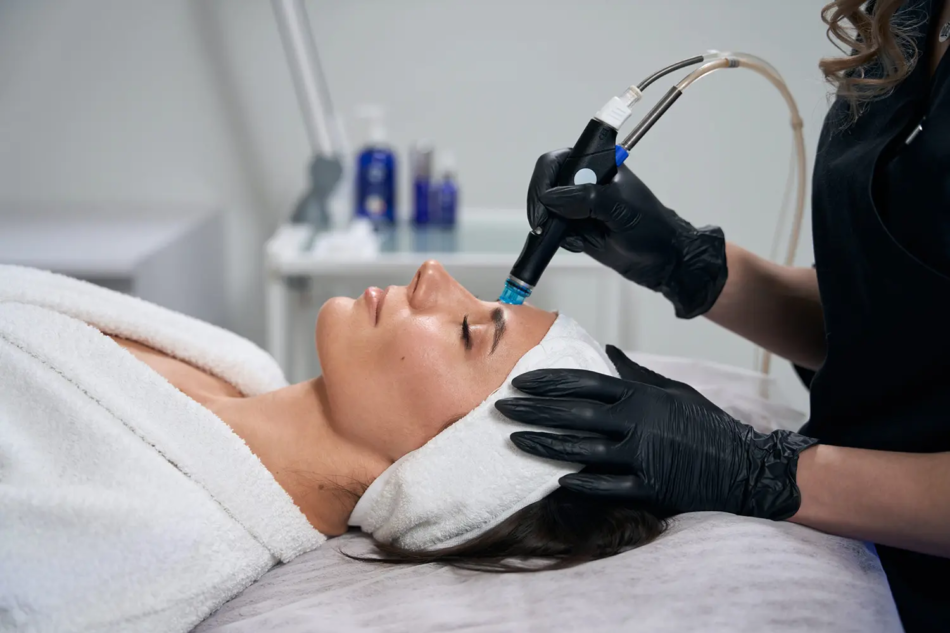
When skin undergoes rapid stretching due to growth spurts, weight fluctuations, or pregnancy, the underlying structural network of collagen and elastin can tear. This dermal disruption manifests as striae distensae, commonly known as stretch marks. While these marks represent a natural skin response, many individuals search for safe, advanced aesthetic approaches to refine their skin texture and restore smooth surface uniformity. Modern dermatological solutions focus on harnessing the body’s natural restorative abilities. Through specialized techniques like micro-needling, individuals looking for Dermapen treatment in Abu Dhabi can effectively target deep dermal scarring. Understanding how automated micro-needling interacts with scar tissue clarifies realistic expectations for skin rejuvenation.
Understanding the Physiology of Stretch Marks
Stretch marks are a form of dermal scarring that occurs in the deeper layer of the skin, known as the dermis. When the connective tissue is stretched beyond its elastic threshold, the extracellular matrix suffers micro-tears. This disruption leads to localized structural breakdown, causing the upper skin layers to lose firm support. Consequently, the skin displays visible linear indents with alterations in color and surface texture.
In the initial development phase, stretch marks often appear red, pink, or purplish (striae rubrae) due to underlying inflammation and blood vessel dilation. Over time, as inflammatory activity subsides, these lines mature into pale, silvery-white linear depressions (striae albae). At this chronic stage, normal collagen and elastin fibers are replaced by dense, misaligned fibrous tissue. Standard topical creams often struggle to yield significant structural improvements because they cannot easily penetrate into the mid-dermis to reorganize this dense scar tissue.
- Dermal Tearing: Rapid expansion breaks down structural proteins within the dermal layer.
- Inflammatory Phase (Striae Rubrae): Early-stage marks present with vascular expansion and a reddish hue.
- Mature Phase (Striae Albae): Chronic marks fade to white or silver as cellular matrix activity slows.
- Topical Limitations: Surface treatments often cannot reach deep structural layers effectively.
Science Behind Dermapen and Microneedling Technology
Automated microneedling devices, such as the Dermapen, use advanced vertical oscillation technology to deliver fast, highly controlled micro-punctures into the skin. Unlike traditional manual rollers that enter the tissue at an angle and risk epidermal tearing, automated pens feature fine needles that penetrate perpendicularly at adjustable depths. This precise movement creates thousands of microscopic physical channels without removing the outer epidermal layer.
These controlled micro-injuries bypass the superficial epidermis and reach deep into the dermal matrix where stretch marks originate. By triggering a localized tissue reaction, the procedure activates a cascade of natural skin healing processes. The physical disruption breaks apart existing, disorganized scar tissue while encouraging the natural production of healthy proteins. Consequently, automated microneedling acts as a biological catalyst, prompting the body to replace damaged structures with fresh tissue matrix.
- Vertical Oscillation: Perpendicular needle entry prevents superficial skin drag or irregular tearing.
- Depth Customization: Precision settings allow variable penetration calibrated to skin thickness.
- Targeted Action: Micro-channels trigger physiological responses directly inside the targeted dermal layer.
- Tissue Preservation: Intact epidermal structure speeds natural recovery while encouraging deep repair.
Three Stages of Dermal Remodeling
To appreciate how micro-needling transforms stretch mark texture, it helps to review the biological stages of skin renewal. The healing cascade unfolds in three consecutive steps: inflammation, tissue proliferation, and structural remodeling. Each phase contributes directly toward softening firm tissue lines and restoring skin suppleness.
Phase 1: Controlled Inflammation
The initial phase begins immediately as micro-needles penetrate the tissue. The body recognizes the microscopic punctures as minor physical wounds and instantly initiates a protective biological response. Platelets release natural growth factors into the surrounding extracellular matrix. Increased blood flow brings oxygen and vital cellular nutrients to the target area. This initial inflammatory state serves as the necessary signal to clear damaged biological material and prepare the foundation for rebuilding structural proteins.
- Cellular Signaling: Growth factors mobilize nearby regenerative cells to the micro-injury sites.
- Increased Microcirculation: Heightened blood supply delivers essential biological building blocks.
- Debris Clearance: Macrophages clean away broken collagen fragments to clear space for new matrix elements.
Phase 2: Fibroblast Proliferation
Within days following treatment, the proliferation phase takes over. Specialized connective tissue cells, known as fibroblasts, migrate into the micro-channels created by the device. These cells rapidly produce new extracellular matrix components, synthesizing flexible Type III collagen along with fresh elastin strands. Simultaneously, temporary vascular networks form to nourish the forming tissue. This rapid synthesis helps plump up depressed areas caused by dermal stretching, filling in the hollow contours of stretch mark grooves.
- Fibroblast Activation: Specialized cells synthesize new collagen networks within the matrix.
- Elastin Synthesis: Flexible fibers rebuild elastic tension to improve overall skin recoil.
- Matrix Infill: Fresh cellular construction gradually lifts the sunken floor of indented scars.
Phase 3: Tissue Remodeling
The final phase, structural remodeling, continues over several months following micro-needling sessions. During this long-term maturation process, temporary Type III collagen is systematically converted into stronger, highly organized Type I collagen. Rather than laying down in chaotic, rigid bundles typical of untreated scars, the newly formed fibers realign into parallel lattice structures. This structural reorganization alters the optical reflectivity and tactile texture of stretch marks, blending them seamlessly with healthy surrounding skin.
- Collagen Conversion: Flexible structural proteins transition into dense, resilient Type I fibers.
- Lattice Alignment: Structural elements realign systematically to mimic smooth, natural skin composition.
- Long-Term Maturation: Continued matrix reorganization leads to sustained improvements over several months.
Early vs Mature Stretch Marks: Understanding Response Rates
Not all stretch marks respond identically to micro-needling, as their maturity level plays an important role. Newer marks (striae rubrae) generally exhibit higher responsiveness. Because early-stage marks retain active vascular supply and exhibit active inflammatory signaling, micro-needling can interrupt scar evolution earlier. Treatments applied during this acute window can significantly reduce discoloration while promoting uniform matrix alignment before rigid scar tissue forms.
Conversely, mature white stretch marks (striae albae) consist of fully formed, hypopigmented fibrotic tissue with low metabolic activity. While these older marks require more time to break down, automated microneedling remains an effective non-ablative method for encouraging structural improvements. The micro-punctures re-energize dormant fibroblast activity, gradually softening firm, shiny scar textures and smoothing out indented borders. Realistic expectations center on softening mark depth and improving overall surface consistency rather than total erasure.
- Vascular Reactivity: Red marks respond swiftly due to underlying active circulation.
- Dormant Tissue Activation: Silver marks require repeated stimulation to kickstart localized collagen synthesis.
- Texture Smoothing: Depressed lines become visibly softer as fresh tissue builds beneath the surface.
- Gradual Realignment: Consecutive sessions progressively refine contrast variations between scar lines and normal skin.
Key Advantages of Dermapen for Body Contours
Treating body stretch marks requires flexibility, given that skin thickness varies across regions like the abdomen, thighs, hips, upper arms, and lower back. Automated microneedling pens allow precise adjustment of needle depth, catering to different skin layers across various areas. Thicker regions like the buttocks or outer thighs benefit from deeper penetration to target dense scar tissue, while thinner areas receive lighter, gentler passes.
Furthermore, the mechanical design of modern pens allows uniform delivery across curved body areas. High-speed automated motion minimizes skin drag, ensuring smooth handling over rounded contours like hips or shoulders. In addition, the creation of micro-channels significantly enhances the skin’s capacity to absorb topical hydrating compounds and restorative formulations. This synergy boosts deep skin hydration and supports skin resilience.
- Targeted Adjustability: Depth settings adapt to variable skin thickness across diverse body locations.
- Uniform Coverage: Fast, oscillating movement provides consistent treatment across curved body surfaces.
- Enhanced Topical Delivery: Micro-channels allow active serums to penetrate deep into structural layers.
- Natural Tissue Preservation: Leaves the outer skin intact, facilitating a smooth, steady recovery cycle.
Maximizing Results Through Comprehensive Skincare Habits
While micro-needling acts as a biological spark for dermal repair, achieving long-term improvements depends heavily on proper skin maintenance habits. Supporting the body’s structural recovery involves providing essential nutrients internally and externally. Hydration plays an essential role; well-hydrated dermal tissues retain better elasticity, allowing newly formed collagen to integrate smoothly into surrounding matrices.
Nutritional factors like Vitamin C, zinc, and bioavailable amino acids supply the required chemical building blocks for proper protein synthesis. Externally, protecting recovering skin from direct UV exposure prevents unwanted post-inflammatory pigment changes, particularly in warmer climates. Incorporating gentle, restorative topical formulas rich in hyaluronic acid and soothing lipids maintains healthy skin barrier function during the recovery phase.
- Internal Hydration: Adequate water intake enhances matrix elasticity and cellular repair efficiency.
- Nutritional Support: Consuming essential amino acids and micronutrients feeds active fibroblast synthesis.
- Sun Defense: Shielding treated areas from strong sunlight prevents irregular pigment shifts.
- Barrier Care: Applying nourishing topical formulas supports comfortable surface recovery.
Frequently Asked Questions about Dermapen treatment in Abu Dhabi
Can Dermapen completely erase stretch marks?
Complete erasure of stretch marks is generally not possible because they represent permanent dermal scar tissue. However, Dermapen treatments can significantly improve their appearance by softening texture, reducing line depth, and blending color contrast with surrounding healthy skin.
How many microneedling sessions are typically required for stretch marks?
Because stretch marks sit deep within the dermis, visible improvement usually requires a series of multiple sessions scheduled several weeks apart. The exact number varies based on whether the marks are new or mature, as well as the body location being targeted.
Is microneedling effective for both red and white stretch marks?
Yes, microneedling works on both red (striae rubrae) and white (striae albae) stretch marks. Red stretch marks usually respond faster due to active blood flow, while older white marks require a broader series of sessions to re-stimulate dormant cellular remodeling.
How soon can results be observed after beginning treatment?
Initial textural improvements may become noticeable within a few weeks as surface skin renews. However, significant collagen remodeling takes time, with the most notable structural changes developing gradually over three to six months following treatment.


